Reading order
Harry Potter books in order
The main sequence is simple. The buying decision is not: title variants, mismatched covers, illustrated editions, and companion books can make a first purchase needlessly confusing.

The short answer
Read the seven novels in publication order
Start with Harry Potter and the Philosopher's Stone, called Sorcerer's Stone in the United States, and continue through Deathly Hallows. Do not insert the companion books between school years on a first read. They add texture, but the seven novels already introduce every piece of information required by the story.
Harry Potter is one of the rare large fantasy properties whose core reading order needs no reconstruction. Each novel follows the next school year, and later books assume that you remember relationships, rules, and losses from the earlier ones. Publication order and narrative order are the same.
The useful question is what to buy. A reader testing the series should purchase the first book alone. A family already committed to all seven will usually spend less on a complete paperback set and avoid a shelf of conflicting heights and cover designs. Collectors should decide on one publisher, territory, and design before buying book two.
The choices
The complete seven-book order
The notes below are spoiler free. They explain how the reading experience changes and when a hesitant reader can make an informed decision about continuing.
1
Harry Potter and the Philosopher's Stone
The essential starting point
The shortest and most welcoming entry establishes Hogwarts through Harry's discovery of it. The plot has the clean shape of a school mystery, but the details introduced here become structural later.
Buying decision: Buy this one alone if you are unsure about the series. US readers may see Sorcerer's Stone instead; it is the same first novel under a different title.
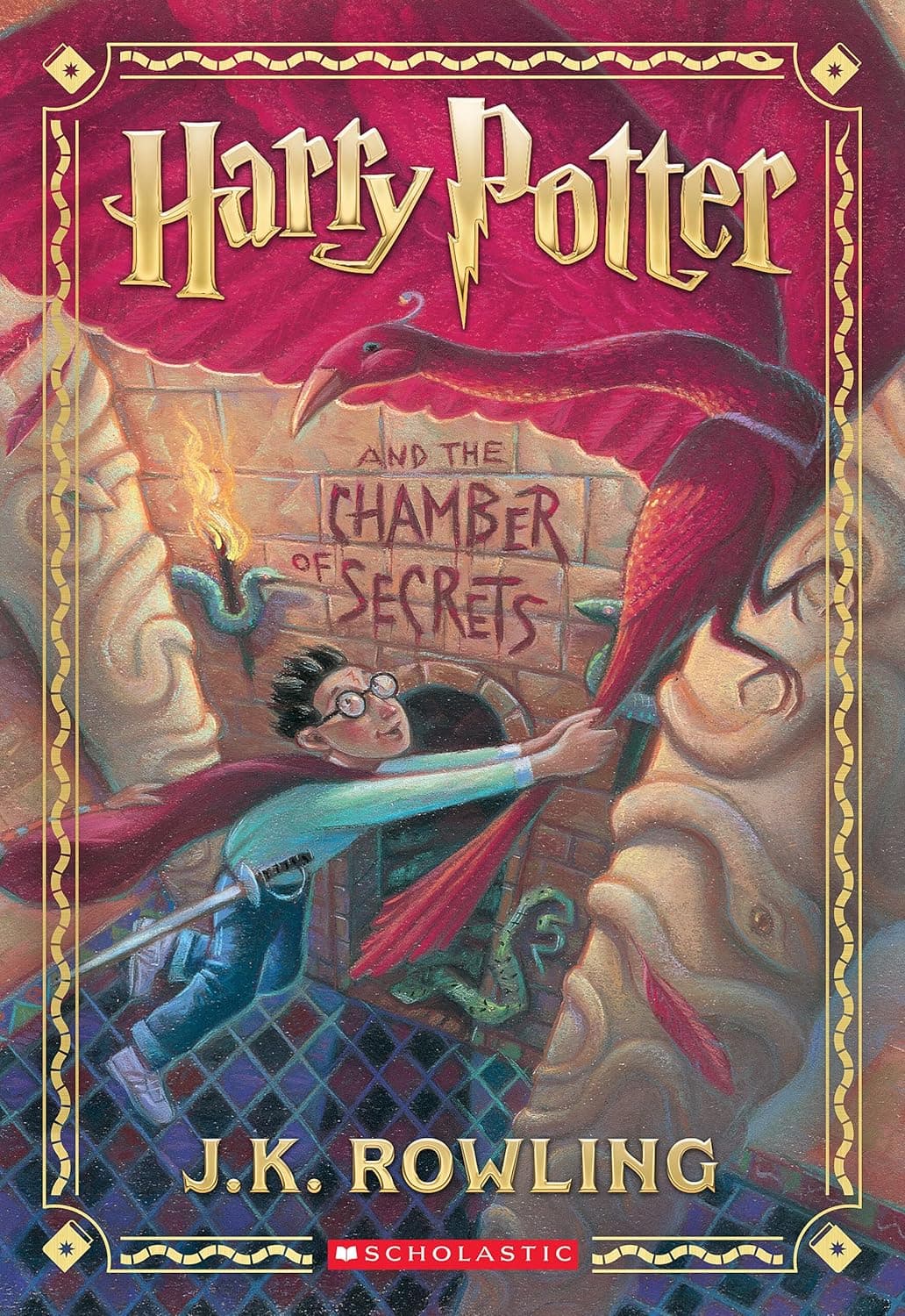
2
Harry Potter and the Chamber of Secrets
A darker second year
The school becomes less safe, prejudice moves closer to the center, and the mystery depends on history that Hogwarts would rather leave buried. It still reads quickly and retains much of the first book's compactness.
Buying decision: Continue directly. Reading a companion volume first adds no useful context and interrupts the momentum.
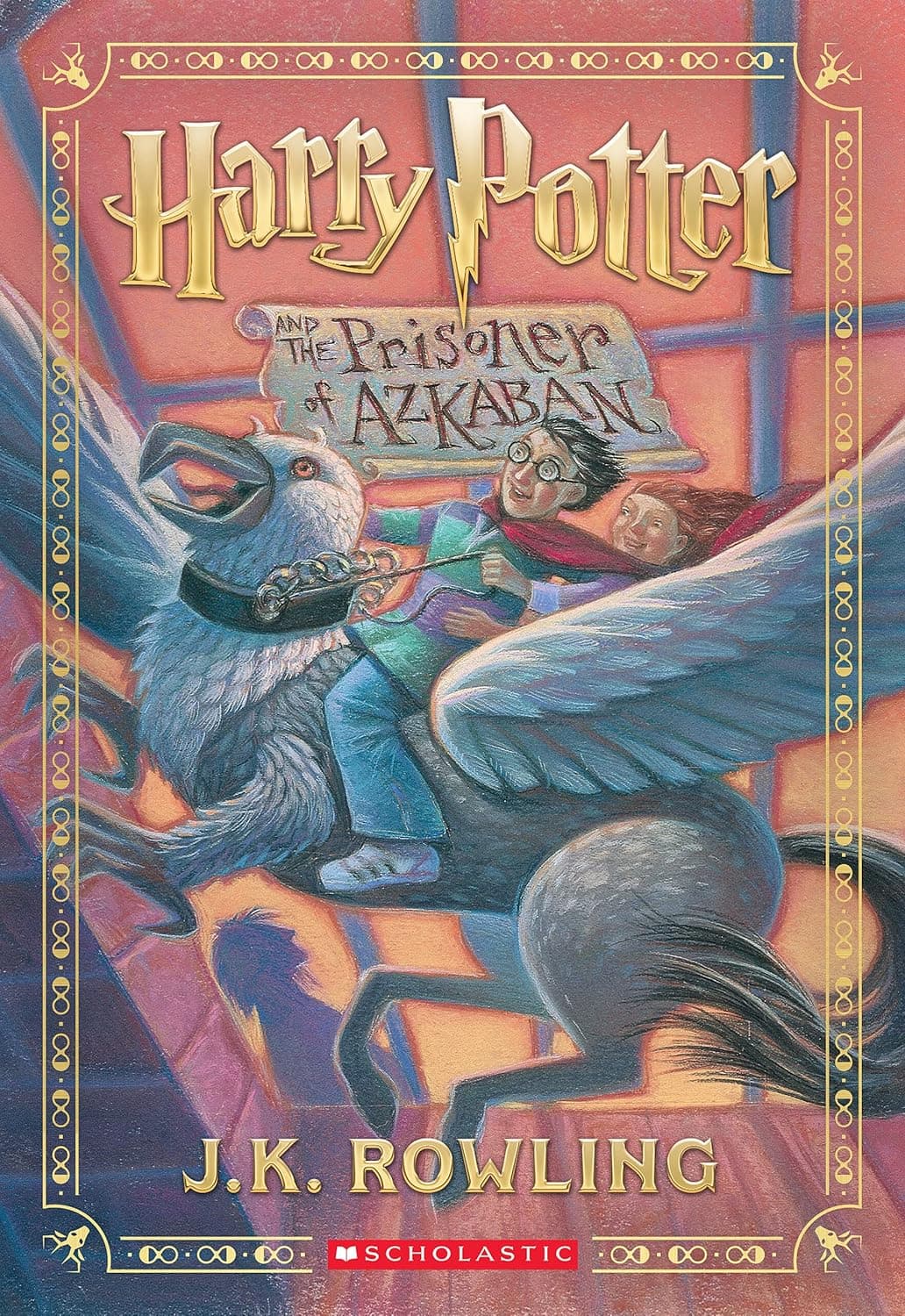
3
Harry Potter and the Prisoner of Azkaban
Where the series gains emotional depth
The third year gives adult history more weight and lets fear, loyalty, and memory complicate the usual school adventure. For many readers, this is the volume that shows what the series can become.
Buying decision: If books one and two felt pleasant but slight, read through this one before deciding whether to stop.
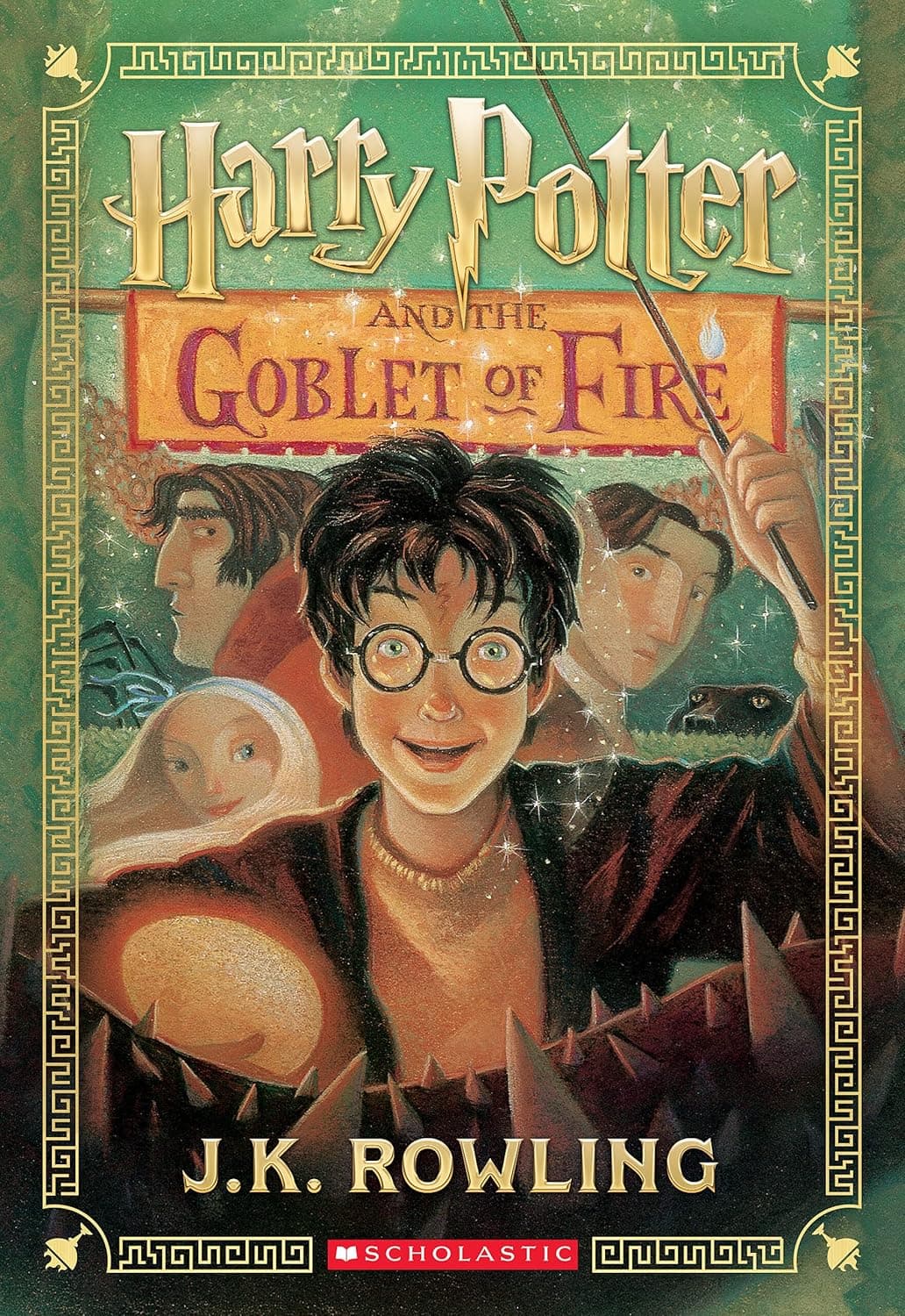
4
Harry Potter and the Goblet of Fire
The hinge between childhood and war
The page count expands, the cast becomes international, and a tournament supplies immediate structure while political danger gathers outside it. This is the first book that feels built for sustained rather than episodic reading.
Buying decision: Plan more time than the first three require. This is also the point where a complete set starts making practical sense.
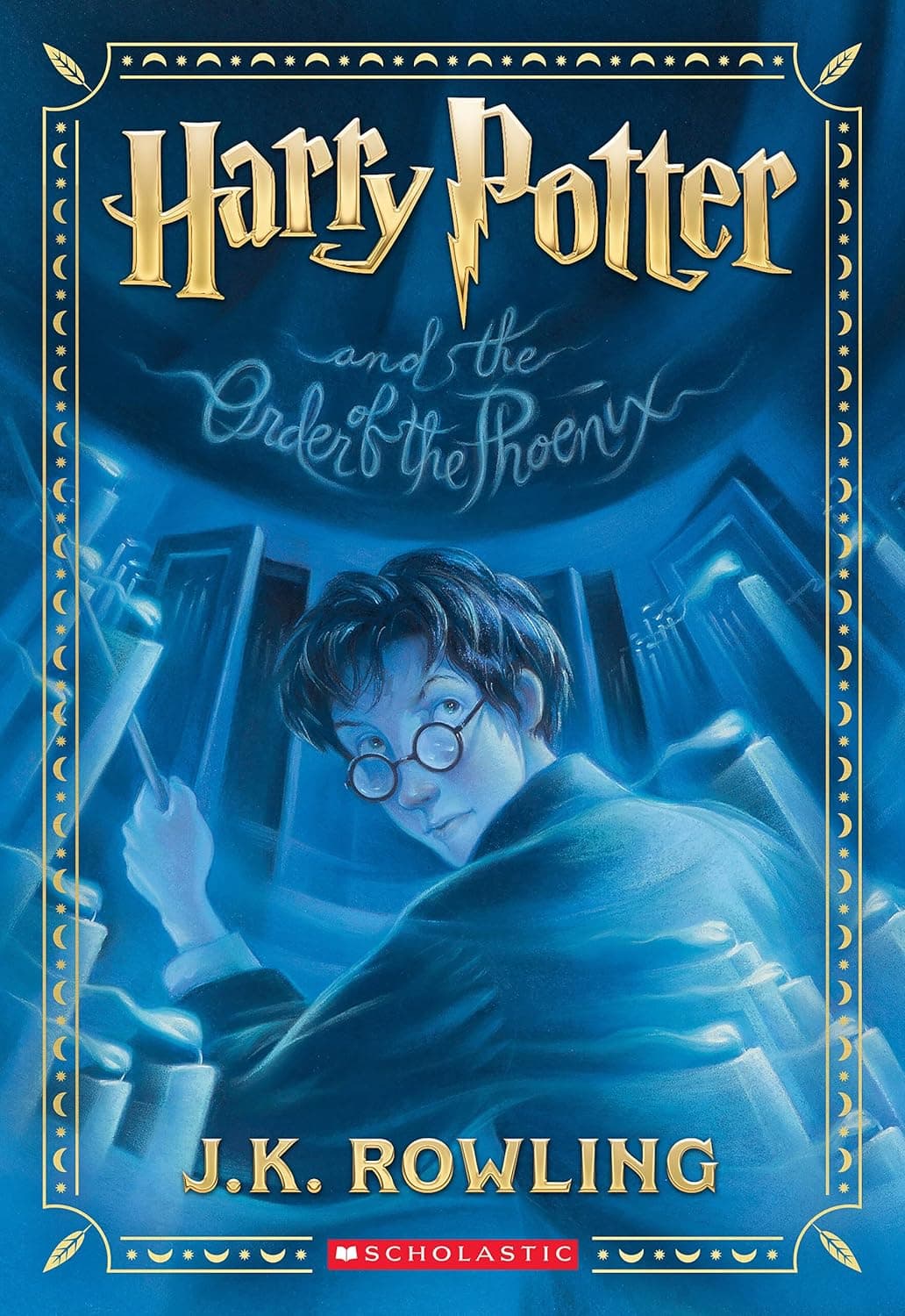
5
Harry Potter and the Order of the Phoenix
The longest and most frustrated year
Institutional denial, hostile authority, and Harry's anger make this the most abrasive volume. Its length is intentional but uneven: daily school pressure matters as much as the larger conflict.
Buying decision: Do not choose a small-print edition casually. This is where trade paperbacks, hardcovers, and ebooks become easier on many readers than compact mass-market formats.
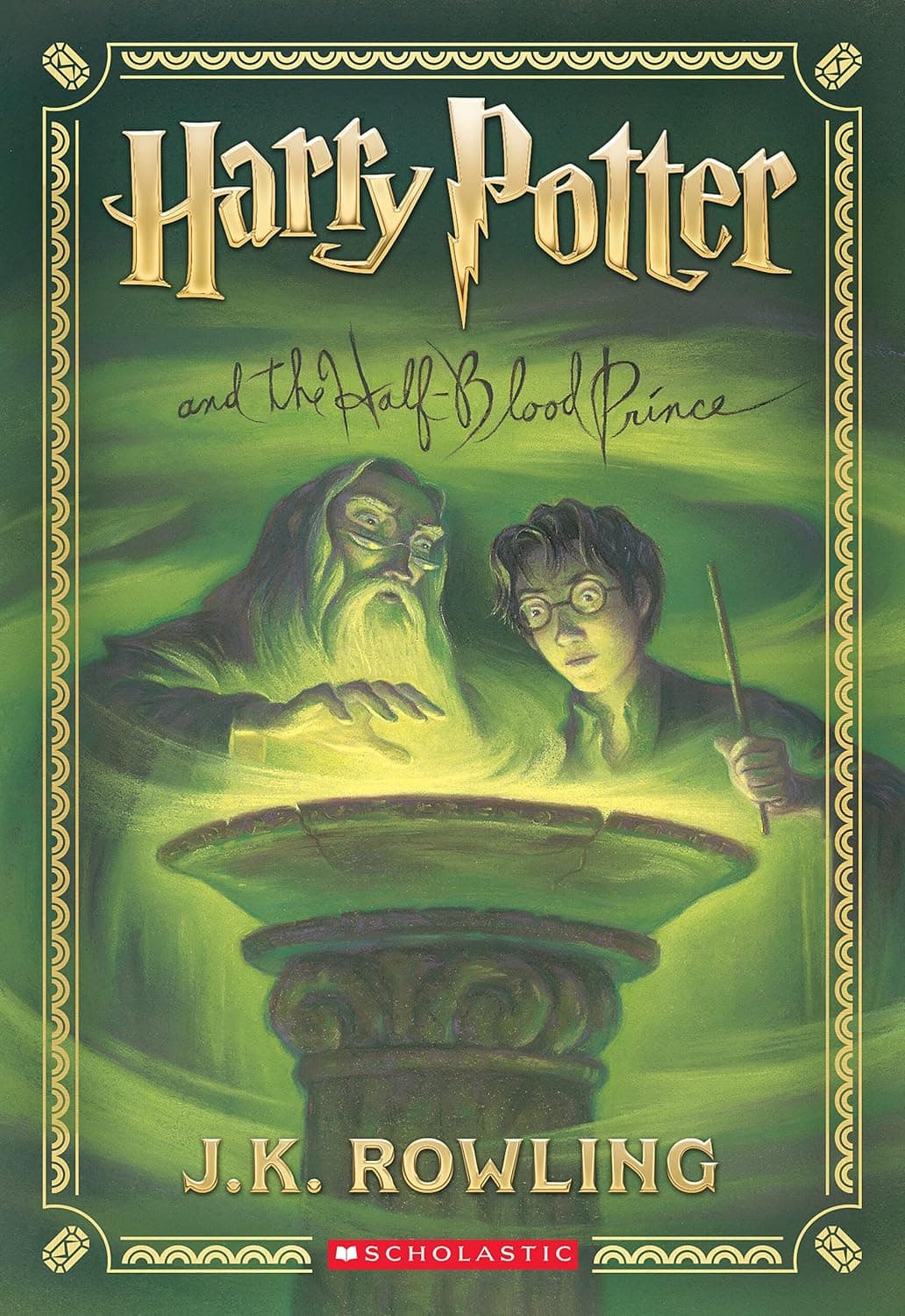
6
Harry Potter and the Half-Blood Prince
The preparation before the finale
The plot studies how the central threat was formed while relationships and ordinary school life continue around that investigation. It is quieter than a penultimate volume might suggest, but nearly every major strand points forward.
Buying decision: Read it rather than relying on the film. The novel's accumulated history is part of the final book's emotional logic.
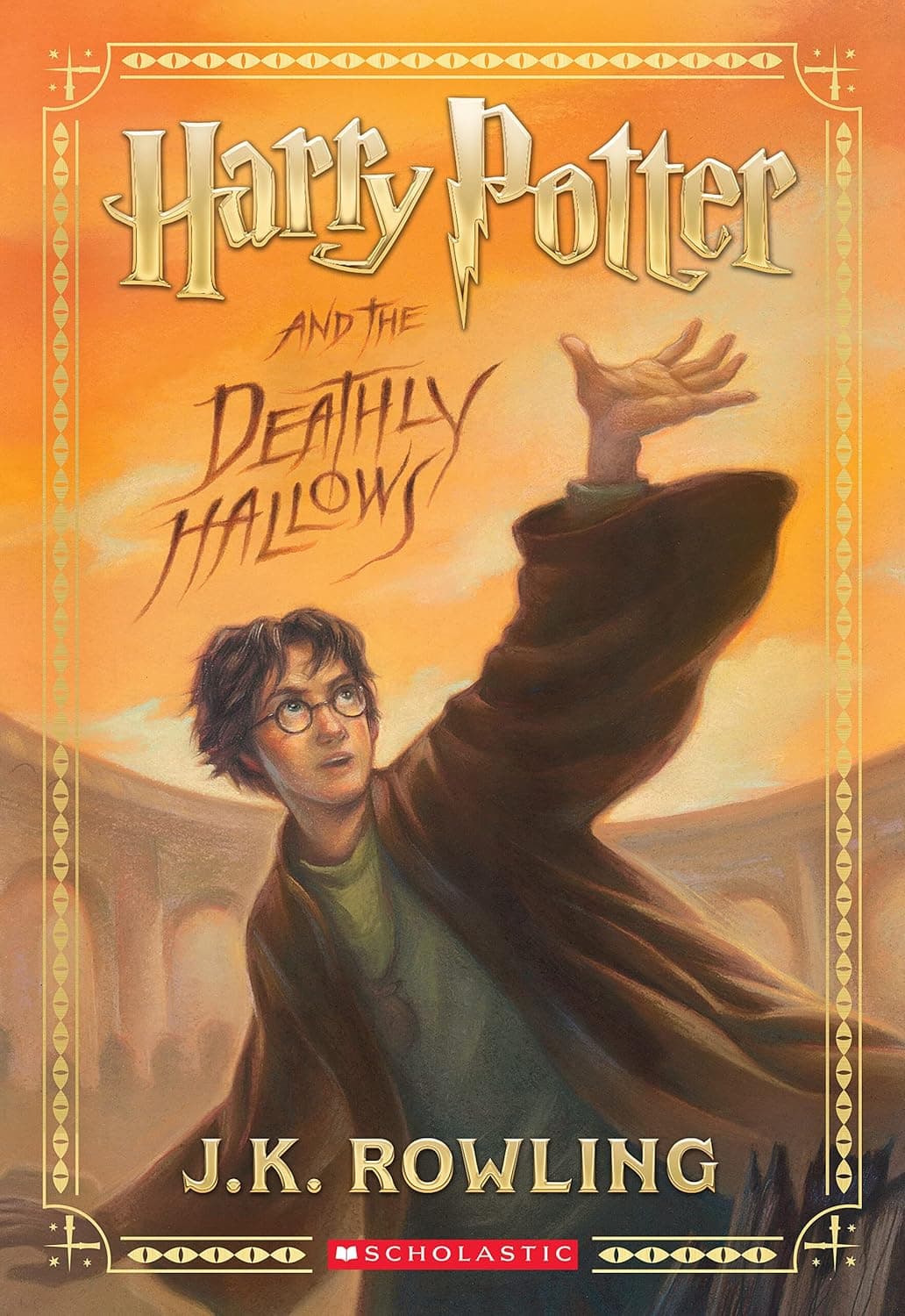
7
Harry Potter and the Deathly Hallows
The conclusion
The familiar school-year pattern gives way to movement, scarcity, and a long reckoning with choices made across the earlier books. It expects the reader to recognize minor objects, stories, and acts of loyalty.
Buying decision: Read it last. The Tales of Beedle the Bard is interesting afterward, but pausing for that companion book before the finale is unnecessary.
Series buying note
Would the collection be the better buy?
These are useful only when you want several books in the same run. The notes below spell out what each package includes and, just as importantly, what it leaves out.
Seven-book hardcover box set
Harry Potter Hardcover Boxed Set
All seven main novels are here in durable hardcovers, so there is no edition switching halfway through Harry's school years.
Included: Harry Potter and the Philosopher's Stone, Harry Potter and the Chamber of Secrets, Harry Potter and the Prisoner of Azkaban, Harry Potter and the Goblet of Fire, Harry Potter and the Order of the Phoenix, Harry Potter and the Half-Blood Prince, Harry Potter and the Deathly Hallows
Our buying note: The set is heavy and costs more than the paperback box. The U.S. edition calls book one Harry Potter and the Sorcerer's Stone; our review uses the U.K. title, Philosopher's Stone. Companion books such as The Tales of Beedle the Bard are not included.
Side by side
Which Harry Potter format should you buy?
The text is the same story across standard modern editions. The meaningful differences are territory, physical comfort, durability, and whether the set will remain visually consistent.
| Format | Best for | Watch for | Our judgment |
|---|---|---|---|
| Individual paperback | Trying book one or replacing a single volume | Later purchases may not match height or cover design | Best low-commitment choice |
| Seven-book paperback set | A first complete read and family shelves | Check whether it uses Philosopher's Stone or Sorcerer's Stone | Best value for most committed readers |
| Hardcover set | Durability, gifts, and repeated rereading | Heavy, expensive, and less comfortable to hold | Buy for longevity, not convenience |
| Illustrated or collector edition | Display, artwork, and slow shared reading | A beautiful volume can be awkward for commuting or bed | A supplement, not the practical default |
| Ebook or audiobook | Travel, accessibility, adjustable text, or family listening | No uniform physical collection | The most flexible way to handle the longer books |
Where the companion books fit
Fantastic Beasts and Where to Find Them and Quidditch Through the Ages are presented as small books from the wizarding world. The Tales of Beedle the Bard is a collection of stories that becomes relevant late in the main sequence. None is an eighth Harry Potter novel.
For a first read, finish Deathly Hallows and then choose the companion that matches your curiosity. Fantastic Beasts suits readers interested in creatures, Quidditch suits readers who enjoy invented sporting history, and Beedle rewards attention to folklore and the final novel.
A practical buying check before you order
Check the territory
Philosopher's Stone is the original UK title; Sorcerer's Stone is the US title. A mixed set can surprise buyers even though the narrative is the same.
Check dimensions and publisher
Cover art alone does not guarantee that separately purchased volumes share height, paper, or spine design.
Read the product description, not the marketplace photo
Third-party listings sometimes reuse images across formats. Confirm paperback, hardcover, ebook, or audio before paying.
Quick answers
Questions readers ask before buying
Is Sorcerer's Stone the same book as Philosopher's Stone?
Yes. Sorcerer's Stone is the US title of the first novel. Some wording was localized, but both begin the same seven-book story.
Should Fantastic Beasts be read before Harry Potter?
No. The small companion book can be read after the main series or whenever a reader wants extra world detail. It is not a narrative prequel to the seven novels.
Can a child stop after the first three books?
Yes. The first three form satisfying school adventures. Book four marks a clear increase in length and danger, so families can pause there and decide when the later material feels appropriate.
Sources
Sources for this guide
Order, series status, and official starting-point claims were checked against these author and publisher pages on August 2, 2026.
Keep reading