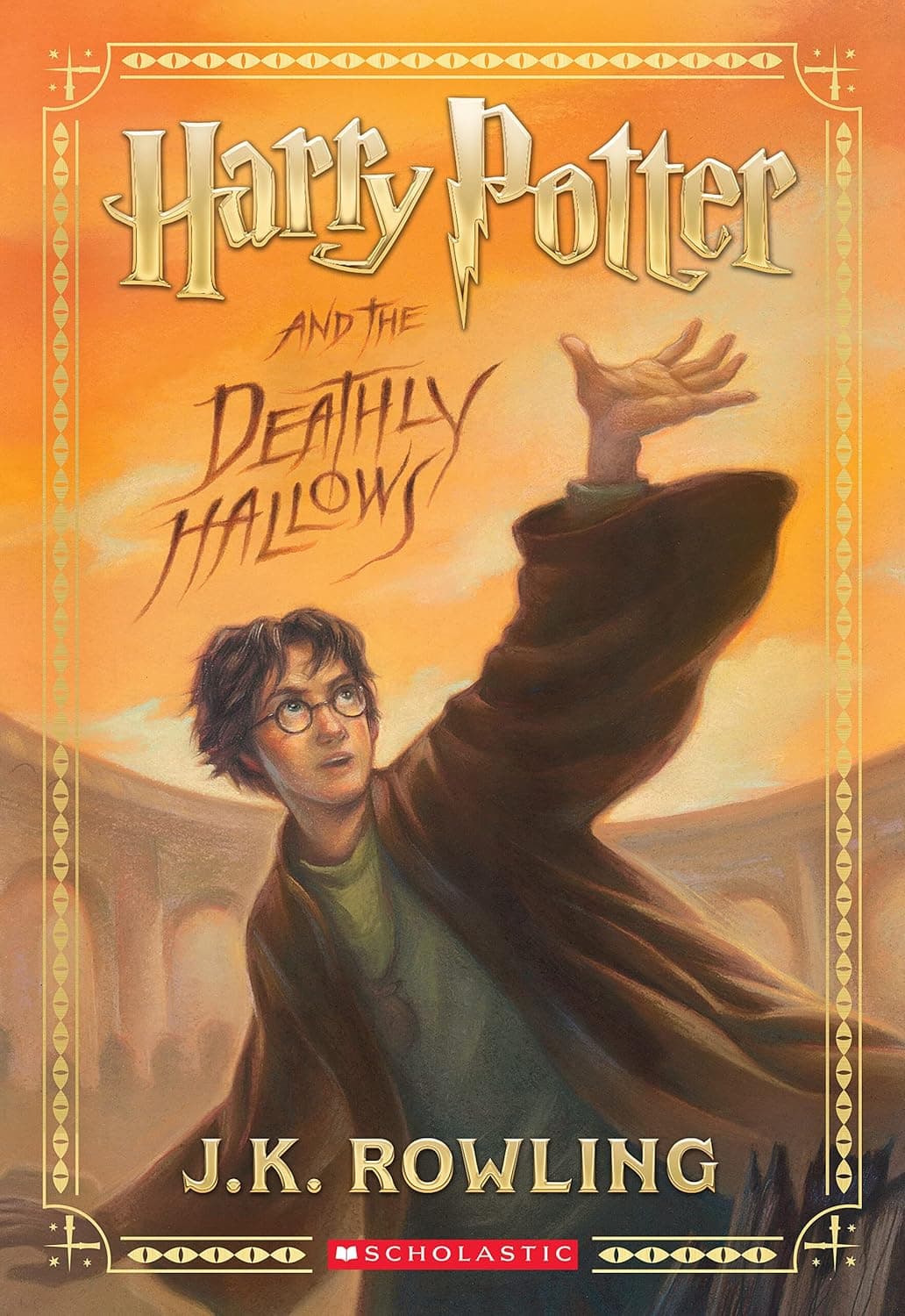
Should you read Harry Potter and the Deathly Hallows?
What works
Removing the trio from Hogwarts tests their friendship without institutional shelter, and the final revelations reframe loyalty, sacrifice, and the pursuit of power.
What may not work for you
The Horcrux search stalls for long stretches, the Hallows arrive late as another system to learn, and some deaths receive very little space.
What may test your patience
The months of displacement, argument, and uncertain searching are the series' clearest drag, even though they communicate isolation and lack of leadership.
Does the ending reward the effort?
Yes overall. The central conflict resolves through choices prepared across the series, while the epilogue is more reassuring and conventional than the preceding moral complexity.
Reading Harry Potter and the Deathly Hallows closely
Harry Potter and the Deathly Hallows closes the series with a war story that pulls the trio out of school and into a world under siege. Mythic quests, found family courage, and long buried secrets all come to the surface as the wizarding world reaches its breaking point.
Worldbuilding sharpens around folklore, resistance networks, and long hinted magical rules. Old tales suddenly matter, symbols gain new meaning, and familiar spells are used in ways that feel fresh but earned. The pacing moves between quiet, tense stretches on the road and sudden bursts of action, giving the story room to explore grief and lore without losing momentum.
Characters carry the emotional weight. Harry walks a thin line between fear and duty, Hermione doubles down on preparation and stubborn hope, and Ron struggles with loyalty in ways that feel painfully human. Side characters reveal new sides and histories, while villains remain unsettling because their choices feel rooted in fear, prejudice, or hunger for power. Spanish editions titled Harry Potter y las Reliquias de la Muerte deliver the same mix of myth and intimate stakes.
The writing stays clear even as the plot threads finally knot together. Clues from earlier books pay off, battles feel chaotic but understandable, and the climax finds room for both spectacle and quiet, personal moments.
Three useful comparisons
Harry Potter and the Half-Blood Prince
Half-Blood Prince is the necessary setup and offers a tighter mystery within Hogwarts.
Best for: Series readers who want character history, gathering dread, school romance, and direct preparation for the finale.
The Return of the King
The Return of the King provides grander mythic warfare and a more extended account of the cost of coming home.
Best for: Readers completing the trilogy who want catharsis, costly victory, homecoming, and an unusually serious aftermath.
Mockingjay
Mockingjay also removes its young hero from the original arena and focuses more sharply on propaganda and trauma.
Best for: Series readers prepared for propaganda, trauma, moral ambiguity, war, and a less crowd-pleasing conclusion.
Compare 10 more books like Harry Potter and the Deathly Hallows
Make the next decision
Reading and buying guides featuring Harry Potter and the Deathly Hallows
Series buying note
Would the collection be the better buy?
These are useful only when you want several books in the same run. The notes below spell out what each package includes and, just as importantly, what it leaves out.

Seven-book hardcover box set
Harry Potter Hardcover Boxed Set
All seven main novels are here in durable hardcovers, so there is no edition switching halfway through Harry's school years.
Included: Harry Potter and the Philosopher's Stone, Harry Potter and the Chamber of Secrets, Harry Potter and the Prisoner of Azkaban, Harry Potter and the Goblet of Fire, Harry Potter and the Order of the Phoenix, Harry Potter and the Half-Blood Prince, Harry Potter and the Deathly Hallows
Our buying note: The set is heavy and costs more than the paperback box. The U.S. edition calls book one Harry Potter and the Sorcerer's Stone; our review uses the U.K. title, Philosopher's Stone. Companion books such as The Tales of Beedle the Bard are not included.