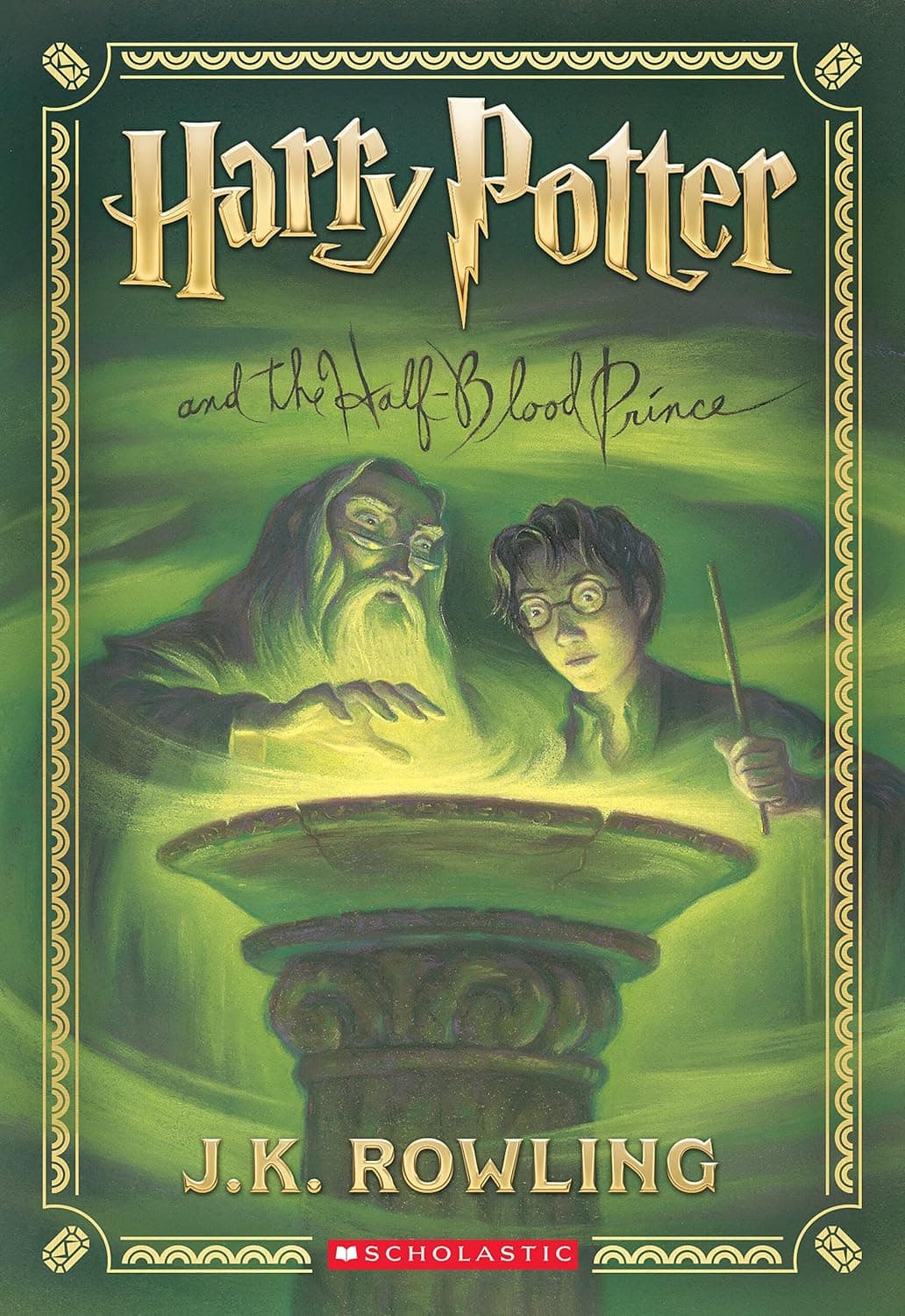
Should you read Harry Potter and the Half-Blood Prince?
What works
The memory lessons give Voldemort history without excusing him, and Draco's visible deterioration adds tension to a school plot Harry cannot persuade others to take seriously.
What may not work for you
The romantic pairings are unevenly developed, the Half-Blood Prince mystery receives less emotional weight than its title suggests, and crucial preparation still depends on secrecy.
What may test your patience
The school romance and Quidditch episodes can feel minor beside the memories and Draco's mission, creating deliberate but uneven normality before war.
Does the ending reward the effort?
Yes. The cave and tower convert accumulated knowledge into irreversible loss and give the final book a clear emotional and practical task.
Reading Harry Potter and the Half-Blood Prince closely
Harry Potter and the Half-Blood Prince leans into a dark academia mood, with war gathering outside Hogwarts while secrets, romance, and dangerous magic simmer inside the castle walls. It feels like a quiet tightening of the net before the story finally leaves school behind.
Worldbuilding deepens in practical, often unsettling ways. A new Potions professor reshapes classroom life, memory lessons with Dumbledore expose hidden history, and old corners of the castle suddenly matter again. The tone is darker but still warm, with Quidditch matches and corridor gossip sharing space with warnings, rumors, and real fear.
Character work sits at the heart of the book. Harry wrestles with leadership and doubt, Hermione tries to balance logic with emotion, and Ron navigates loyalty, insecurity, and first serious relationships. Teen romance creates friction without overwhelming the bigger plot. Snape remains unreadable, Draco carries one of the tensest arcs in the series, and background characters get small but important moments. In Spanish editions titled Harry Potter y el misterio del príncipe, readers encounter the same mix of mystery, school life, and looming war.
The writing stays direct while juggling clues, flashbacks, and major revelations. The cave, the lightning-struck tower, and the Pensieve scenes are clear even at their darkest. The final chapters prepare both the emotional and plot stakes for the finale.
Three useful comparisons
Harry Potter and the Order of the Phoenix
Order is broader and angrier; Half-Blood Prince is more controlled and investigative.
Best for: Committed series readers prepared for the longest, angriest volume and a sustained conflict with political authority.
Harry Potter and the Deathly Hallows
Deathly Hallows leaves school behind and cashes in the objects, loyalties, and losses established here.
Best for: Readers who have completed the series and want war, sacrifice, revelations, and a definitive conclusion rather than another school year.
The Silmarillion
The Silmarillion offers a vastly denser account of a dark power's history through myth rather than school-centered memory.
Best for: Committed Middle-earth readers who enjoy mythology, tragic history, invented languages, and repeated reading more than conventional character access.
Compare 10 more books like Harry Potter and the Half-Blood Prince
Make the next decision
Reading and buying guides featuring Harry Potter and the Half-Blood Prince
Series buying note
Would the collection be the better buy?
These are useful only when you want several books in the same run. The notes below spell out what each package includes and, just as importantly, what it leaves out.

Seven-book hardcover box set
Harry Potter Hardcover Boxed Set
All seven main novels are here in durable hardcovers, so there is no edition switching halfway through Harry's school years.
Included: Harry Potter and the Philosopher's Stone, Harry Potter and the Chamber of Secrets, Harry Potter and the Prisoner of Azkaban, Harry Potter and the Goblet of Fire, Harry Potter and the Order of the Phoenix, Harry Potter and the Half-Blood Prince, Harry Potter and the Deathly Hallows
Our buying note: The set is heavy and costs more than the paperback box. The U.S. edition calls book one Harry Potter and the Sorcerer's Stone; our review uses the U.K. title, Philosopher's Stone. Companion books such as The Tales of Beedle the Bard are not included.