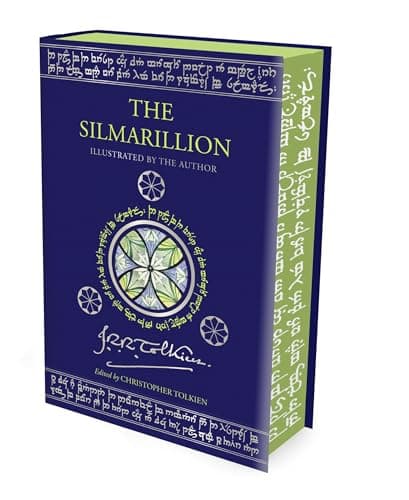
Should you read The Silmarillion?
What works
Recurring jewels, oaths, names, lineages, and doomed refuges create cumulative tragedy, while the creation music gives conflict a metaphysical shape without making evil necessary.
What may not work for you
The density of names and generations creates distance, women receive uneven attention, and editorial compression makes some great stories feel summarized rather than lived.
What may test your patience
The early cosmology and rapid genealogies are the steepest barrier; a map and family tree help until Beleriand's conflicts acquire continuity.
Does the ending reward the effort?
Yes. The fall of the great powers and the brief transition toward later ages make The Lord of the Rings feel like one surviving echo of a much larger loss.
Reading The Silmarillion closely
The Silmarillion moves from creation through the rebellion of the Noldor, wars against Morgoth, the Silmarils, Númenor, and the Rings of Power.
It reads like mythology and compressed history rather than a conventional novel. The names are dense, but recurring families, oaths, and tragedies build enormous force.
A mythology, not a prequel novel
Stories span ages and generations with a distant narrative voice and no single protagonist.
Making it approachable
Use maps, family trees, and the index; focus on major relationships before memorizing names.
Three useful comparisons
The Children of Húrin
The Children of Húrin expands one tragedy into a continuous, more emotionally accessible narrative.
Best for: Readers who know The Silmarillion or want a standalone entrance into Tolkien's tragic First Age.
Unfinished Tales of Númenor and Middle-earth
Unfinished Tales offers variant and extended material with visible editorial framing rather than one mythic sequence.
Best for: Readers already familiar with The Lord of the Rings and The Silmarillion who enjoy textual history alongside lore.
Fire and Blood
Fire & Blood also presents invented history, but emphasizes disputed sources, dynastic politics, and cynical ambiguity.
Best for: Targaryen enthusiasts and readers who enjoy dynastic pseudo-history, unreliable sources, and political succession more than close viewpoint fiction.
Make the next decision