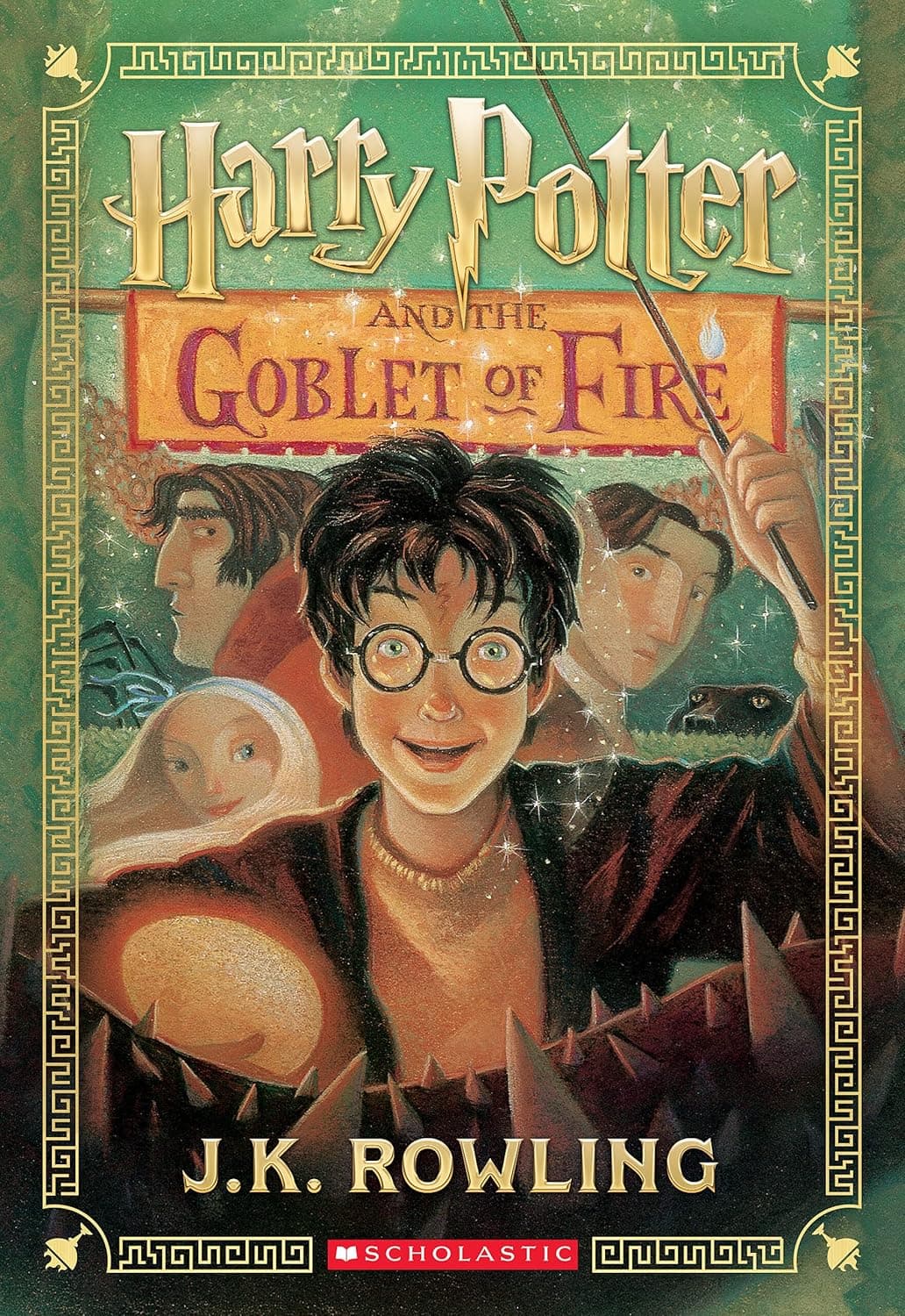
Should you read Harry Potter and the Goblet of Fire?
What works
The World Cup, visiting schools, tasks, press, and Ministry tensions expand the magical society while keeping Harry's unwanted participation emotionally central.
What may not work for you
The plan behind Harry's selection is improbably elaborate, and several tournament dangers are tolerated by adults because the plot needs them to be.
What may test your patience
The long opening before Hogwarts and the intervals between tasks make the book feel broader and less tightly controlled than Azkaban.
Does the ending reward the effort?
Yes. The final shift is genuinely consequential, refuses to reset the school year, and changes the moral contract of the series.
Reading Harry Potter and the Goblet of Fire closely
Harry Potter and the Goblet of Fire widens the series into large scale fantasy, tying a dangerous tournament to international wizarding politics and a rising, long shadowed threat. It is the book where Hogwarts feels firmly connected to a broader, unsettled magical world.
The worldbuilding stands out through vivid scenes at the Quidditch World Cup, the visiting schools, and the Ministry of Magic. Each Triwizard task has clear rules and limitations, so the suspense feels fair instead of random. Readers who enjoy this kind of immersive detail can explore our middle grade fantasy archive for more stories that make school settings feel big and alive.
Character arcs keep the spectacle grounded. Harry balances fear, frustration, and a stubborn sense of what is right. Hermione turns empathy and sharp thinking into real leverage, while Ron's jealousy and loyalty pull him in different directions. New mentors, rivals, and an intrusive magical press complicate life at Hogwarts just as danger outside the school grows.
Even with its length, the novel reads quickly because the chapters are punchy and the humor never fully disappears. Important clues are set up early, and the final act lands with real shock.
Three useful comparisons
Harry Potter and the Prisoner of Azkaban
Azkaban is tighter and more character-led; Goblet delivers greater scale and the decisive series transition.
Best for: Series readers wanting a darker but still self-contained school adventure with the richest character payoff of the early books.
Harry Potter and the Order of the Phoenix
Order of the Phoenix follows the political denial and trauma, with more anger and institutional conflict.
Best for: Committed series readers prepared for the longest, angriest volume and a sustained conflict with political authority.
The Hunger Games
The Hunger Games treats deadly competition as deliberate political spectacle and examines its coercion more directly.
Best for: Teens and adults wanting fast dystopian suspense, political spectacle, survival, violence, and a guarded protagonist.
Compare 10 more books like Harry Potter and the Goblet of Fire
Make the next decision
Reading and buying guides featuring Harry Potter and the Goblet of Fire
Series buying note
Would the collection be the better buy?
These are useful only when you want several books in the same run. The notes below spell out what each package includes and, just as importantly, what it leaves out.

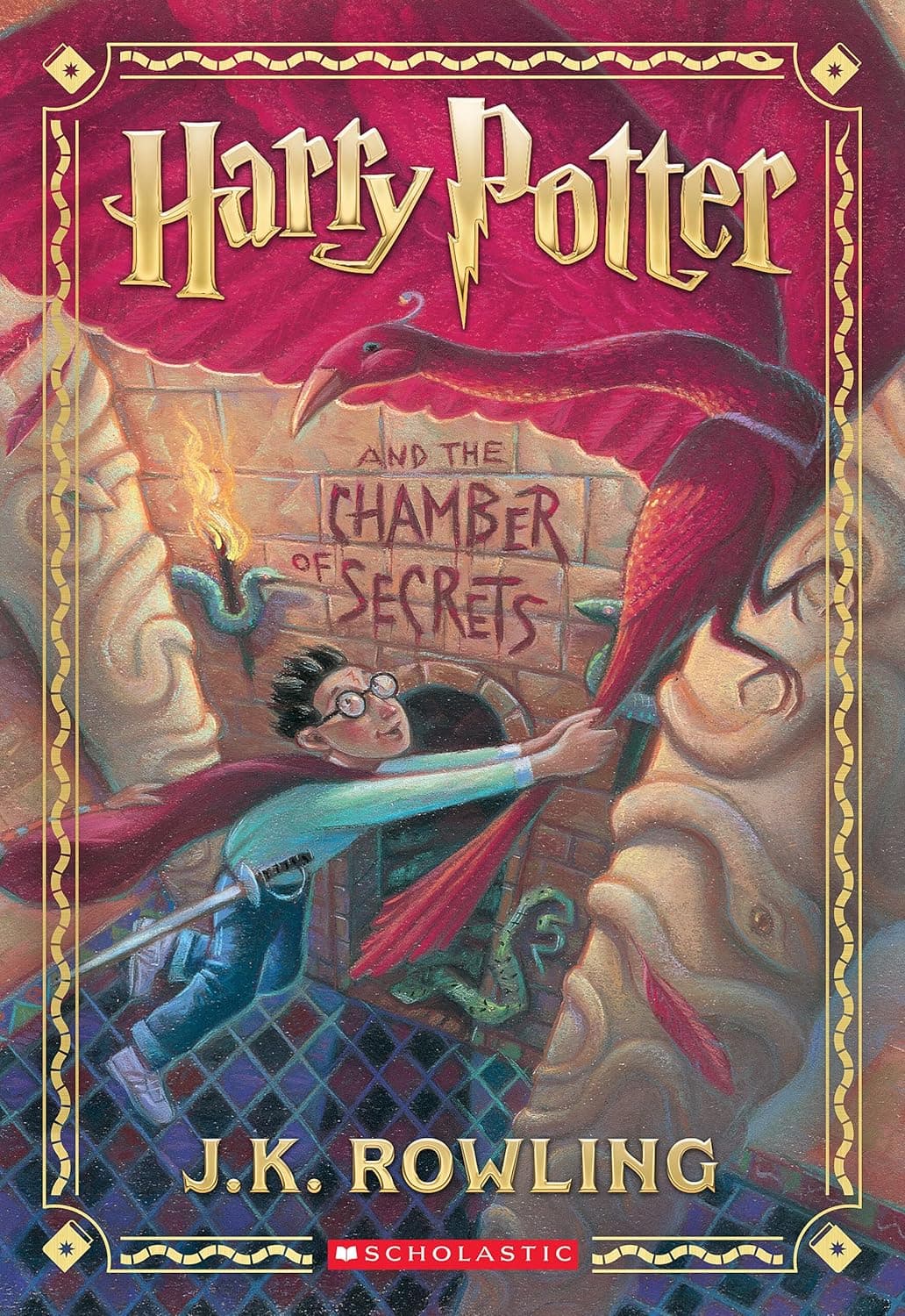
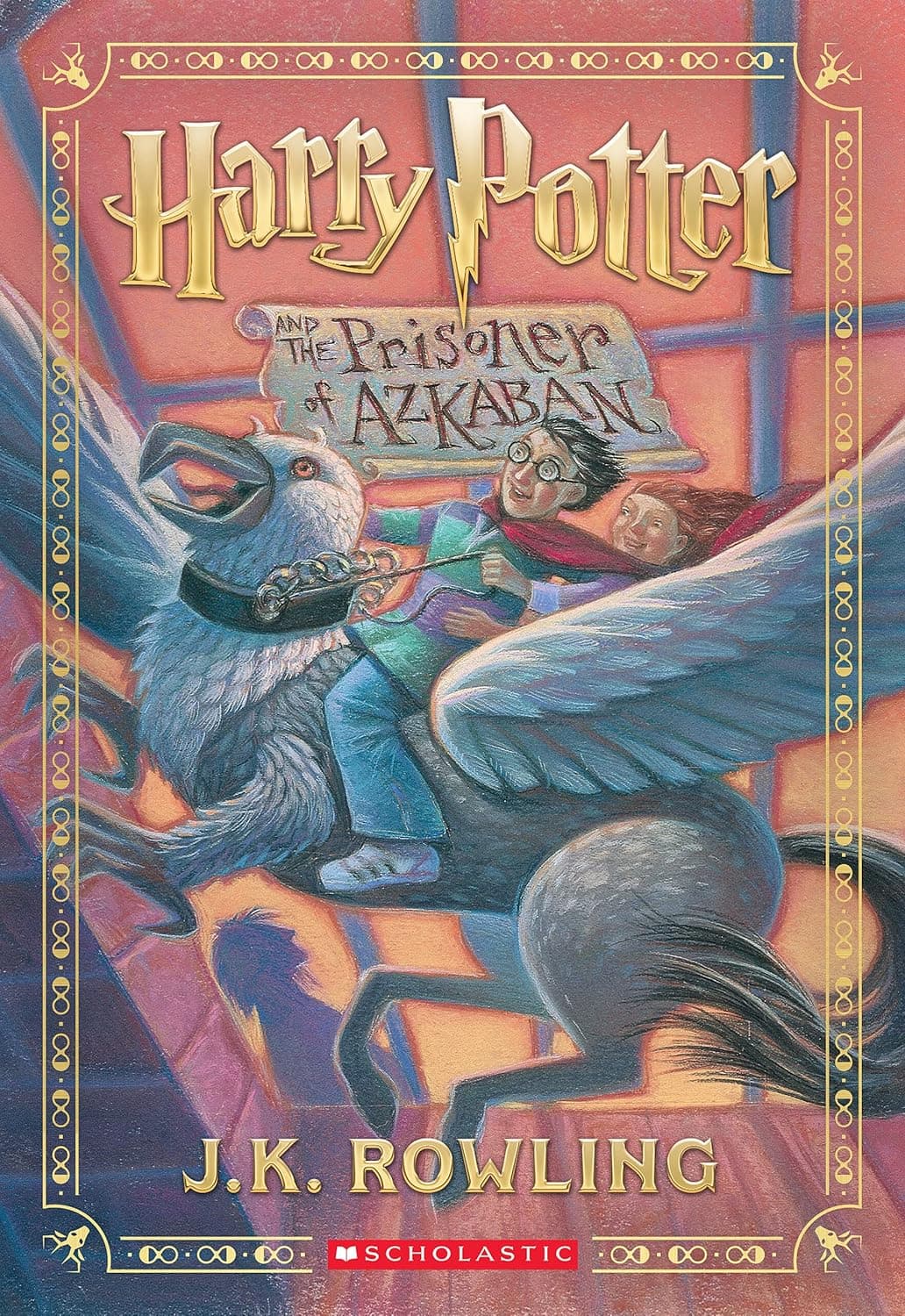
Seven-book hardcover box set
Harry Potter Hardcover Boxed Set
All seven main novels are here in durable hardcovers, so there is no edition switching halfway through Harry's school years.
Included: Harry Potter and the Philosopher's Stone, Harry Potter and the Chamber of Secrets, Harry Potter and the Prisoner of Azkaban, Harry Potter and the Goblet of Fire, Harry Potter and the Order of the Phoenix, Harry Potter and the Half-Blood Prince, Harry Potter and the Deathly Hallows
Our buying note: The set is heavy and costs more than the paperback box. The U.S. edition calls book one Harry Potter and the Sorcerer's Stone; our review uses the U.K. title, Philosopher's Stone. Companion books such as The Tales of Beedle the Bard are not included.