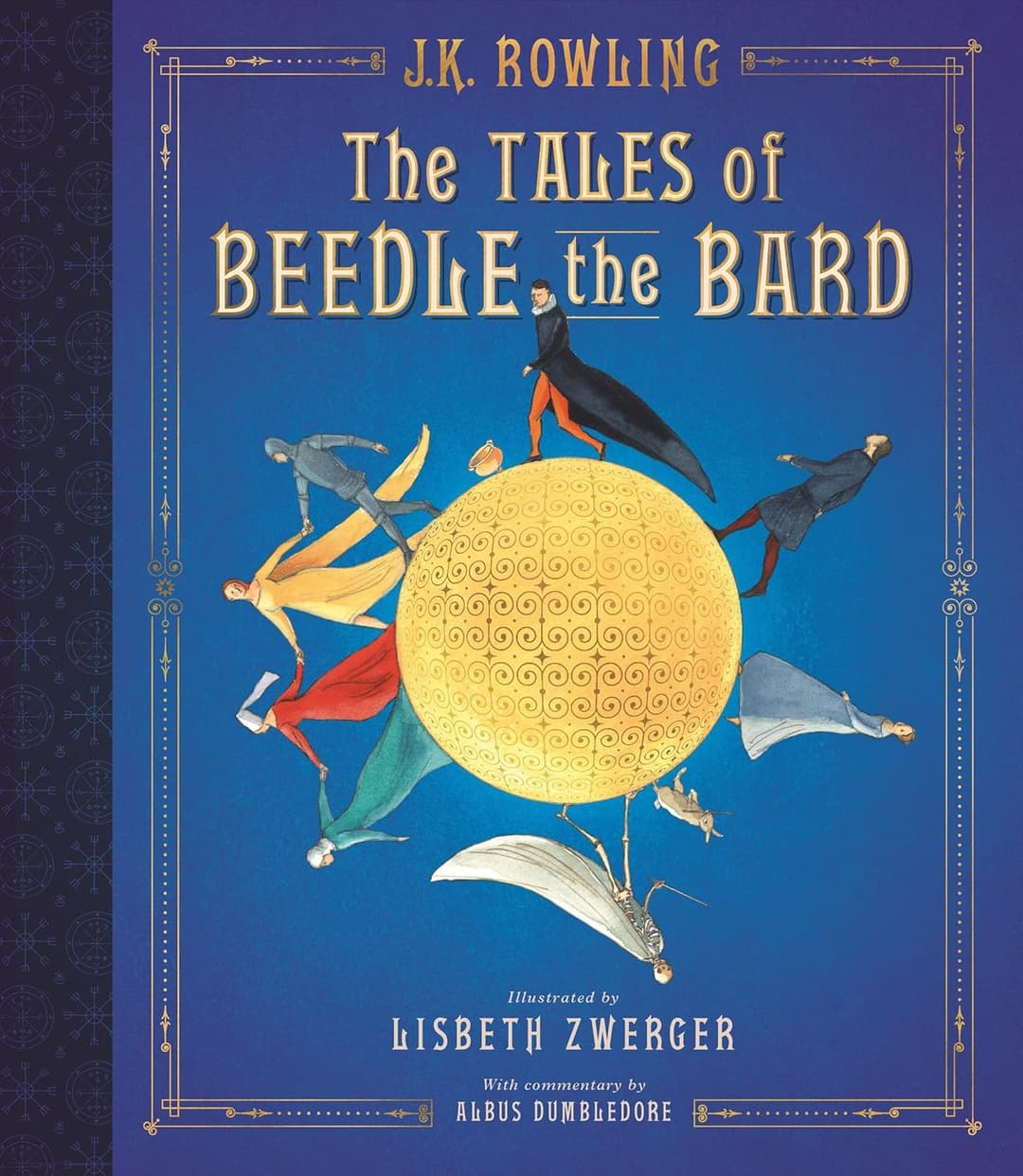
Should you read The Tales of Beedle the Bard?
What works
Each tale has a distinct moral mechanism, and Dumbledore's notes complicate the apparent lesson through history, censorship, or social context.
What may not work for you
The collection is very short, and the commentary sometimes explains implications the tales communicate adequately on their own.
What may test your patience
There is little drag; the main interruption is moving from a compact tale into longer explanatory notes after its emotional effect has landed.
Does the ending reward the effort?
Yes. The final tale carries the greatest series relevance and still stands independently as a clear meditation on mortality and power.
Reading The Tales of Beedle the Bard closely
The Tales of Beedle the Bard contains five fairy tales from the wizarding world, followed by notes attributed to Albus Dumbledore. Unlike the catalog format of Fantastic Beasts, these are complete little stories with jokes, cruelty, reversals, and morals that do not always flatter magical society.
The tales are simple without being bland. The best of them let greed or fear trap a character through a choice that feels inevitable in retrospect. Their old-story cadence also makes the final tale about three brothers feel at home outside the scene in which Harry first hears it.
Dumbledore's commentary adds history, censorship, and disagreement about what each story means. It occasionally explains a lesson that was already clear, but it also shows how prejudice can survive in the way a culture teaches children.
This is a very short companion, not a new Harry Potter adventure. It works best for readers who want an in-world artifact that has value beyond trivia.
Why the tales work
Each story has its own trap, reversal, and moral rather than existing only to supply lore.
Dumbledore's notes reveal how wizarding prejudice and censorship shape the stories children inherit.
The collection is brief enough to read in one sitting, though that brevity may disappoint anyone expecting a full novel.
Three useful comparisons
Fantastic Beasts and Where to Find Them
Fantastic Beasts offers catalog lore; Beedle provides actual stories and stronger themes.
Best for: Harry Potter fans who enjoy in-world artifacts, creature lore, and quick browsing more than story.
Tales from the Perilous Realm
Tolkien's collection is longer, linguistically richer, and more varied in tone, with less dependence on another series.
Best for: A substantial collection of Tolkien's shorter, stranger, and often funnier work.
The Father Christmas Letters
The Father Christmas Letters are more intimate and visually playful, built from family tradition rather than public folklore.
Best for: Families, collectors, and Tolkien readers wanting a warm visual holiday book rooted in real correspondence.
Make the next decision