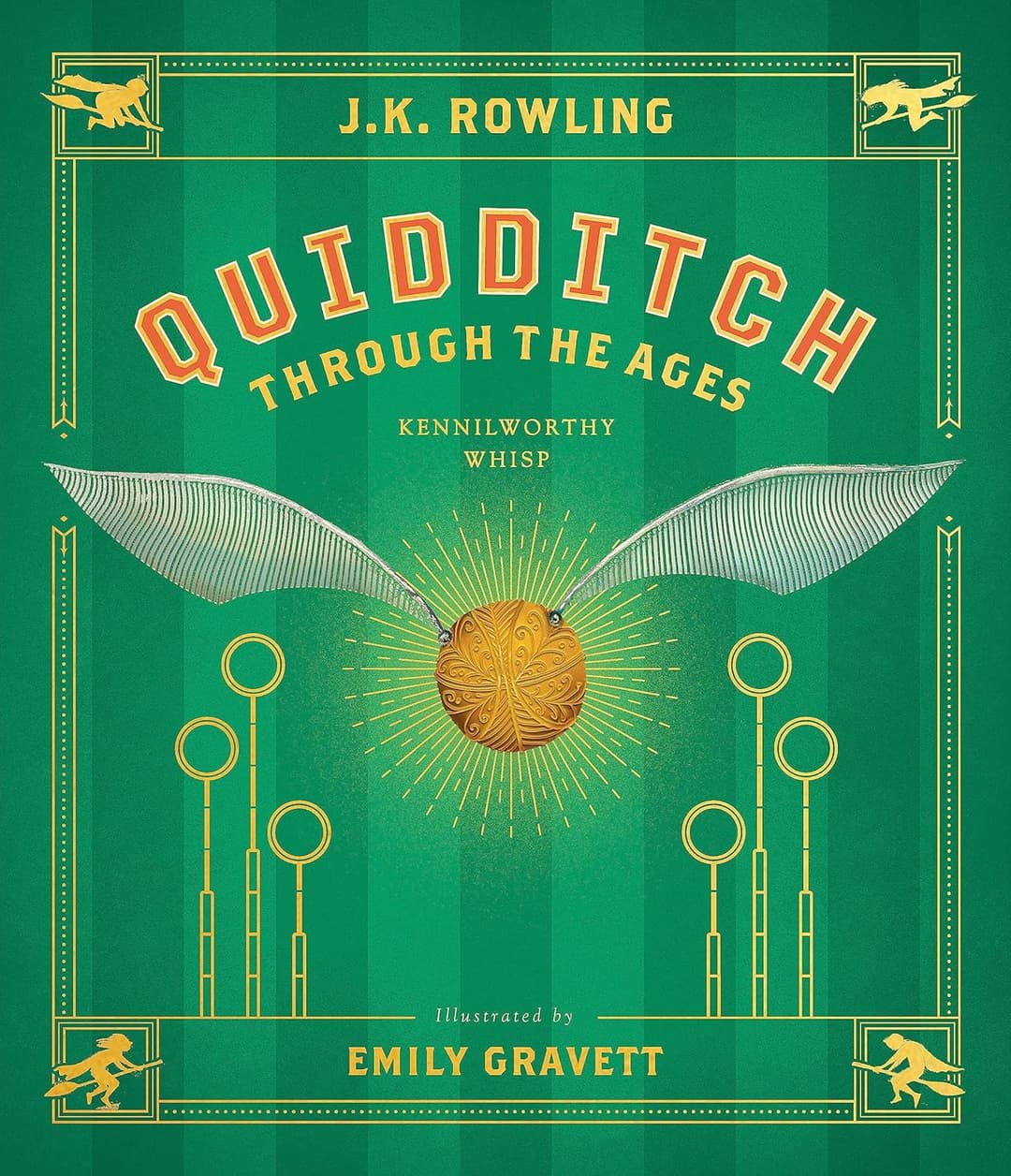
Should you read Quidditch Through the Ages?
What works
The evolution of balls, fouls, positions, teams, and international variants makes magical sport feel historically improvised rather than delivered fully formed.
What may not work for you
The faux-history voice keeps characters at a distance, and lists of teams or rule changes will matter mainly to readers already invested in Quidditch.
What may test your patience
Regional teams and technical rules dominate the later sections; casual fans may prefer to browse rather than read straight through.
Does the ending reward the effort?
The book closes as a reference work, not a story, and succeeds by leaving the game with more texture than emotional consequence.
Reading Quidditch Through the Ages closely
Quidditch Through the Ages is presented as a Hogwarts Library handbook tracing the development of Quidditch, its equipment, rules, and teams. It is an in-universe reference work rather than a conventional Harry Potter story.
The structure keeps the avalanche of lore easy to follow. Early chapters outline the evolution of broomsticks and early flying games, then narrow in on Queerditch Marsh, where modern Quidditch takes shape with the Quaffle, Bludgers, and the Golden Snitch. Position breakdowns, lists of fouls, pitch diagrams, and mock Daily Prophet clippings all work together to make wizarding matches feel as organized as any Muggle league. Curious readers can also visit the official Wizarding World history of Quidditch feature to compare timelines and extra details.
The tone is brisk and witty without losing its reference-book feel. Dumbledore's foreword sets the mood, and the faux academic voice balances jokes with worldbuilding. It works both as a Harry Potter companion and as a short history of wizarding athletics.
Team profiles and World Cup notes make the sport feel global, but the handbook format means there is no sustained character arc. Start with the main novels for a story. Use the Harry Potter reading-order guide to place this compact piece of worldbuilding among the other companion books.
What kind of Harry Potter book is this?
It is one of the Hogwarts Library companion books and reads as a fictional reference text, not as another installment in Harry’s story.
The focus stays on broom development, the sport’s rules, famous teams, and historical anecdotes.
Reader fit and companion books
This is most useful for readers who already know the wizarding world and want sports lore in a short handbook format.
Compare the other Hogwarts Library volumes, Fantastic Beasts and Where to Find Them and The Tales of Beedle the Bard.
Three useful comparisons
Fantastic Beasts and Where to Find Them
Fantastic Beasts is more fragmented and creature-focused; Quidditch has a clearer historical line.
Best for: Harry Potter fans who enjoy in-world artifacts, creature lore, and quick browsing more than story.
The Tales of Beedle the Bard
Beedle offers complete fairy tales and more thematic substance.
Best for: Harry Potter readers wanting short magical folktales, moral ambiguity, and an in-world artifact with genuine narrative value.
Fire and Blood
Fire & Blood is a much darker, larger fictional history that uses source disagreement as part of its narrative.
Best for: Targaryen enthusiasts and readers who enjoy dynastic pseudo-history, unreliable sources, and political succession more than close viewpoint fiction.
Make the next decision