Science author starting guide
Best Carl Sagan Book to Start With
Cosmos is the broadest welcome, but it is not automatically the best book for every reader. Sagan wrote for people drawn to skepticism, planetary futures, religion, evolution, and fiction as well as astronomy.
Best overall starting point
Start with Cosmos for range, or The Demon-Haunted World for method
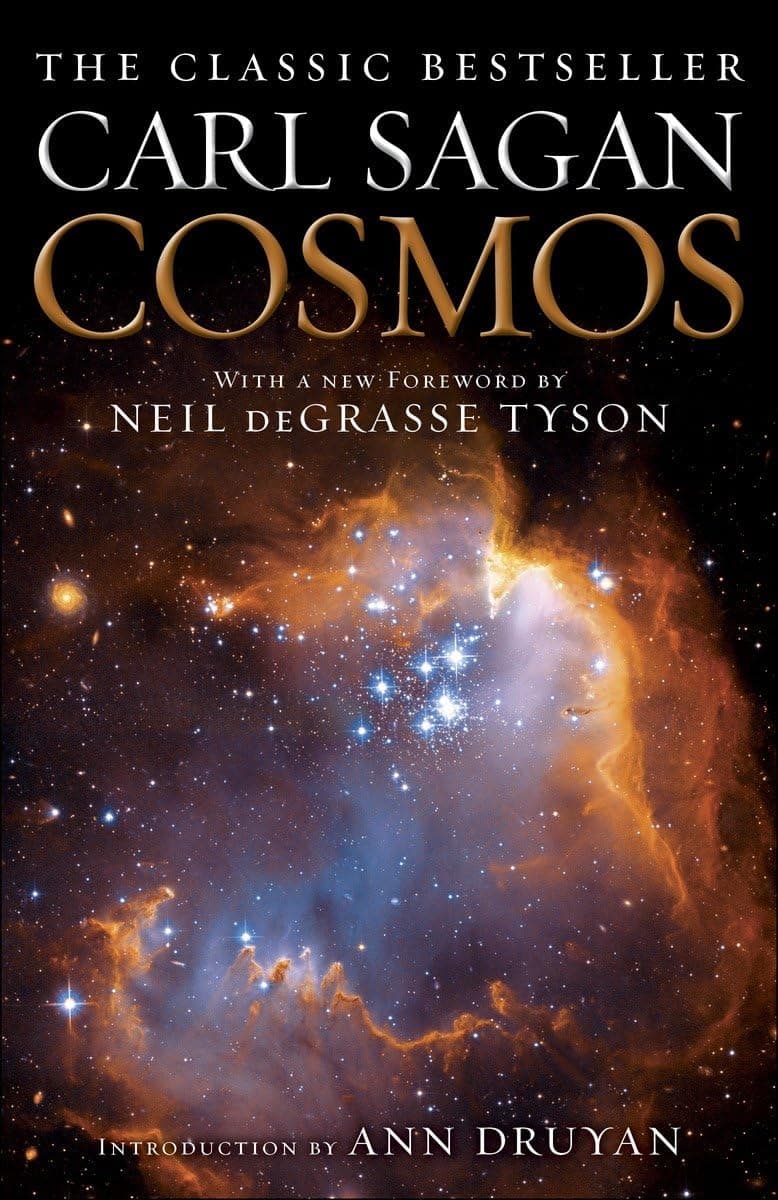
Cosmos is the best general introduction because it joins astronomy, history, evolution, scientific error, and humanity's place in the universe through memorable narrative rather than a textbook sequence. Choose The Demon-Haunted World instead if your main interest is how to evaluate claims and resist pseudoscience. Pale Blue Dot is the strongest next book for readers already convinced by the science who want Sagan's argument about exploration, responsibility, and the long future of civilization.
Carl Sagan is often reduced to wonder, as if his books exist to make galaxies feel beautiful. Wonder is present, but it is disciplined. He repeatedly asks what evidence supports a claim, how an image was obtained, what a past thinker got wrong, and why admitting uncertainty is more durable than pretending to certainty. That combination is why his older books remain readable even when a planetary detail or mission status has been updated. The facts matter, and so does the public habit used to revise them.
A starting guide should therefore match the question a reader brings. Cosmos asks what sort of universe produced minds capable of studying it. The Demon-Haunted World asks how those minds can protect themselves from deception. Pale Blue Dot asks what responsibilities follow from seeing Earth at planetary scale. The Varieties of Scientific Experience asks how scientific and religious claims meet. Contact turns several of those questions into a novel. Starting with the right one prevents a broad catalog from looking like eight versions of the same astronomy lesson.
Eight entry points
Choose a Carl Sagan book by the question you want to pursue
The order begins with the most useful general introductions, then moves toward specialized essays, intellectual history, and fiction.
1
Cosmos
Best overall
Written alongside the television series, Cosmos travels from the scale of the universe to the history of scientific ideas, the evolution of life, planetary exploration, and the danger created by human power without human perspective. Sagan uses historical episodes as arguments about method, not decorative anecdotes. The breadth is enormous, yet each chapter is built around images and questions a general reader can hold.
Choose it if: you want one book that demonstrates Sagan's range and can tolerate a few scientific details being products of its 1980 publication moment.
2
The Demon-Haunted World
Best for critical thinking
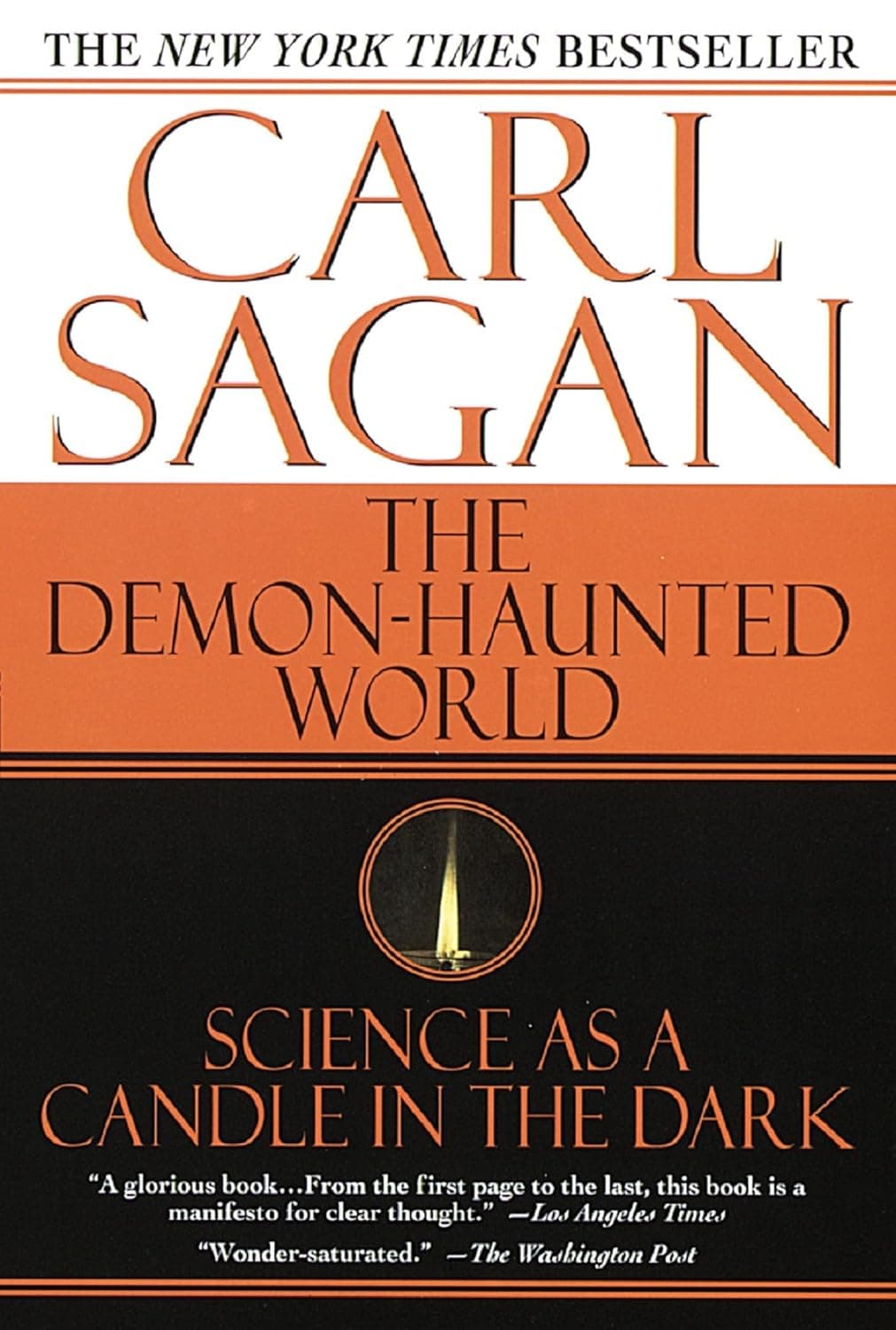
This is Sagan's most direct defense of evidence, skepticism, education, and the tools ordinary people can use when claims are emotionally appealing but poorly supported. The famous baloney-detection kit is not a license for reflexive cynicism. It is a set of habits that includes alternative hypotheses, independent confirmation, quantitative reasoning, and a willingness to test preferred beliefs too.
Choose it if: misinformation, conspiracy, pseudoscience, and the civic value of scientific literacy matter more to you than a tour of planets and stars.
3
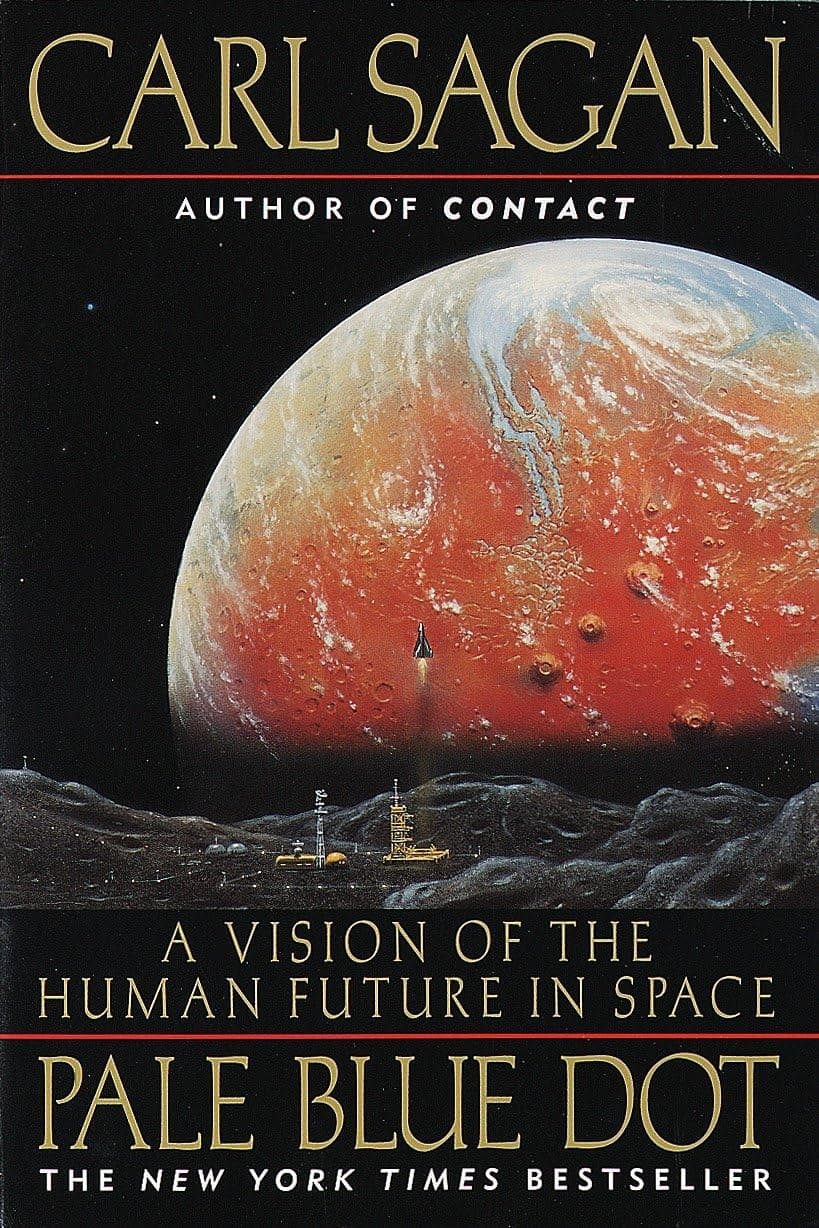
Pale Blue Dot
Best for space and humanity's future
Beginning from the distant Voyager image of Earth, Sagan connects planetary science with humility, exploration, risk, and the long-term survival of human civilization. The book is less introductory than Cosmos because it assumes the reader already accepts the value of the cosmic view. Its strongest passages keep technological ambition tied to ethical scale rather than treating expansion as destiny.
Choose it if: you want space exploration to lead toward a serious argument about responsibility, fragility, and the future rather than a list of missions.
4
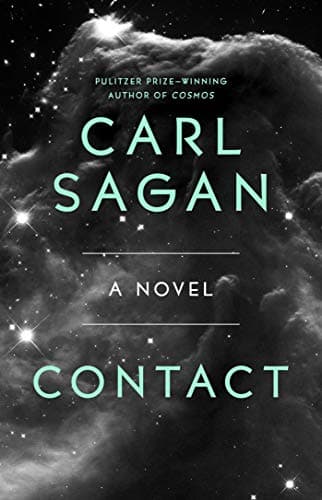
Contact
Best first Sagan for fiction readers
A signal from beyond Earth places science, politics, religion, media, engineering, and private grief inside one narrative problem. The novel allows uncertainty to operate through character and institution rather than essay alone. Readers who know only the film will find a different scale and emphasis on the page, including more room for the international and philosophical consequences of verification.
Choose it if: a story will hold your attention better than exposition, and you want scientific discovery to remain entangled with human institutions.
5
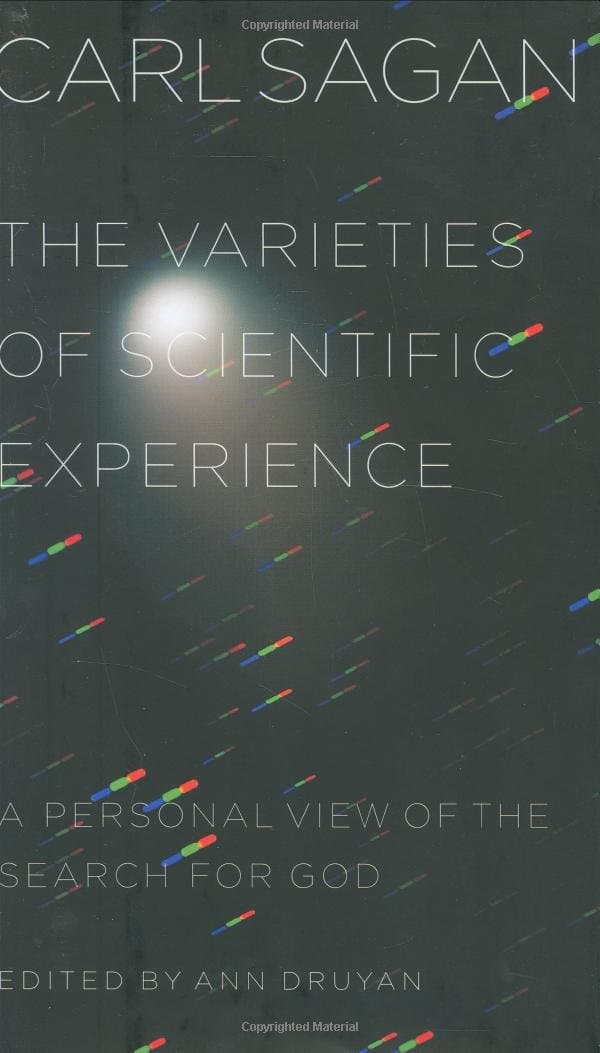
The Varieties of Scientific Experience
Best for science and religion
Ann Druyan edited these lectures for posthumous publication. Sagan considers natural theology, the scale of the universe, ideas of divinity, extraterrestrial life, and the moral use of knowledge. The lecture origins make the prose approachable, but the sequence is narrower and more argumentative than Cosmos. It works best when the reader wants the boundary questions rather than a general science survey.
Choose it if: you are specifically interested in how religious language, evidence, awe, and cosmology can be discussed without flattening disagreement.
6
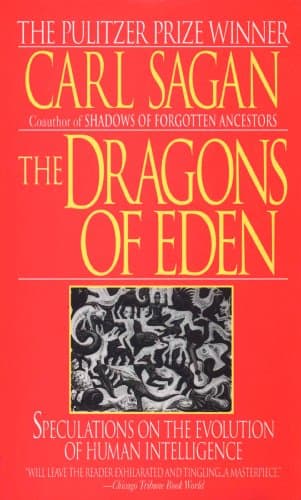
The Dragons of Eden
Best for mind and evolution
Sagan explores the evolution of human intelligence, brain structure, dreams, language, and the relationship between biological inheritance and culture. It won the Pulitzer Prize, but portions reflect the neuroscience available in the 1970s and should be read historically rather than as a current introductory textbook. Its lasting appeal lies in the attempt to connect scales of explanation without pretending the mind is simple.
Choose it if: you enjoy intellectual history and can pair an older synthesis with newer neuroscience when factual currency matters.
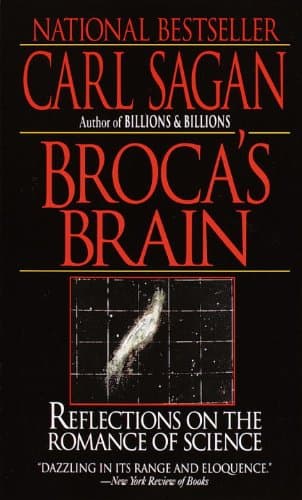
7
Broca's Brain
Best essay collection
These essays move through astronomy, scientific history, popular error, extraterrestrial speculation, and the responsibilities of inquiry. The variety makes it easy to sample, though it lacks the satisfying sweep of Cosmos. It is a good place to see Sagan change scale and tone across separate arguments, including subjects that later became central to his public work.
Choose it if: you prefer one question per sitting and want to browse Sagan's interests without committing to a single sustained thesis.
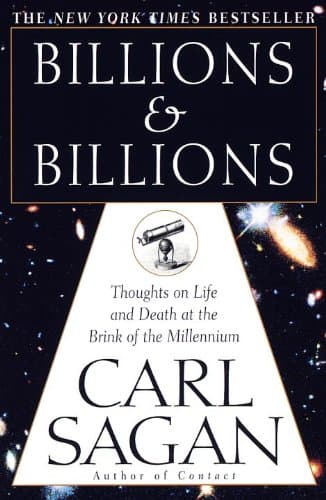
8
Billions and Billions
Best late collection
Sagan's final essays address large numbers, environmental risk, public policy, abortion, war, love, illness, and mortality. The range becomes increasingly personal without abandoning the demand for reasons. Because it includes reflections from the end of his life, the book has greater force after the reader already knows the public scientific voice heard in Cosmos or Demon-Haunted World.
Choose it if: you have read one earlier book and want science, ethics, and personal finitude placed in the same conversation.
Fast choice
The four best Sagan starting points
Choose by purpose. The books overlap in worldview, but they do not perform the same job.
| Book | Central question | Accessibility | Best next book |
|---|---|---|---|
| Cosmos | Where do we fit in the universe? | Very accessible | Pale Blue Dot |
| The Demon-Haunted World | How should we test claims? | Accessible | Cosmos |
| Pale Blue Dot | What should a spacefaring future value? | Accessible with some prior interest | Cosmos if not already read |
| Contact | What would verified contact do to society? | Accessible fiction | The Varieties of Scientific Experience |
Has the science in Cosmos become outdated?
Some mission knowledge, planetary details, cosmological measurements, and expectations about future exploration have changed since 1980. Read a current annotated edition when available and verify precise numbers before using the book as a contemporary reference. That is not a special failure. A scientific book that remains untouched by later discovery would be evidence of a field that stopped moving.
The durable part of Cosmos is the relationship it models between evidence and imagination. Sagan explains how an observation supports a conclusion, shows earlier errors without contempt for inquiry, and connects technical knowledge to the political danger of self-destruction. Those habits survive updates to the numbers.
Why skepticism is not the opposite of wonder
The Demon-Haunted World is sometimes quoted as ammunition against people rather than bad methods. Sagan's fuller position is more demanding. Humans are vulnerable to pattern, authority, hope, fear, and memory, including humans who identify as skeptics. A useful test must therefore be applied to one's own preferred explanation and must allow evidence to change the conclusion.
Cosmos supplies the emotional counterpart. Reality does not become smaller when unsupported claims are removed. A universe discovered through patient instruments, disputed measurements, and revisable models can be more astonishing because it resists personal convenience. Read the two books together if either wonder or skepticism has started to feel like a performance.
The best Sagan route for four kinds of reader
A general science reader should move from Cosmos to Pale Blue Dot and then Demon-Haunted World. A reader focused on misinformation should reverse the first and third positions. A science-fiction reader can begin with Contact, continue with Cosmos, then read Varieties to see how Sagan handles similar boundary questions outside a novel.
A reader interested in Sagan himself should still avoid beginning with late personal essays. Billions and Billions becomes more moving when the confident public teacher is already familiar. Follow it with an edition of correspondence or biography rather than treating every first-person passage as a complete private record.
Which edition should you buy?
For illustrated works such as Cosmos and Pale Blue Dot, format matters. Confirm whether an edition includes the images and whether they reproduce clearly. An inexpensive digital edition may be excellent for searchable prose but frustrating for photographs, diagrams, and captions. Used hardcovers can offer a better visual experience if the binding and color pages remain sound.
For posthumous works, check the editor. The Varieties of Scientific Experience identifies Ann Druyan's role because the published book derives from lectures rather than a manuscript prepared by Sagan as a conventional volume. That context should be visible, not treated as trivia.
Quick answers
Questions readers ask before buying
What Carl Sagan book should I read first?
Start with Cosmos for the broadest introduction. Start with The Demon-Haunted World instead if critical thinking and evaluating claims are your main interests.
Is Cosmos still worth reading?
Yes, for its history, explanatory method, and connection between scientific knowledge and human responsibility. Check current sources for exact scientific figures that have changed since 1980.
Did Carl Sagan write fiction?
Yes. Contact is his novel and the best entry for readers who want first contact, institutions, religion, and evidence explored through character and plot.
Which Sagan book is about pseudoscience?
The Demon-Haunted World is the clearest choice. It examines unsupported claims and offers practical habits for skeptical inquiry without arguing for reflexive cynicism.
What should I read after Cosmos?
Choose Pale Blue Dot for space exploration and humanity's future, or The Demon-Haunted World for scientific literacy and the evaluation of claims.
Sources
Sources for this guide
Titles, publication years, and official descriptions were checked against the Carl Sagan Portal and publisher catalogs. Advice about outdated details is editorial and reflects the normal need to pair older science writing with current reference material.
Keep reading