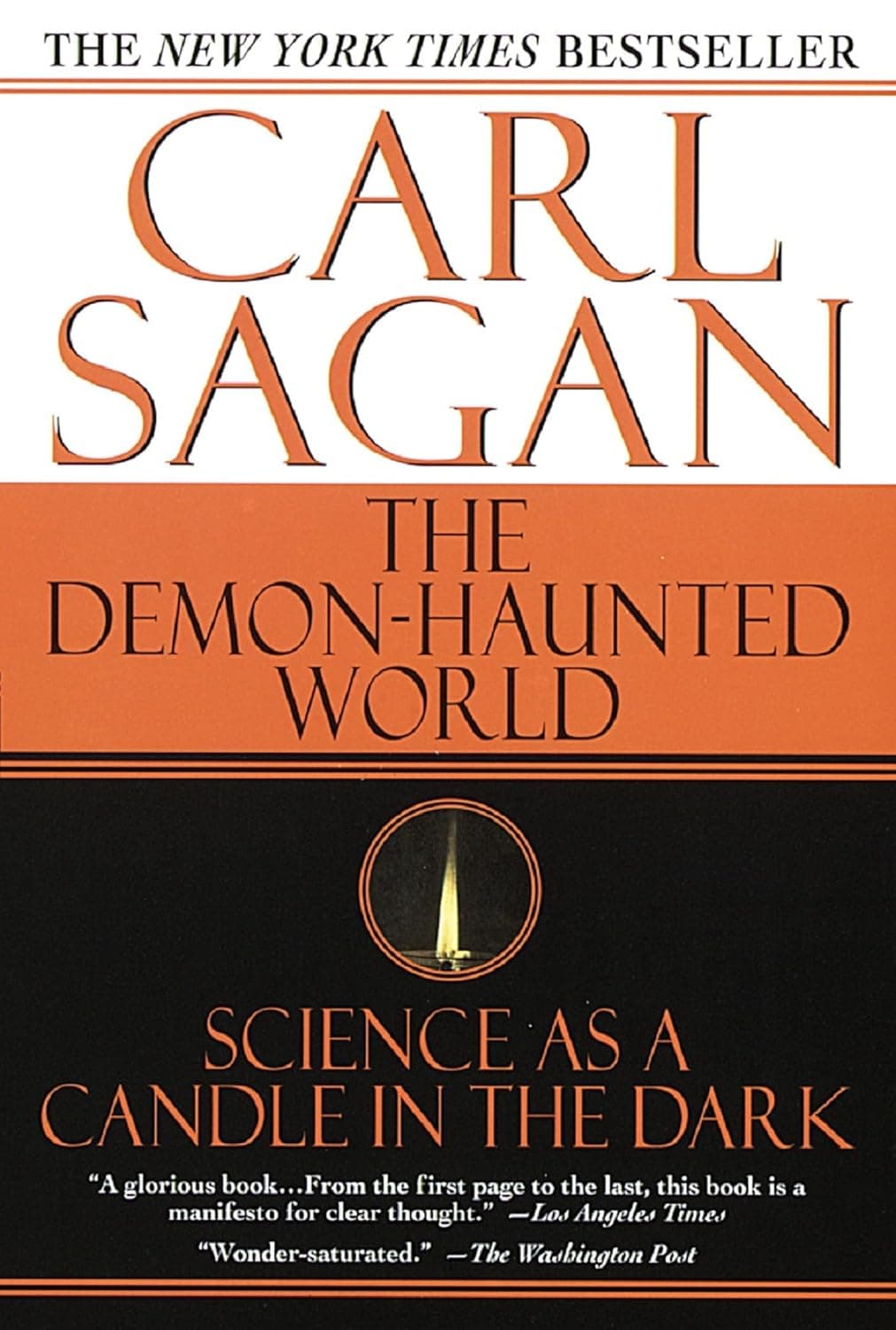
Should you read The Demon-Haunted World?
What works
The baloney-detection kit turns scientific habits into questions ordinary readers can use when confronting extraordinary claims, advertising, or political manipulation.
What may not work for you
Some examples and media references are dated, and the repeated encounters with pseudoscience occasionally make the middle feel like a catalogue of similar errors.
What may test your patience
The case studies of alien abduction and paranormal belief run longer than the core reasoning requires, especially once Sagan's standard of evidence is clear.
Does the ending reward the effort?
Yes. The closing concern for education and democracy shows why skepticism matters beyond winning arguments and gives the book lasting civic weight.
Reading The Demon-Haunted World closely
The Demon-Haunted World is Carl Sagan's plain language guide to skepticism and critical thinking. Instead of a dry manual, it reads like a conversation about how to tell sound science from comforting stories and confident nonsense.
Sagan uses essays, case studies, and personal memories to explore UFO sightings, miracle cures, conspiracy theories, and everyday misunderstandings. He shows how the scientific method works in practice by focusing on habits like independent confirmation, careful hypothesis testing, and honest uncertainty.
One of the book's most memorable contributions is the "baloney detection kit" - a set of questions and tools readers can apply to extraordinary claims. Sagan also outlines common logical fallacies and explains how media, fear, and poor education can make people vulnerable to bad arguments.
Three useful comparisons
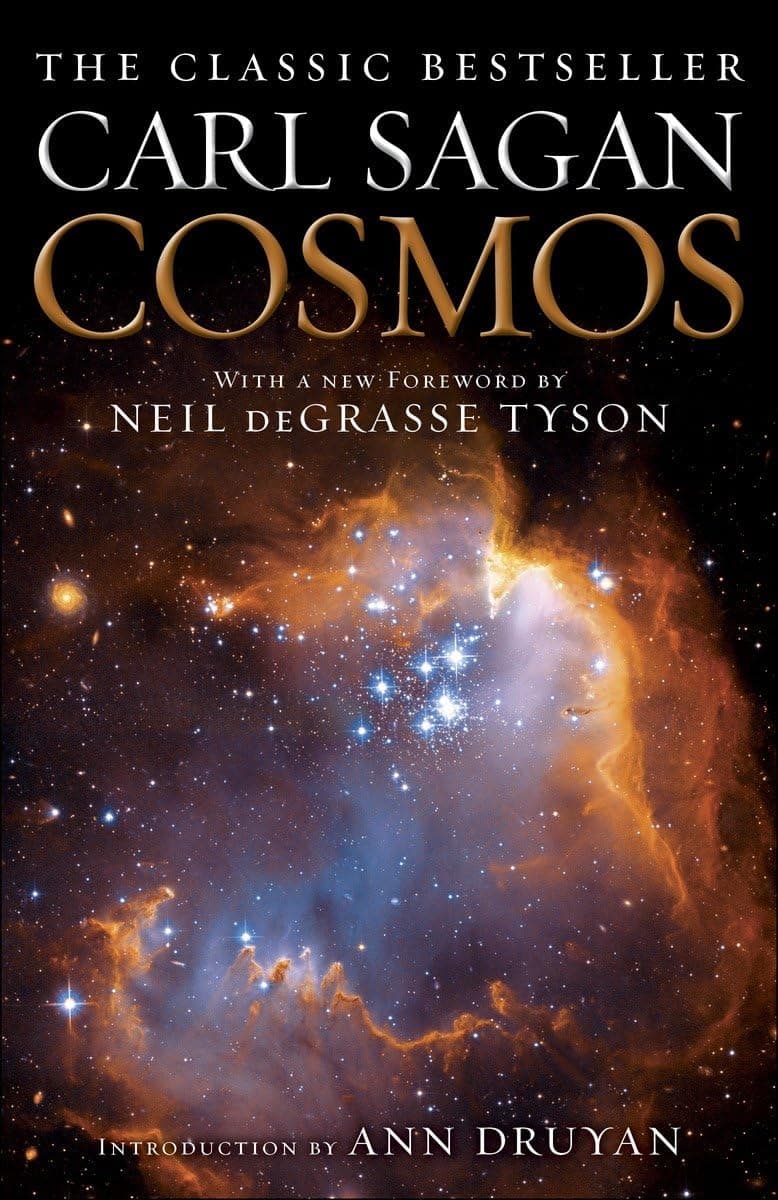
Cosmos
Cosmos builds wonder through astronomy, evolution, biography, and scientific history. The Demon-Haunted World focuses on how to protect that inquiry from bad evidence and manipulation. Choose Cosmos for the invitation, then this book for the habits needed to keep the invitation honest.
Best for: Curious general readers and older teens wanting a humane, accessible route into astronomy, scientific history, and cosmic perspective.
As an Amazon Associate, I earn from qualifying purchases.
Broca's Brain
Broca's Brain shows an earlier, less unified version of Sagan's skeptical practice across scientific history, planetary essays, and fringe claims. It is more varied and more dated. Choose it after this book when you want to see the method applied to particular artifacts and controversies.
Best for: Readers who already enjoy Sagan and want essays on scientific history, planetary exploration, pseudoscience, intelligence, and the obligation to explain research to the public.
As an Amazon Associate, I earn from qualifying purchases.
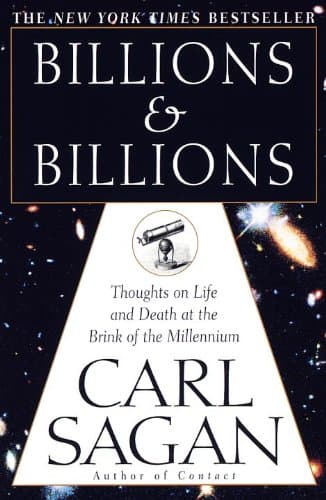
Billions and Billions
Billions and Billions assumes the value of evidence and applies it to environmental risk, war, public ethics, illness, and death. It offers fewer reusable skeptical tools, but much more personal exposure. Read it later to see whether Sagan's standards survive the questions closest to his own life.
Best for: Readers who know Sagan's public voice and want a humane final collection about numbers, climate, war, ethics, love, illness, and death rather than another general introduction to astronomy.
As an Amazon Associate, I earn from qualifying purchases.
Make the next decision