What to read next
10 books like The Forever War
Relativity is not decorative science here. If that is what you want more of after The Forever War, these recommendations preserve that appeal in different ways, without pretending every similar book offers the same experience.
Start with our The Forever War review by Joe Haldeman.

Choose by reading mood
Where to start
For the fastest read
Timeline
BriskFor the gentlest option
House of Suns
GentleFor minimal romance
Dune
MinimalFor the easiest entry
Children of Time
ModerateThe full shortlist
Why each book belongs here
Each match is judged against The Forever War, not merely placed beside it because the books share a broad genre label.
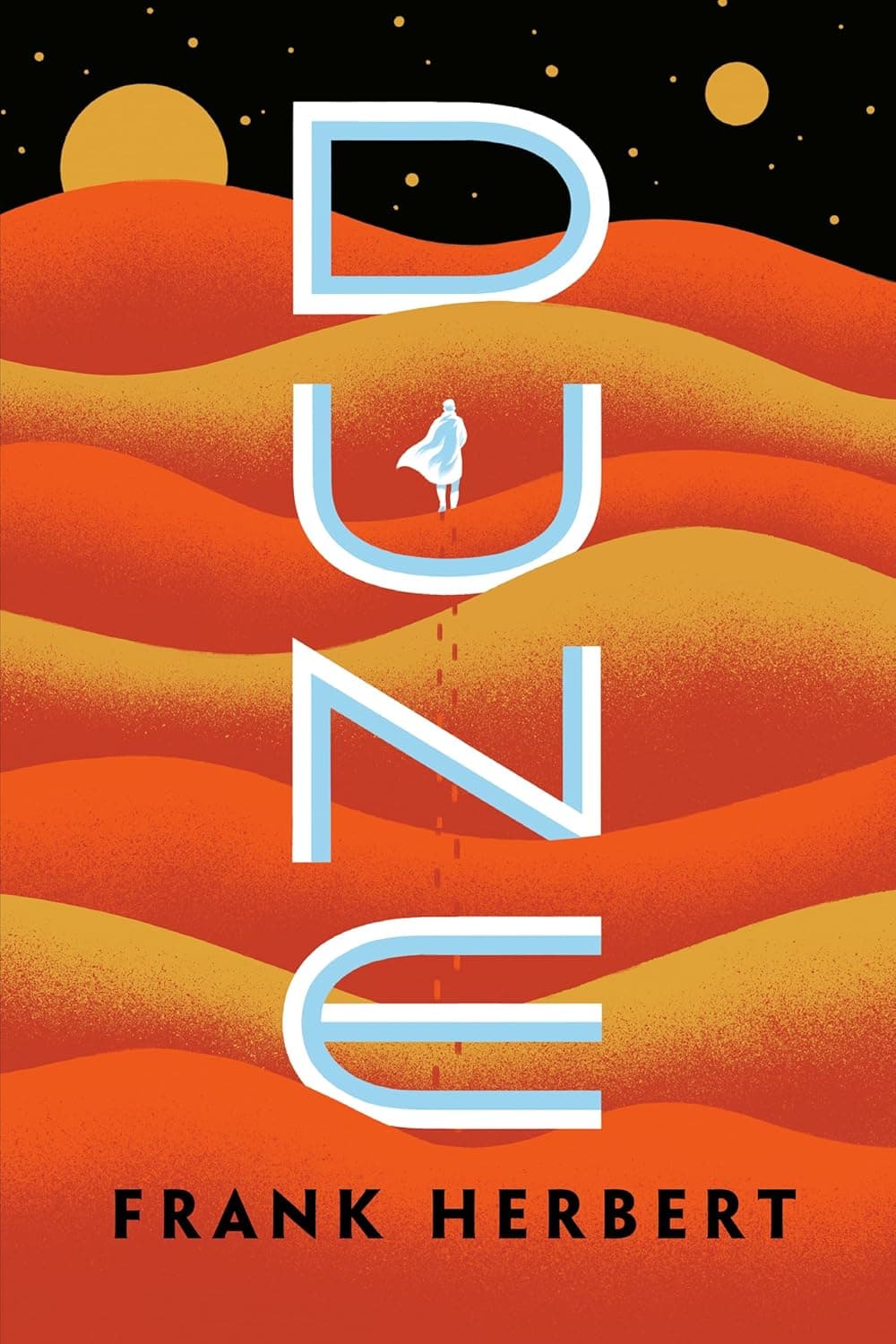
Dune
- Shared ground
- Both books reward attention to voice, social context, and the consequences of mistaken judgment.
- What changes
- Dune treats war through dynasties, religion, ecology, and the danger of heroic myth. The Forever War stays with an ordinary conscript who has almost no control over the cause he serves. Choose Haldeman for a leaner, more personal account of institutions consuming individual time.
- Best for
- Readers willing to trade immediate intimacy for political, ecological, and religious ideas that become more connected with every chapter.
- Pace Balanced
- Darkness Moderate
- Romance Minimal
- Difficulty Demanding
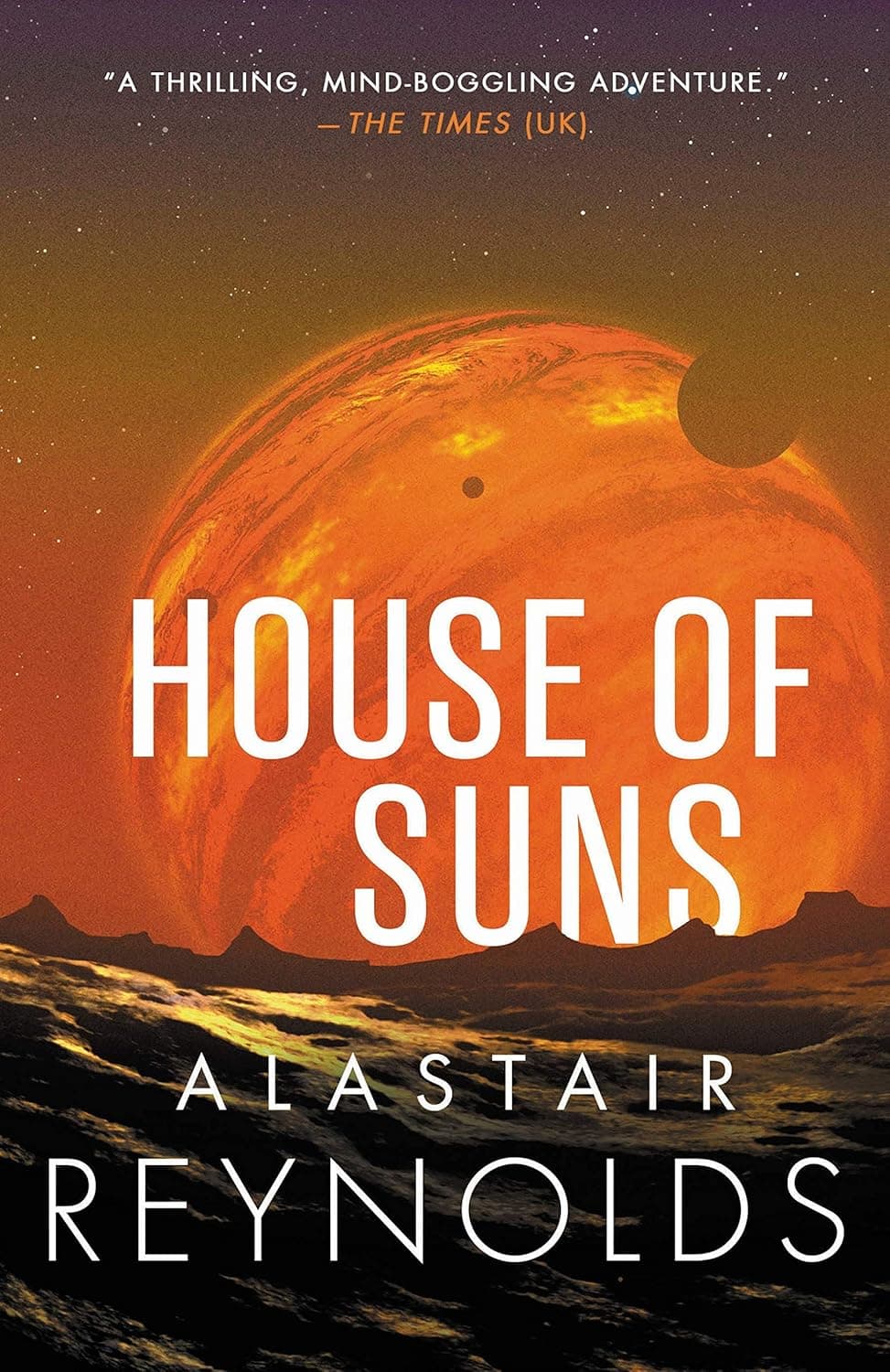
House of Suns
- Shared ground
- Both books make scientific constraints part of the problem rather than background decoration.
- What changes
- House of Suns also makes relativistic travel emotionally consequential, but its immortal clones think across millions of years and pursue a cosmic mystery. The Forever War is narrower and harsher. Its time scale matters because each return home erases another part of one soldier's cultural identity.
- Best for
- Readers wanting an accessible standalone epic with deep time, clones, machine people, romance, pursuit, and galactic mystery.
- Pace Measured
- Darkness Gentle
- Romance Minimal
- Difficulty Moderate
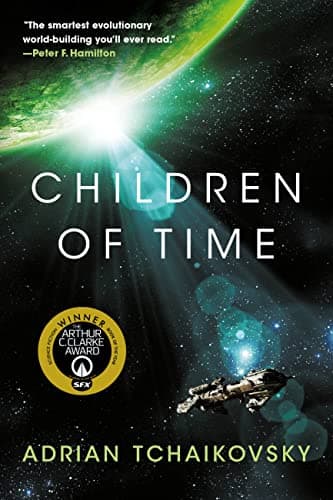
Children of Time
- Shared ground
- Both books make scientific constraints part of the problem rather than background decoration.
- What changes
- Children of Time follows civilizations developing across deep time and finds exhilaration in radically different intelligence. Haldeman focuses on what such temporal distance does to one human relationship. Read it when you want the science of long voyages to produce loss, dislocation, and bitter institutional irony.
- Best for
- Readers who like big evolutionary ideas, nonhuman viewpoints, and long time scales more than a conventional hero's journey.
- Pace Balanced
- Darkness Gentle
- Romance Minimal
- Difficulty Moderate
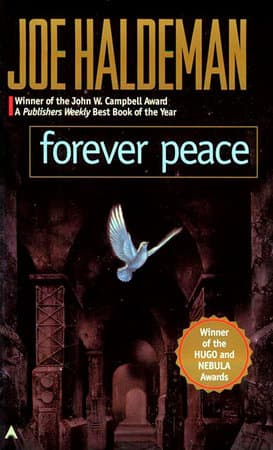
Forever Peace
- Shared ground
- Both books come from Joe Haldeman, and they make scientific constraints part of the problem rather than background decoration.
- What changes
- Forever Peace has a similar overall reading load, but changes the emphasis. The soldierboy operators are physically safe from the battlefield but mentally exposed to its violence, while the jack linking them lets Haldeman examine intimacy as both trauma and a possible route out of organized cruelty.
- Best for
- Readers who want idea-driven military science fiction, remote combat, linked minds, scientific risk, political conspiracy, and an optimistic proposal that remains open to debate.
- Pace Balanced
- Darkness Moderate
- Romance Minimal
- Difficulty Demanding
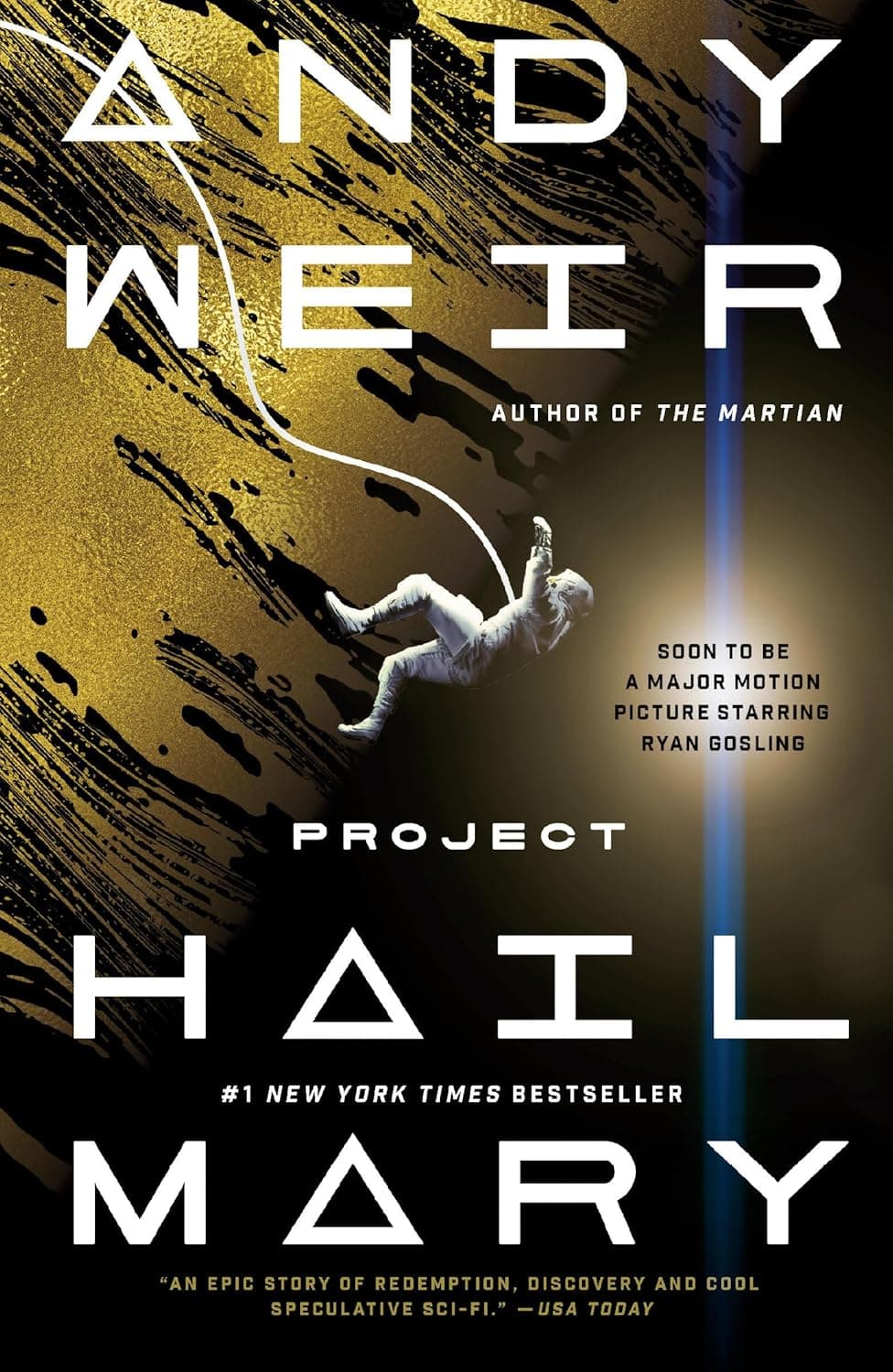
Project Hail Mary
- Shared ground
- Both books make scientific constraints part of the problem rather than background decoration.
- What changes
- Project Hail Mary is faster than The Forever War. Ryland and Rocky must build trust through measurement, language, shared experiments, and incompatible biology, making communication itself the novel's best scientific problem.
- Best for
- Readers wanting optimistic hard science fiction, first contact, high-stakes problem solving, and an emotionally satisfying partnership.
- Pace Balanced
- Darkness Moderate
- Romance Minimal
- Difficulty Moderate
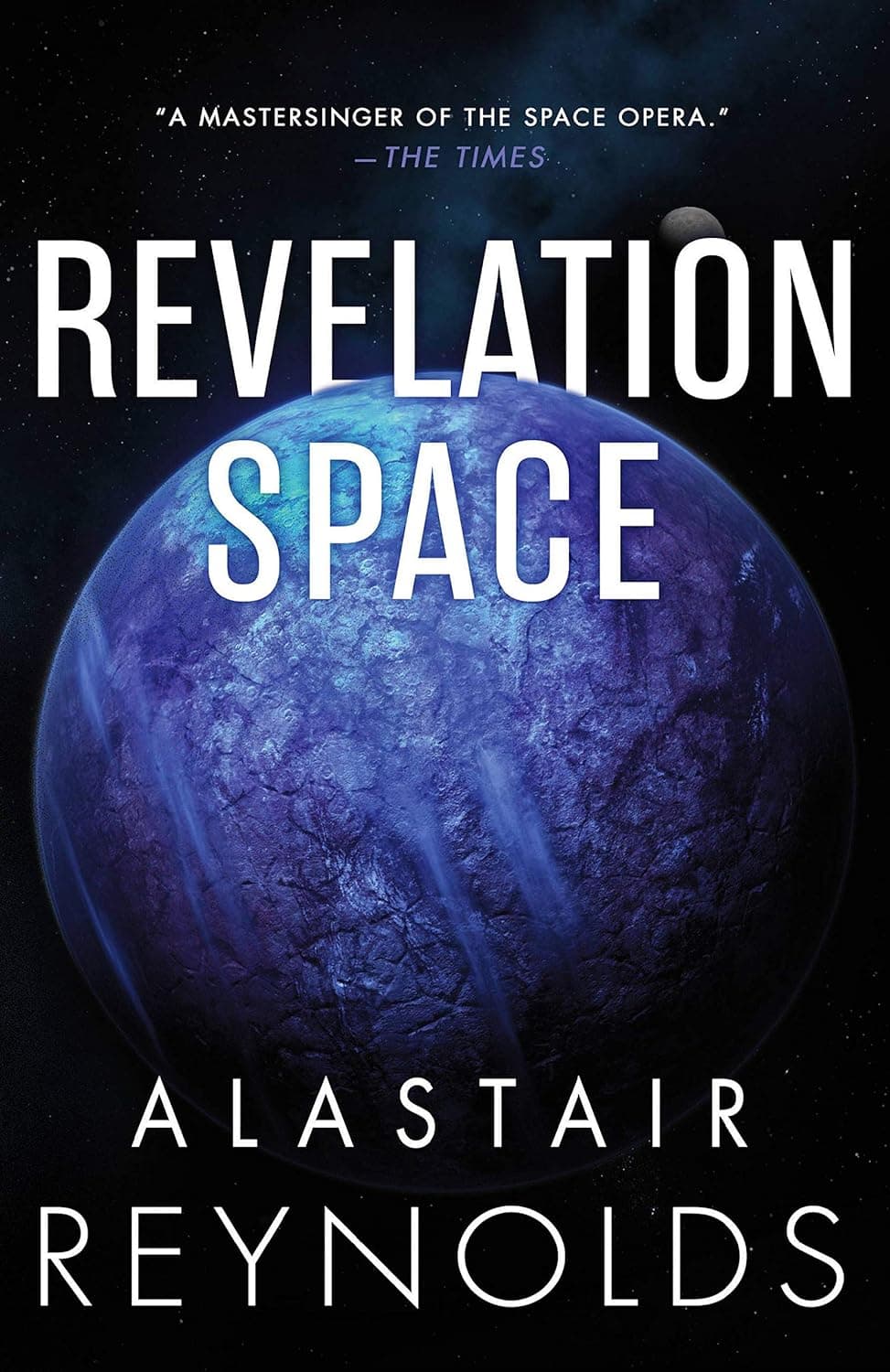
Revelation Space
- Shared ground
- Both books make scientific constraints part of the problem rather than background decoration.
- What changes
- Revelation Space has a similar overall reading load, but changes the emphasis. The Amarantin extinction turns ruins into testimony, while Sylveste, Volyova, and Khouri approach the same threat through incompatible motives.
- Best for
- Patient readers wanting hard science fiction, archaeology, deep time, morally difficult characters, and cosmic danger.
- Pace Measured
- Darkness Gentle
- Romance Minimal
- Difficulty Demanding
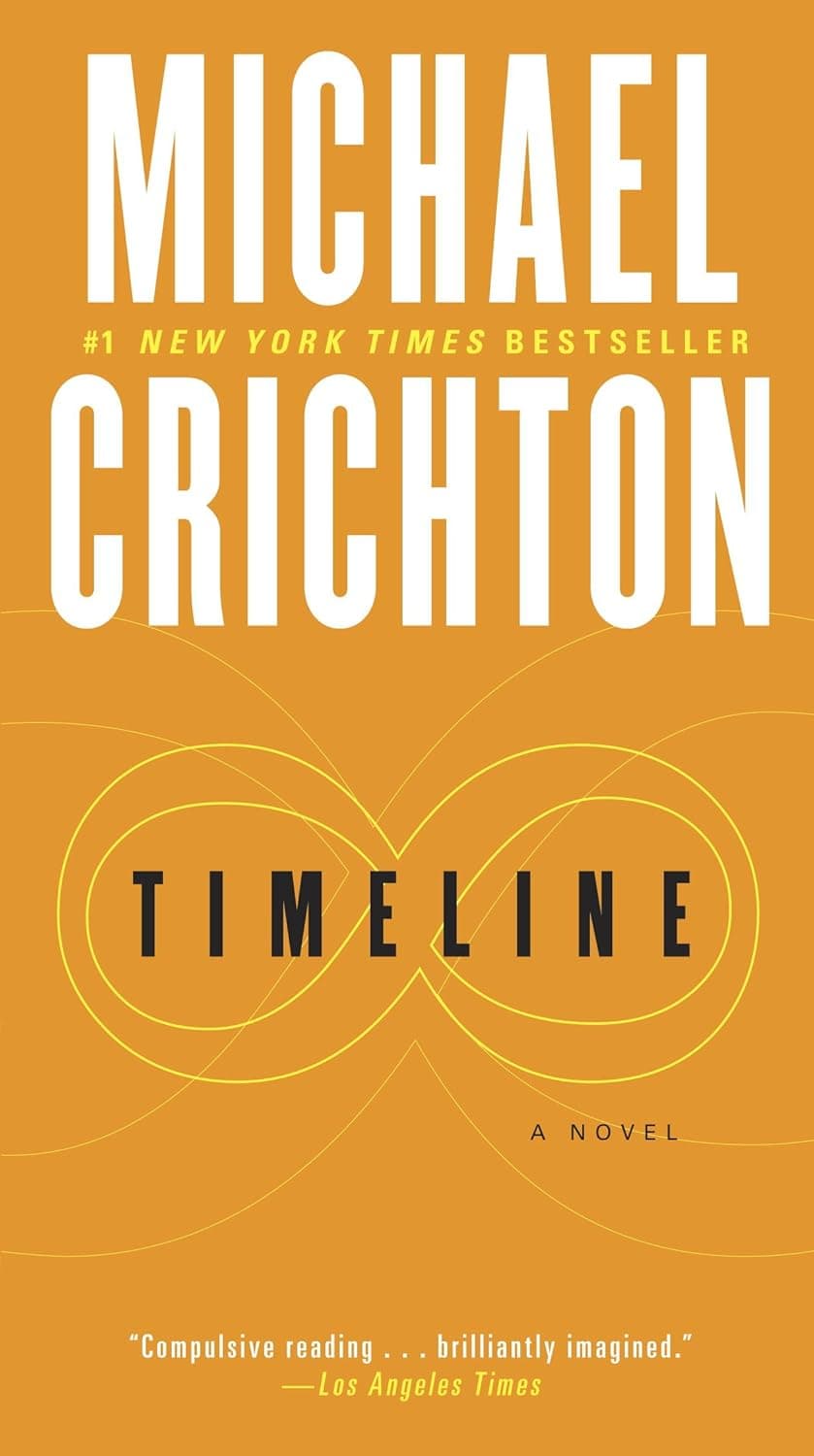
Timeline
- Shared ground
- Both books use speculative ideas to place human choices under unfamiliar pressure.
- What changes
- Timeline is faster and easier to enter than The Forever War. Languages, fortifications, weapons, clothing, and social status turn academic expertise into uncertain survival tools rather than decorative research.
- Best for
- Readers wanting researched medieval action, archaeology, speculative time travel, and a long setup followed by rapid adventure.
- Pace Brisk
- Darkness Moderate
- Romance Minimal
- Difficulty Accessible
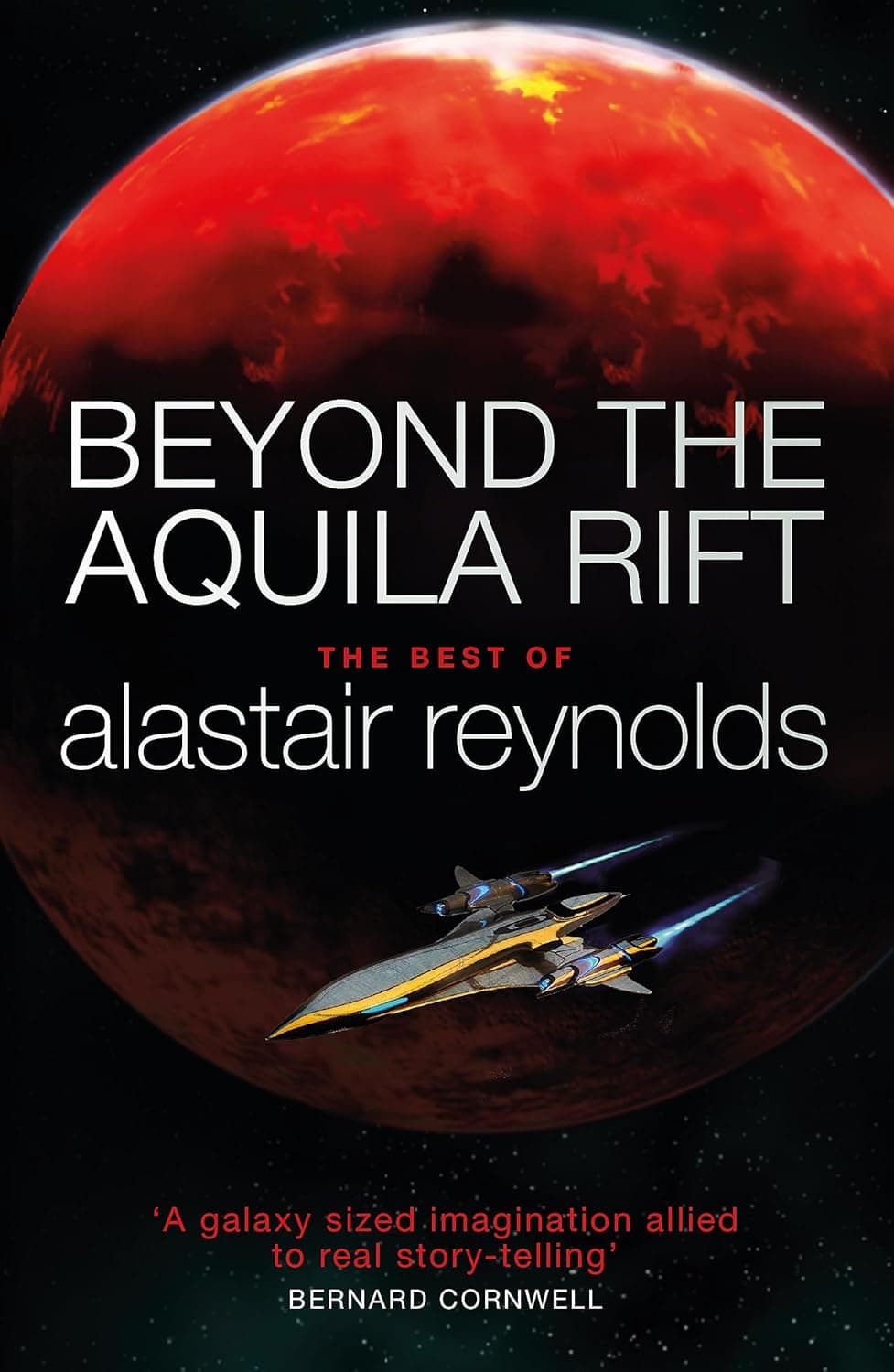
Beyond the Aquila Rift
- Shared ground
- Both books make scientific constraints part of the problem rather than background decoration.
- What changes
- Beyond the Aquila Rift has a similar overall reading load, but changes the emphasis. Long novellas and short pieces show technology changing grief, distance, art, war, and identity rather than repeating one space-opera mode.
- Best for
- Newcomers wanting a substantial Reynolds sampler and established readers collecting major standalone short fiction.
- Pace Balanced
- Darkness Moderate
- Romance Minimal
- Difficulty Moderate
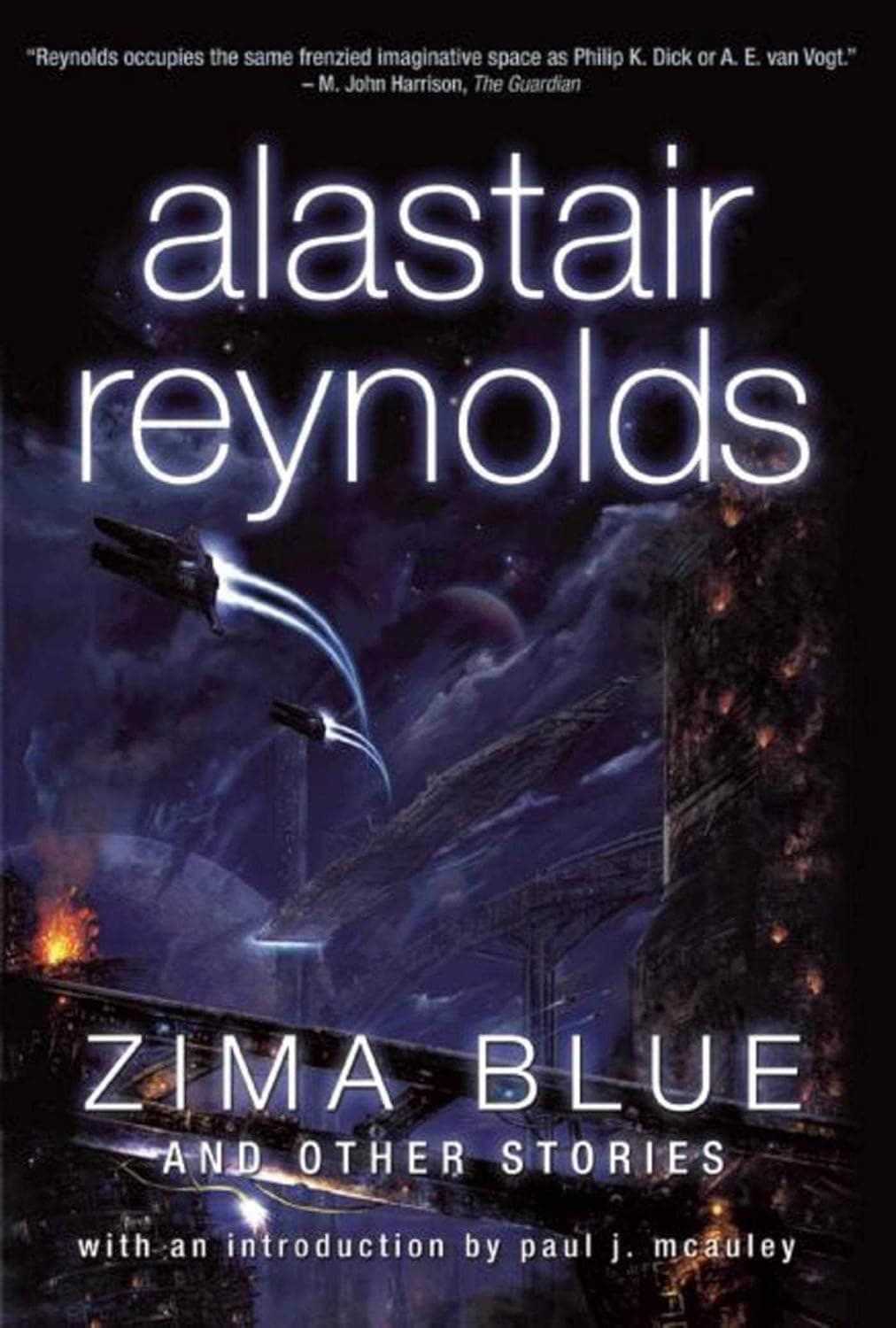
Zima Blue and Other Stories
- Shared ground
- Both books make scientific constraints part of the problem rather than background decoration.
- What changes
- Zima Blue and Other Stories has a similar overall reading load, but changes the emphasis. The title story and Beyond the Aquila Rift reduce vast technology to one revealing human or posthuman need, while the collection varies tone confidently.
- Best for
- New and established Reynolds readers wanting varied standalone short science fiction with both darkness and humanity.
- Pace Balanced
- Darkness Moderate
- Romance Minimal
- Difficulty Moderate
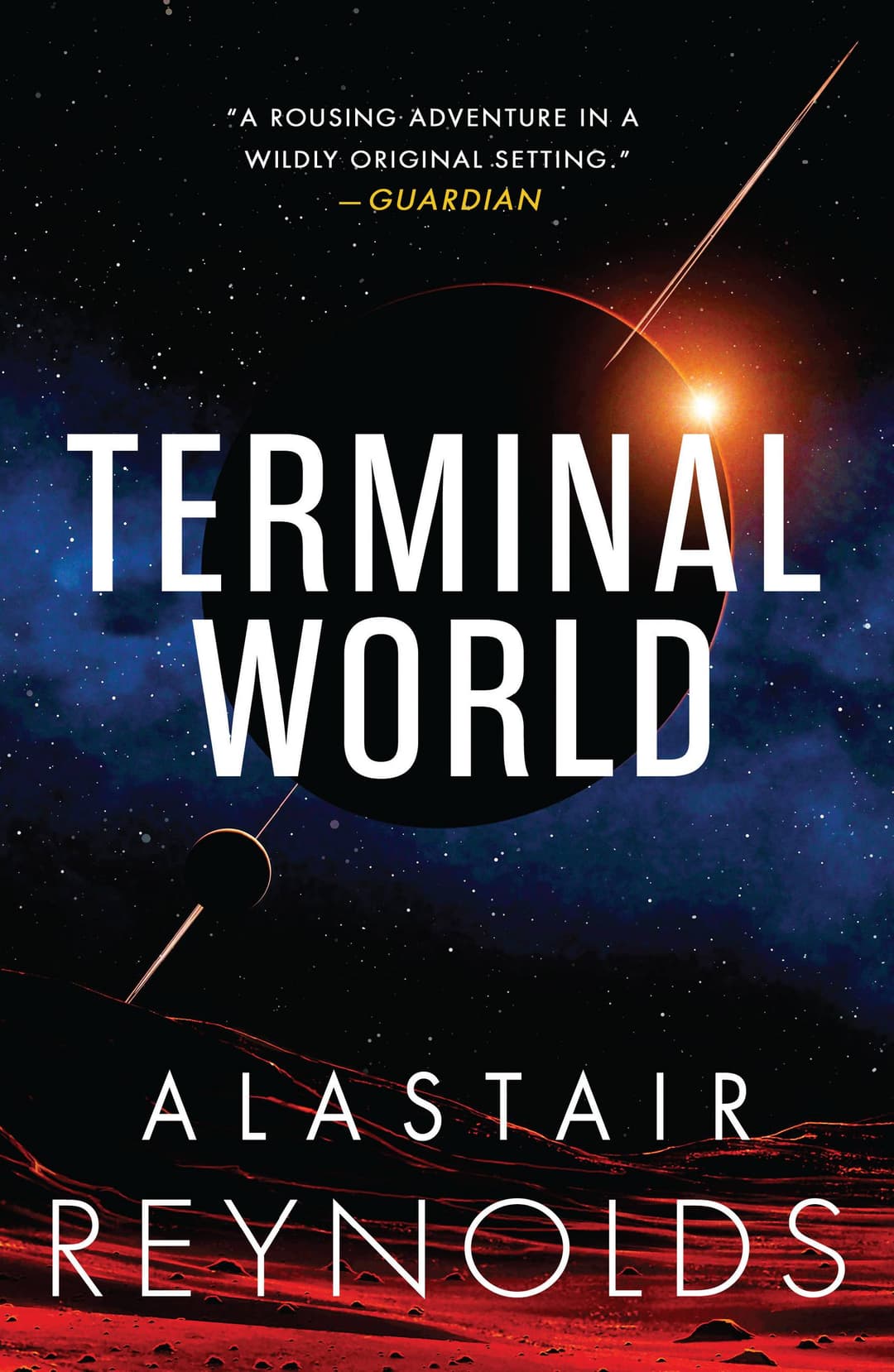
Terminal World
- Shared ground
- Both books make scientific constraints part of the problem rather than background decoration.
- What changes
- Terminal World has a similar overall reading load, but changes the emphasis. Spearpoint's technology zones make medicine, transport, weapons, and political power fail at physical boundaries, giving worldbuilding immediate consequence.
- Best for
- Readers who enjoy exploratory science fantasy, steampunk machinery, posthuman biology, and settings more than perfectly unified plots.
- Pace Balanced
- Darkness Gentle
- Romance Minimal
- Difficulty Moderate
Side-by-side
Pace, darkness, romance, and difficulty
Use these labels as directional guidance. The individual notes above explain the tradeoffs.
| Book | Pace | Darkness | Romance | Difficulty |
|---|---|---|---|---|
| The Forever War | Measured | Gentle | Minimal | Moderate |
| Dune | Balanced | Moderate | Minimal | Demanding |
| House of Suns | Measured | Gentle | Minimal | Moderate |
| Children of Time | Balanced | Gentle | Minimal | Moderate |
| Forever Peace | Balanced | Moderate | Minimal | Demanding |
| Project Hail Mary | Balanced | Moderate | Minimal | Moderate |
| Revelation Space | Measured | Gentle | Minimal | Demanding |
| Timeline | Brisk | Moderate | Minimal | Accessible |
| Beyond the Aquila Rift | Balanced | Moderate | Minimal | Moderate |
| Zima Blue and Other Stories | Balanced | Moderate | Minimal | Moderate |
| Terminal World | Balanced | Gentle | Minimal | Moderate |
Keep exploring
Explore another Books Like guide
Start from another familiar book and compare a new set of reading paths.