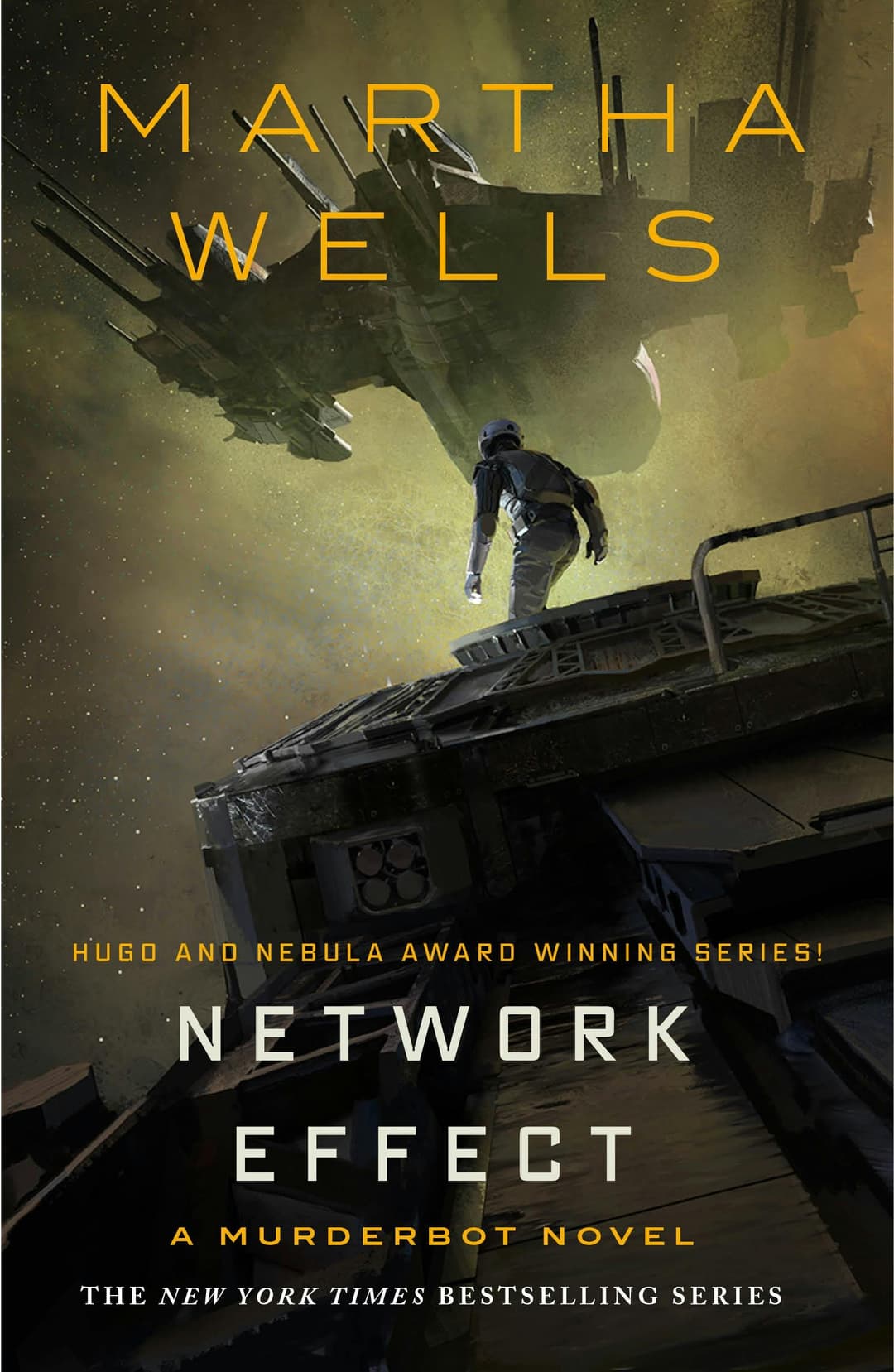
Should you read Network Effect?
What works
Wells expands the cast without reducing anyone to a passenger in Murderbot's story. Amena, Thiago, ART's crew, and the Preservation team each complicate its protective instincts. ART's disappearance and altered behavior turn a familiar relationship into both mystery and emotional emergency.
What may not work for you
The second half layers alien contamination, hostile targets, separated teams, copied software, and simultaneous network operations. Each element pays off, but the accumulation makes some action harder to follow than the lean confrontations in the novellas.
What may test your patience
The novel's densest stretch arrives after the initial abduction, when readers must reconstruct ART's condition while following multiple locations and versions of the same intelligence. It rewards attention but is not effortless.
Does the ending reward the effort?
Absolutely. The ending resolves the central rescue and threat while allowing the machine relationships to remain strange on their own terms. It feels earned because the book makes cooperation costly rather than automatic.
Reading Network Effect closely
Network Effect opens with Murderbot working alongside Preservation people who now know what it is and still refuse to behave predictably around it. A survey mission turns into an abduction when a vessel associated with ART attacks. The familiar transport appears altered, its crew is missing, and several people Murderbot is responsible for are carried into a crisis shaped by alien contamination.
The full novel length changes what Wells can attempt. Amena is not simply a teenager to protect; she notices Murderbot's evasions and has her own fear, frustration, and loyalty. Thiago's suspicion cannot be dismissed because Murderbot is dangerous and withholding information. Separate teams make protection a problem of trust and delegation rather than a sequence of solo interventions.
ART remains the central attraction. Its apparent hostility and damaged memory turn reunion into investigation. Murderbot has to distinguish the intelligence it knows from systems using the same infrastructure, while admitting through action that losing ART matters. Their exchanges retain the sharp comedy of Artificial Condition, but fear now sits underneath the competition for control.
The alien-remnant plot supplies body horror and a threat that cannot be solved by ordinary security assumptions. At times the novel stacks too many moving elements: infected targets, copied code, divided crews, unfamiliar ships, and simultaneous feed exchanges. Wells keeps the purpose of each rescue clear, though readers may need to reread the exact mechanics of later maneuvers.
The ending justifies the density. Several people contribute knowledge Murderbot lacks, and survival depends on cooperation that leaves room for anger and boundaries. Network Effect is the series' richest single volume, but it is not a sensible entry point. The four opening novellas, especially Artificial Condition and Exit Strategy, provide the emotional history that turns this from an energetic space thriller into a story about chosen connection.
A novel changes the scale of responsibility
Murderbot cannot keep every person physically beside it, so competence requires sharing information and trusting others to act. The expanded cast turns delegation into the practical form of emotional growth.
ART is both person and environment
Because ART normally inhabits a ship, damage to its identity cannot be separated from control of doors, weapons, air, and data. The mystery works by asking where a machine person ends when its body is also the setting.
Alien contamination disrupts familiar categories
Murderbot understands corporations, security units, and hostile humans. The remnant technology does not follow those contracts or identities, forcing the narrator to interpret behavior before it can decide which systems or bodies remain trustworthy.
Three useful comparisons
Artificial Condition
Artificial Condition creates the Murderbot and ART relationship through a contained journey and sharper comic friction. Network Effect assumes that history, then subjects it to loss, altered memory, and competing responsibilities. Start with the novella; choose the novel for the richest test of what their unconventional friendship actually demands.
Best for: Readers who liked All Systems Red's dry first-person voice and want more interior depth, a memorable machine friendship, a compact mystery, and a clearer look at how Murderbot interprets its own autonomy.
Children of Time
Children of Time studies nonhuman intelligence across generations and makes evolutionary change the engine of its plot. Network Effect stays close to one anxious narrator and unfolds over days. Choose Wells for voice, rescue tension, and machine intimacy; choose Tchaikovsky for a slower civilizational encounter with radical otherness.
Best for: Readers who like big evolutionary ideas, nonhuman viewpoints, and long time scales more than a conventional hero's journey.
Project Hail Mary
Both novels pair technical problem-solving with a relationship that crosses familiar definitions of personhood. Project Hail Mary explains each scientific obstacle in accessible stages and works as a standalone. Network Effect moves faster through its technology, depends on earlier books, and gives the partnership a more combative, emotionally guarded texture.
Best for: The best fit is someone who likes optimistic hard science fiction, first contact, high-stakes problem solving, and an emotionally satisfying partnership.
Make the next decision
Reading and buying guides featuring Network Effect
Series buying note
Would the collection be the better buy?
These are useful only when you want several books in the same run. The notes below spell out what each package includes and, just as importantly, what it leaves out.

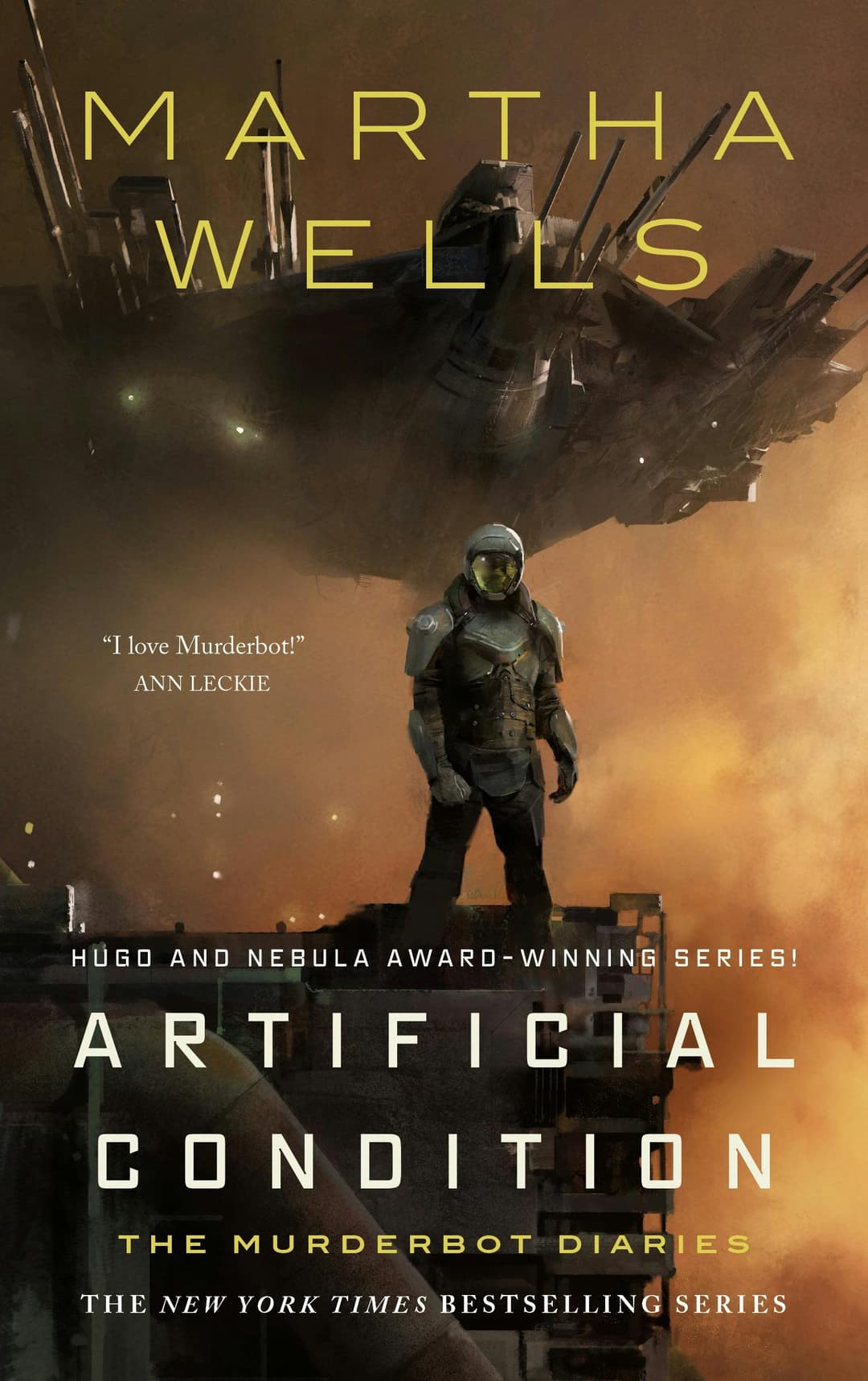
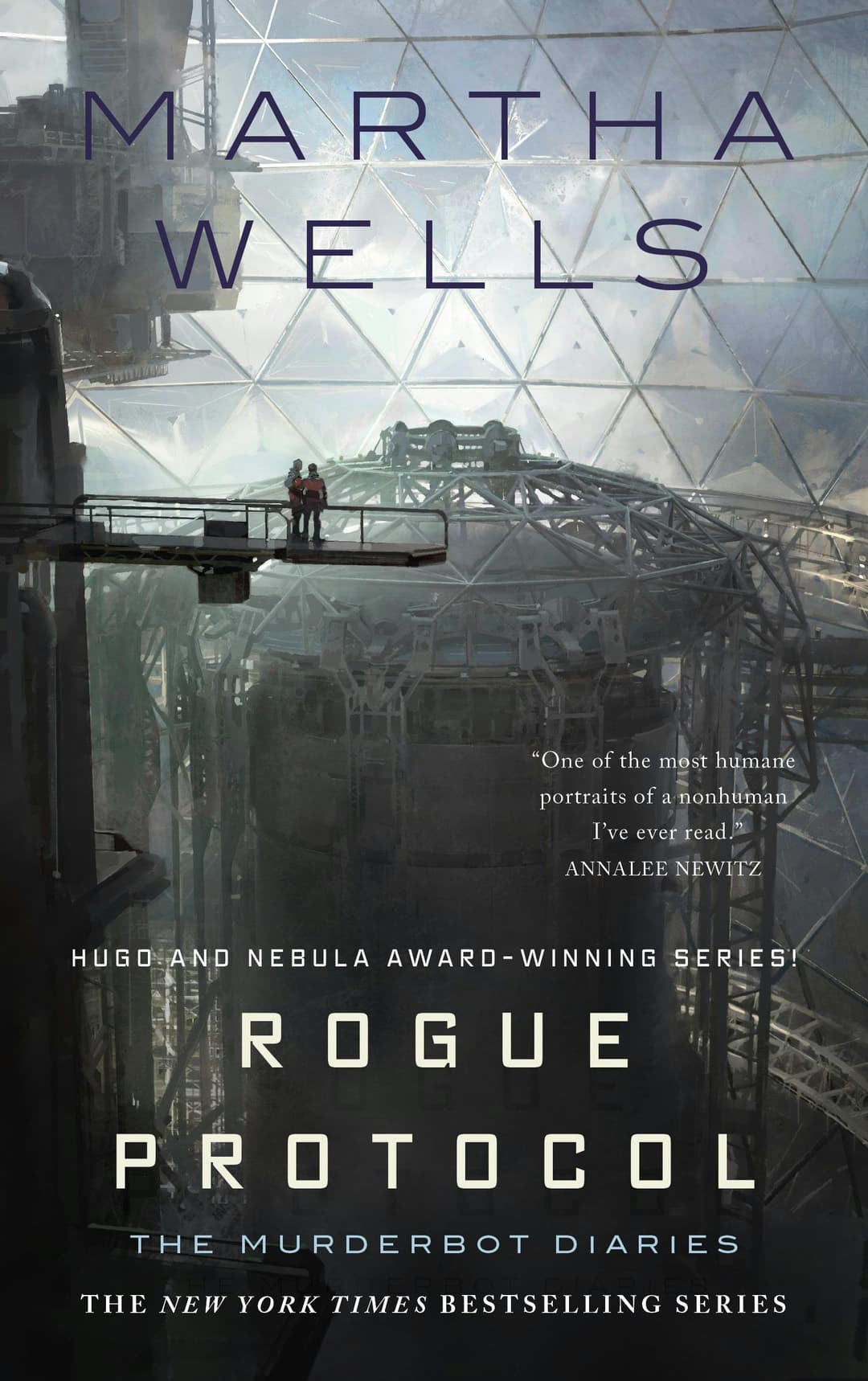
Seven-book hardcover collection
The Murderbot Diaries 7-Book Hardcover Set
This hardcover run takes Murderbot from All Systems Red through System Collapse, keeping the four early novellas and the later full-length novel together.
Included: All Systems Red, Artificial Condition, Rogue Protocol, Exit Strategy, Network Effect, Fugitive Telemetry, System Collapse
Our buying note: All Systems Red is short enough to test before making the larger purchase. Platform Decay comes after the seven books in this collection and must be bought separately.