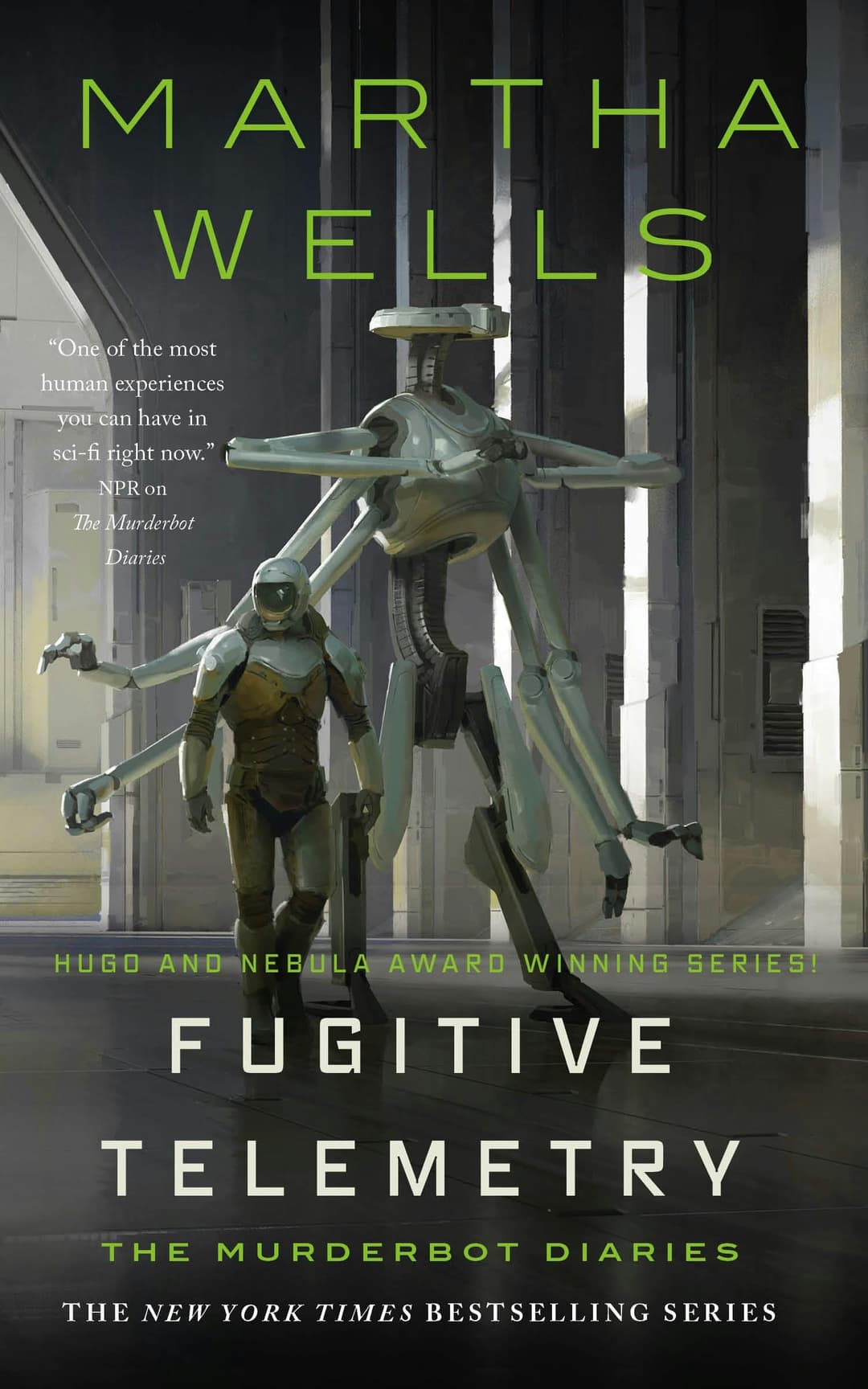
Should you read Fugitive Telemetry?
What works
The investigation turns gaps in surveillance into meaningful evidence and forces Murderbot to work with officers who distrust an armed construct in their station. Its growing respect for Senior Officer Indah is especially well judged because neither character becomes suddenly agreeable.
What may not work for you
The suspects receive limited space, so the eventual solution is satisfying as reconstruction rather than revelation. The lower physical stakes and absence of several major series relationships also make this feel intentionally smaller than Network Effect.
What may test your patience
Readers arriving in publication order may spend the first chapters wondering why recent developments are not mentioned. The story occurs before Network Effect, a chronology choice the book does not foreground as clearly as it could.
Does the ending reward the effort?
Yes. The solution follows from specific station details, and the final professional shift between Murderbot and security feels more valuable than a dramatic confrontation would have.
Reading Fugitive Telemetry closely
Fugitive Telemetry begins with a body in a public corridor on Preservation Station. Murderbot is present because Dr. Mensah wants it nearby and station security would prefer a heavily armed rogue SecUnit almost anywhere else. The death offers a problem in which its access to surveillance is useful, but unrestricted interference could destroy the fragile cooperation protecting its place on the station.
Senior Officer Indah is an effective counterpart because her distrust is professional rather than cartoonish. Murderbot withholds information, violates ordinary procedure, and possesses capabilities her department cannot fully supervise. She also knows the station is now her crime scene. Their working relationship improves through correct deductions and reluctantly shared evidence, not through a sudden speech about personhood.
The mystery is built around absent images. Preservation does not monitor every space with Corporation Rim intensity, so Murderbot cannot simply retrieve a perfect recording. It has to consider traffic patterns, access, transport, and why a person would appear where the available cameras begin. This makes the station's commitment to privacy relevant to the method rather than a piece of utopian decoration.
The suspect pool is thinner than in a long detective novel, and the solution is more satisfying as a chain of logistics than as a revelation about a deeply developed character. That limitation comes with the novella form. Wells is more interested in how Murderbot investigates under institutional constraints than in providing multiple psychologically elaborate motives.
Publication order creates one avoidable confusion: this story occurs before Network Effect. Once placed correctly, it becomes an excellent account of Murderbot learning to participate in a community without becoming its property or overriding its officials. The violence is limited, the humor remains dry, and the modest conclusion earns its shift in mutual respect.
Privacy creates a better mystery
Preservation's incomplete surveillance makes the investigation harder but reflects a deliberate social value. Murderbot must solve the crime without assuming that safety requires the total monitoring familiar in corporate space.
Indah has reasons to resist Murderbot
The security chief is not merely prejudiced against constructs. She is responsible for a station where Murderbot can enter systems her officers cannot secure. Cooperation improves because both sides demonstrate useful judgment while retaining legitimate concerns.
Procedure replaces overwhelming force
Combat ability cannot identify a victim, reconstruct a route, or preserve evidence. The case makes Murderbot use attention, interviews, and shared authority, revealing a different form of competence from the rescue missions.
Three useful comparisons
The Tainted Cup
The Tainted Cup provides the fuller detective partnership, a more elaborate fair-play mystery, and a fantasy ecology central to the crime. Fugitive Telemetry is shorter and driven by one distinctive narrator. Choose Wells for station security and surveillance; choose Bennett for richer suspects and methodical deduction.
Best for: Mystery readers who want a fair trail of clues and fantasy readers who enjoy learning a world through an investigation.
All Systems Red
All Systems Red puts Murderbot in immediate danger with clients it must keep alive. Fugitive Telemetry asks it to protect a community by respecting an investigation led by people who do not trust it. The first is the better introduction; the later novella shows more growth in patience and collaboration.
Best for: Readers who want a fast science-fiction novella, an artificial narrator with a strong voice, corporate criticism, tactical action, low romance, and an emotionally guarded beginning to a longer series.
A Drop of Corruption
A Drop of Corruption offers a sprawling secondary-world investigation in which the detective's unusual cognition is openly part of the method. Fugitive Telemetry is tighter and more technological. It uses cameras, access records, and station geography while keeping Murderbot's abilities politically uncomfortable rather than institutionally celebrated.
Best for: Readers who enjoyed The Tainted Cup and want a larger, stranger murder case with the same investigator partnership.
Series buying note
Would the collection be the better buy?
These are useful only when you want several books in the same run. The notes below spell out what each package includes and, just as importantly, what it leaves out.

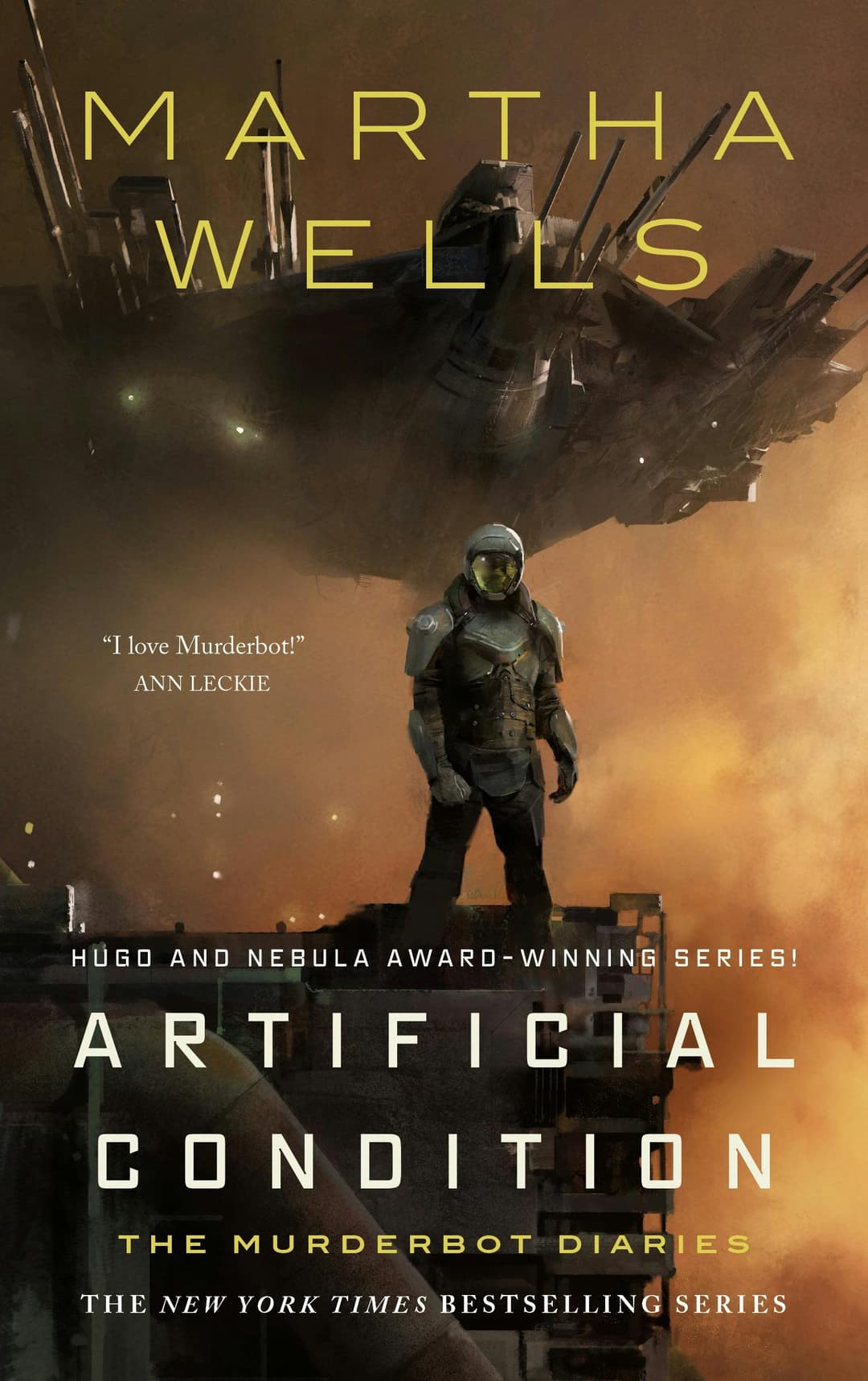
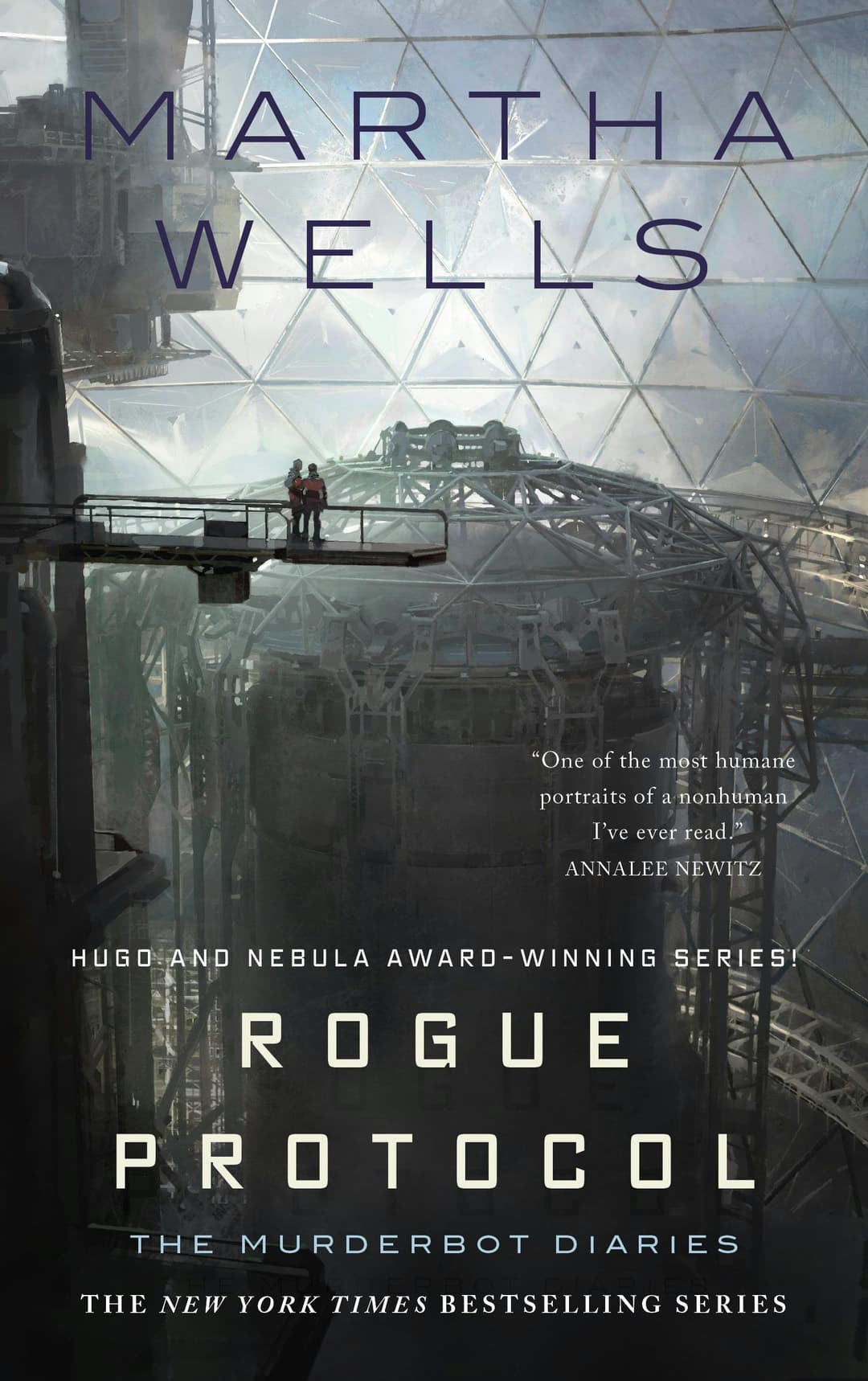
Seven-book hardcover collection
The Murderbot Diaries 7-Book Hardcover Set
This hardcover run takes Murderbot from All Systems Red through System Collapse, keeping the four early novellas and the later full-length novel together.
Included: All Systems Red, Artificial Condition, Rogue Protocol, Exit Strategy, Network Effect, Fugitive Telemetry, System Collapse
Our buying note: All Systems Red is short enough to test before making the larger purchase. Platform Decay comes after the seven books in this collection and must be bought separately.