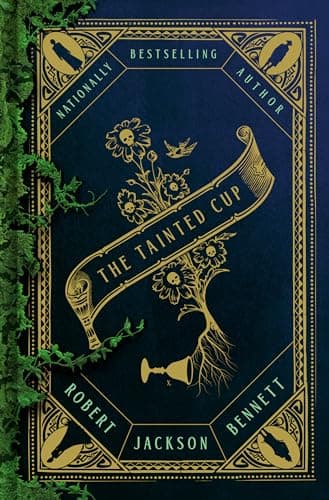
Should you read The Tainted Cup?
What works
The clues belong to the world. Altered bodies, engineered plants, military infrastructure, and imperial bureaucracy all affect what is physically possible, so solving the murder also teaches the reader how the empire functions.
What may not work for you
Ana's refusal to explain can feel strategically convenient, and several imperial offices arrive as labels before their human stakes are clear. The eccentric-genius routine is enjoyable, but occasionally too familiar.
What may test your patience
The first round of interviews asks the reader to absorb ranks, contagion rules, and biological alterations while the central partnership is still settling into place. Din's methodical observations become more satisfying once Ana starts testing them.
Does the ending reward the effort?
Yes. Evidence planted early returns with a purpose, the motive fits the institutions around the crime, and the solution does not require the fantasy rules to change at the last minute.
Reading The Tainted Cup closely
The Tainted Cup begins with an imperial officer killed when a tree erupts from his body. Investigator Ana Dolabra sends her new assistant, Dinios Kol, into the contaminated mansion to observe everything, relying on his magically altered memory while she tests the assumptions behind the impossible crime.
Robert Jackson Bennett combines a fair-play mystery with a biological fantasy empire threatened by immense leviathans. Ana and Din provide the familiar pleasure of an eccentric genius and grounded narrator, but their abilities, secrets, and growing trust belong specifically to this strange world.
A mystery that uses its fantasy rules
The alterations and contagions are not decorative. Solving the case means understanding how bodies, plants, infrastructure, and imperial authority interact.
Three useful comparisons
A Drop of Corruption
A Drop of Corruption is the direct continuation of Ana and Din's work. Read it next for a broader investigation and a partnership that no longer needs to spend as much time introducing itself.
Best for: Readers who enjoyed The Tainted Cup and want a larger, stranger murder case with the same investigator partnership.
The Da Vinci Code
The Da Vinci Code moves much faster and builds suspense from a chain of puzzles and pursuit. Choose it for a breathless chase; stay with The Tainted Cup if you prefer evidence, interviews, and a solution rooted in social systems.
Best for: Best for a fast art-history conspiracy if you can treat its factual claims as entertainment that needs verification.
What Moves the Dead
What Moves the Dead also turns strange biology into evidence, but compresses the investigation into Gothic horror. Choose it for a shorter, more intimate mystery where bodily unease matters more than imperial politics.
Best for: Best for anyone who wants a short Gothic retelling, fungal horror, body unease, and a practical narrator with flashes of dry humor.
Make the next decision