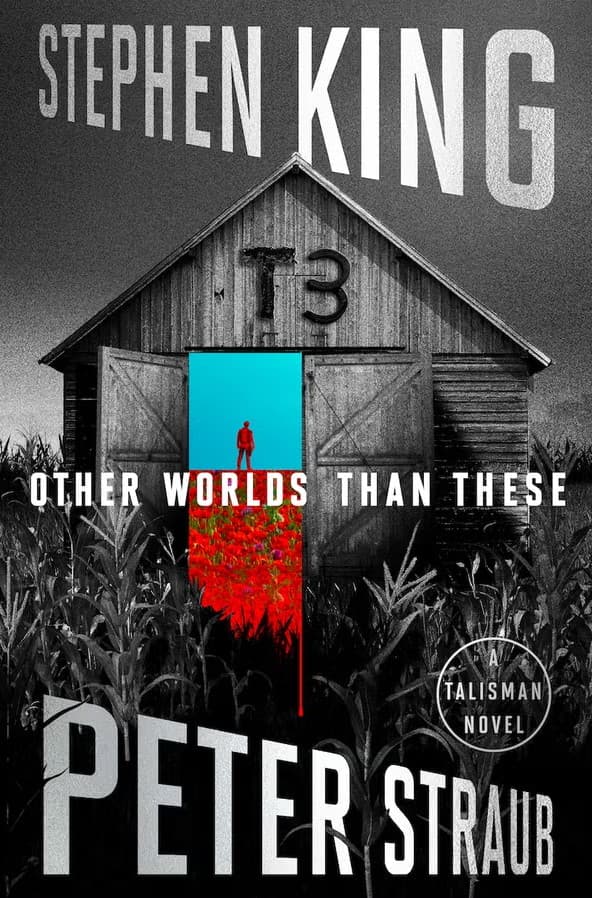
Publication and format details
The official publication date is October 6, 2026. Scribner lists Other Worlds Than These as Book 3 of The Talisman Trilogy, credited to Stephen King and Peter Straub.
- Publication date
- October 6, 2026
- Print publisher
- Scribner
- Series
- The Talisman Trilogy, Book 3, following The Talisman and Black House
- Illustrator
- Gabriel Rodríguez
- Formats
- Hardcover, eBook, and unabridged audio; check the selected edition with the retailer
- Audiobook readers
- Patton Oswalt and Stephen King, as credited by Simon & Schuster Audio
Primary sources: Stephen King: Other Worlds Than These, Scribner hardcover, Scribner eBook, Simon & Schuster Audio, Stephen King interview on completing the collaboration
Should you read Other Worlds Than These?
What works
Jack's weariness gives the return to dangerous worlds a human cost. Grief shapes the adventure itself, and the farewell to Peter Straub feels woven into the story rather than added as a memorial aside.
What may not work for you
The balance of voices has changed. This sounds much more like King than the earlier collaborations, and the accumulated multiverse references make it a poor introduction for newcomers.
What may test your patience
The opening is a melancholic slow burn. Jack's memories and exhaustion take precedence over immediate momentum before the second half turns movement through hostile terrain into an urgent survival problem.
Does the ending reward the effort?
Yes. The conclusion rewards the long investment in Jack without making the losses easy. I found its mixture of brutality, beauty, and leave-taking exceptionally satisfying.
Reading Other Worlds Than These closely
Jack Sawyer has spent a lifetime surviving other worlds. What matters here is how much that survival has cost him. The boy who crossed the Territories to save his mother is now an older, grieving man, and the return to danger carries the weight of that distance. For me, the strongest reason to read Other Worlds Than These is the way it makes an enormous fantasy conflict feel like a reckoning with the people Jack can no longer keep beside him.
Grief does more than color the atmosphere. It shapes the machinery of the story. The farewell to Peter Straub becomes part of how the novel thinks about friendship, memory, and the obligation to continue after someone is gone. That could have become solemn or self-conscious. Instead, Jack has work to do, and the danger keeps remembrance from settling into a static tribute. The illustrations by Gabriel Rodríguez deepen that atmosphere without replacing the prose's more intimate sense of wear.
The pace takes time to change. Early on, the novel is contemplative, concerned with what Jack carries from his earlier life. I found that patience worthwhile, but anyone expecting immediate acceleration may feel the delay. Once the story commits to movement through hostile country, physical vulnerability gives it a much sharper clock. The second half gains urgency because continuing costs something, not simply because the threats become larger.
I was less convinced by its accessibility. The publisher presents it as a story newcomers can enter directly, and that describes a possible way to approach the plot. It does not describe the reading experience I would recommend. The Talisman and Black House supply Jack's history; Dark Tower familiarity helps the larger connections carry meaning. Without that background, there is a great deal to absorb before the emotional stakes can land. The voice also leans unmistakably toward King, losing some of the friction between the two writers that distinguished the earlier books.
The ending earns the return. It is brutal and bittersweet, but it gives Jack's long story the sense of an arrival rather than another postponement. I do not want to explain how that closure works, because discovering its shape is part of the reward. My 4.5-star recommendation is for readers already invested in these worlds: the reservations about density and the changed voice are real, but the final leave-taking makes them worth accepting.
Do you need the earlier Talisman books?
I would read both first. The publisher says the finale can be read on its own, but Jack's history is what makes his weariness and attachments matter here. Start with The Talisman, then Black House. Our Talisman reading-order guide separates the recommended sequence from optional Dark Tower background.
How much Dark Tower knowledge helps?
Quite a lot. This is the third Talisman novel, with explicit Mid-World connections, rather than a newly numbered volume in Roland's main series. I found the multiverse lore demanding even though the central character remains Jack. The order guide explains how to approach that background without spoiling either sequence.
What changes without Straub at the keyboard?
King completed the novel after Straub's death, drawing on ideas his collaborator had sent him. Both authors are credited. The prose feels more consistently like King, especially in its reflective weariness. I missed the distinct balance of the earlier collaborations, but the tribute works because it accepts the loss instead of pretending the collaboration can be recreated.
The Peter Straub hub puts the trilogy beside his own horror fiction. The Stephen King hub offers other starting points if this finale would be your first King novel.
Hardcover, eBook, or audio?
Choose a visual edition if Rodríguez's illustrations matter to you, and check which edition includes them before ordering. The unabridged audio listing credits Patton Oswalt and Stephen King. That is a different way into the story, not a substitute for seeing the artwork.
The official page counts disagree: King's site gives 624 pages and Scribner gives 704 for the same hardcover ISBN. That is not a confirmed difference between editions, so there is no single page count here. Hardcover, eBook, and audio have separate publisher identifiers; check the format rather than assuming their details are interchangeable.
After Jack's story
For another crossing into hostile worlds, start with our Books Like Other Worlds Than These recommendations. They separate cosmic horror, road adventures, damaged travelers, and companionship, with clear differences so you can choose which part to follow.
Three useful comparisons
The Hollow Places
The Hollow Places offers an easier first encounter with cosmic otherworlds. Kara and Simon's friendship carries the danger without requiring decades of series knowledge.
Best for: Readers new to cosmic horror who want impossible spaces, body unease, friendship, and relief from unbroken bleakness.
Between Two Fires
Between Two Fires is a standalone horror quest through ruined country. Its religious imagery replaces King's multiverse, but companionship still gives the travel its moral weight.
Best for: Go here for medieval horror, plague, faith, demons, violence, and a damaged knight's redemptive journey.
The Sunlit Man
The Sunlit Man also follows a worn traveler through a hostile world whose rules make delay dangerous. Sanderson puts more emphasis on tactical mechanics and much less on an elegiac farewell.
Best for: Cosmere readers wanting a fast planetary survival adventure and newcomers comfortable not understanding every connection.
Make the next decision