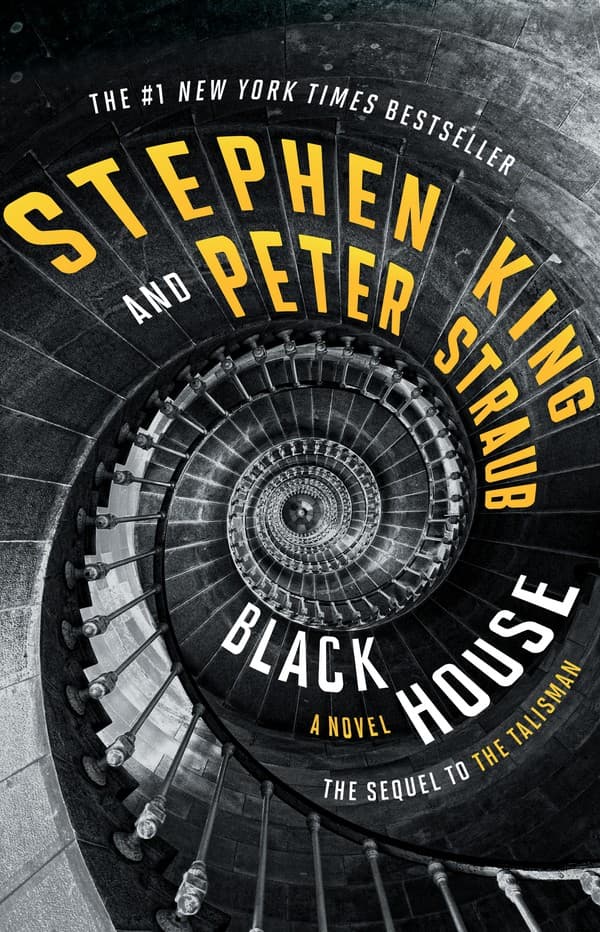
Original publication and editions
Black House was first published on September 15, 2001. It is the second Talisman Trilogy novel by Stephen King and Peter Straub; the edition details here describe the 2018 Scribner trade paperback.
- Original publication
- September 15, 2001
- Original publisher
- Random House
- Series position
- The Talisman Trilogy, Book 2
- Reference edition
- Scribner trade paperback, April 17, 2018; ISBN 9781501192296; 672 pages
Primary sources: Stephen King: Black House, Scribner: 2018 trade paperback, Official Dark Tower connections (contains spoilers)
Should you read Black House?
What works
The local case and the wider supernatural threat strengthen each other. Adult Jack gives the return a psychological cost, while Henry Leyden and the Thunder Five keep the supporting cast sharply individual.
What may not work for you
The roaming omniscient narrator puts considerable distance between the reader and the case at first. The formal ambition is interesting, but it delays the immediate hook the crime premise seems to promise.
What may test your patience
The opening surveys French Landing before settling into Jack's investigation. It asks for an upfront investment; once he takes the case, the pace becomes much more urgent.
Does the ending reward the effort?
Yes, though the reward is darker than a reassuring case closure. The confrontation has a devastating weight and leaves Jack's future less settled than the first novel did.
Reading Black House closely
Black House keeps looking away from the place I initially wanted it to look. A series of murders should give a crime novel an immediate center, yet the narration begins above French Landing and takes its time bringing the town into focus. The present tense and roaming perspective are deliberate. They make the setting feel watched. They also make the opening a substantial test of patience.
Once Jack takes the case, that distance starts to pay off. The investigation has urgency because the threat is close enough to hurt people and large enough to resist an ordinary police explanation. I found the move into Dark Tower material persuasive here: the cosmic scale intensifies the local horror instead of making the local stakes disposable. This is a much grimmer novel than Jack's first adventure.
The adult Jack is compelling because returning to the Territories also means approaching a childhood he has pushed away. His experience as a detective does not make that recovery painless. King and Straub have changed the emotional task from a child trying to save a parent to a weary adult deciding what he can no longer keep outside his life. The earlier novel gives that change its depth.
Henry Leyden and the Thunder Five prevent the supporting cast from becoming a collection of functions in the case. The blind radio host and the intellectually curious bikers have a particularity that stays with me more than the machinery of the investigation. Their eccentricity gives the town texture without softening the horror. The prose can be dense, but it makes room for people who do not exist merely to guide Jack toward the next clue.
I prefer this darker return to the first novel, with one clear reservation: the opening's stylistic demands are a considerable admission price. The later pace and the ending earn that investment for me. The close is devastating and unsettled rather than triumphant, which suits a story about recovered history that cannot simply be put away again. At 4.5 stars, this is a strong recommendation for readers who want their supernatural fiction to retain the pressure of a crime investigation.
Read The Talisman before Black House?
I would. Black House opens a new investigation, but Jack's suppressed childhood is central to what the return costs him. The Talisman lets that earlier life carry its own emotional weight. Reading it first also makes the change from childhood quest to adult horror more striking.
Do not expect the same balance of wonder and danger. The murders of children are part of the premise, and the crime story is substantially darker. The resemblance lies in Jack and his past, not in a promise to repeat the first book's adventure.
The Territories and The Dark Tower
The Territories remain part of Jack's history, while King's official synopsis explicitly connects the new threat to End-World in Roland's universe. You can approach it through Jack's two novels without turning every connected King book into homework. Familiarity with the wider lore helps, but it should not obscure the local case that makes the danger matter.
The edition behind the page count
The 672-page count describes Scribner's April 17, 2018 trade paperback, ISBN 9781501192296. It is not a universal length for Black House. Hardcover and digital editions can use different pagination; check the selected format rather than carrying this count across editions.
After the investigation
Other Worlds Than These is the third novel. Follow the complete Jack Sawyer reading order for preparation, or use books like Black House to pursue supernatural crime elsewhere. Both the Stephen King and Peter Straub hubs include the trilogy.
Three useful comparisons
The Tainted Cup
The Tainted Cup makes a murder investigation the way into a strange fantasy world, with more emphasis on deduction and less on psychological terror. It is the easier starting point for a clear case.
Best for: Mystery readers who want a fair trail of clues and fantasy readers who enjoy learning a world through an investigation.
The Shining
The Shining confines supernatural pressure to a family and one hotel. Black House spreads its case through a town and a connected universe, asking for more narrative patience.
Best for: Readers who want a long haunted-house novel grounded in addiction, family fear, and a child's vulnerable perception.
Dead Beat
Dead Beat also expands detective work into a large supernatural crisis. It is quicker and funnier, but its place as Dresden book seven brings a different set of earlier-series commitments.
Best for: Urban-fantasy readers comfortable entering mid-series for necromancy, detective work, humor, and very large magical action.
Make the next decision