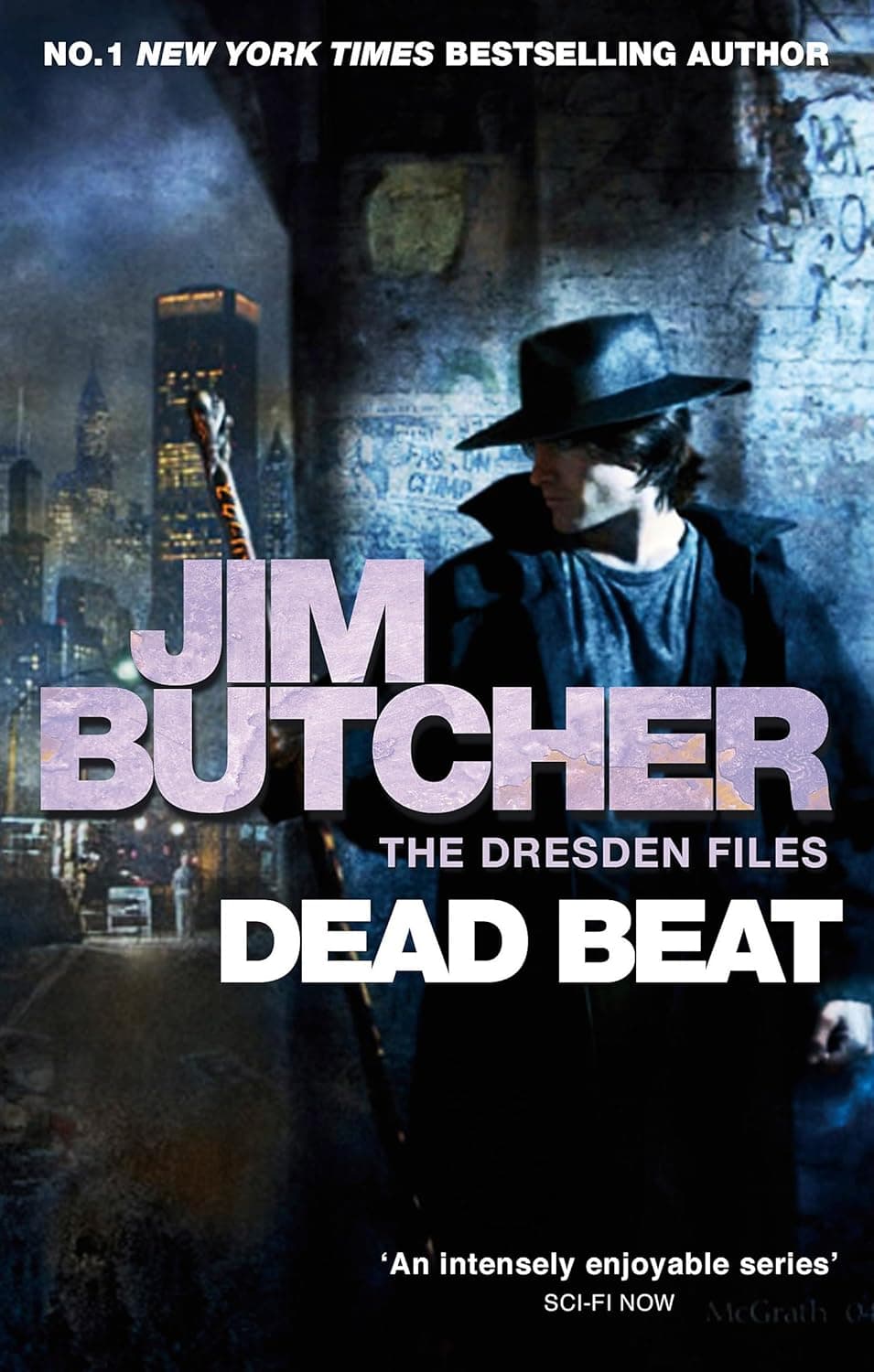
Should you read Dead Beat?
What works
Competing necromancers, the Word of Kemmler, Butters, polka, and Halloween rules give Harry a clear mystery with increasingly inventive tactical payoffs.
What may not work for you
Harry's gaze and humor have dated, series continuity is substantial, and emotional reflection is repeatedly interrupted by the next attack.
What may test your patience
Several necromancer factions and magical rules arrive rapidly before their separate plans become easy to distinguish.
Does the ending reward the effort?
Yes. The climax is absurd, spectacular, and properly prepared by earlier magical and character details rather than pure surprise.
Reading Dead Beat closely
Dead Beat begins with Harry Dresden under pressure from Mavra, a Black Court vampire who has leverage over someone Harry cares about. Her demand sends him after the Word of Kemmler, a book containing knowledge that several necromancers would kill to possess. With Halloween approaching, Chicago becomes the center of a contest whose consequences reach far beyond one act of blackmail.
Book seven is often treated as a turning point because Jim Butcher brings the series’ detective structure and supernatural scale together with unusual confidence. Harry still follows clues, bargains for information, and makes reckless deductions, but the case widens into set pieces that show how large the magical world has become without losing the immediacy of one exhausted wizard trying to protect people.
Waldo Butters gives the story an effective human counterweight. His fear is reasonable, his knowledge has limits, and his presence forces Harry to explain pieces of the world that longtime characters already accept. That makes Dead Beat more accessible than its position in the series suggests, though the emotional stakes still benefit from knowing Harry’s history.
The tone mixes horror imagery, noir pressure, banter, and exuberant fantasy action. Necromancy and death are everywhere, but the book is not relentlessly grim. Its most memorable sequences work because Butcher is willing to let the story become spectacular while Harry’s narration remains stubbornly practical and funny.
Series order and accessibility
Dead Beat was designed to be approachable for readers encountering the series in hardcover, so it explains more context than some middle installments. You can follow the central plot without six earlier books, but Storm Front remains the better starting point if you plan to read the full character arc.
Three useful comparisons
The Devils
The Devils offers a larger ensemble, darker profanity, and secondary-world monster adventure.
Best for: Readers who want profane, violent quest fantasy and enjoy a crowded ensemble more than a lone hero.
Paladin's Hope
Paladin's Hope combines murder investigation and fantasy danger with a warmer adult romance.
Best for: The appeal is M/M fantasy romance, mature intimacy, forensic work, gnoles, and a claustrophobic puzzle adventure.
The Tainted Cup
The Tainted Cup is more rigorous as mystery and far less dependent on a long action series.
Best for: Mystery readers who want a fair trail of clues and fantasy readers who enjoy learning a world through an investigation.
Make the next decision