December puzzle guide
9 Murder Mystery Puzzle Books to Solve in December 2026
A Christmas countdown, a case between errands, or a mystery to leave open on the table. Nine books offer different ways to spend time with a puzzle this December.
Some mysteries let you put the pencil down as soon as the grid is finished. Others leave you with a list of names or a set of pages that will still be there the next evening. In between are puzzles where the work is spotting a detail in a picture or finding a word that restores a line of evidence.
December is the time to solve these books. Their publication dates vary, and the Christmas setting belongs chiefly to Merry Murdle. The comparison below starts with what you'll have in front of you and where you can comfortably leave off.
The December rhythm
A fresh case or a mystery to return to
Merry Murdle sets one case on each date from December 1 through 25. Cluedoku and Murdoku offer a different floor plan each time, while Search and Solve starts with missing words. The Killer Isn't Alice and Cain's Jawbone each leave an investigation in progress between sessions, so your notes matter as much on the next visit as they do on the first.
Nine ways to work a case
What you do and what carries over
The titles jump to the fuller descriptions. The last column shows what you can leave behind when you close the book.
| Book | What you do | Kind of reasoning | Shape of the challenge |
|---|---|---|---|
| Merry Murdle | Cross off pairings in a detective grid | Written-clue deduction | 25 dated cases with a Christmas thread |
| Cluedoku | Place lettered suspects around a marked crime | Row and column exclusion | 101 floor plans that reset each case |
| Murdle Heist | Assign jobs and account for obstacles | Planning under constraints | 56 capers with a recurring rivalry |
| The Killer Isn't Alice | Filter a dossier of 46,600 suspects | Elimination across one list | One case that keeps your earlier markings |
| Murdoku | Place suspects and the victim in the scene | Spatial deduction from rooms and objects | 80 illustrated scenes with fresh positions each time |
| Search and Solve: Murder Mystery | Find words and put them back into the file | Word search followed by inference | More than 30 files with evidence to recover |
| Murdle: Volume 1 | Match suspects, weapons, and places | Cross-category elimination | 100 grids with a larger mystery running through them |
| Murder Most Puzzling | Read a case and examine its illustration | Observation and interpretation | 20 separate illustrated investigations |
| Cain's Jawbone | Reorder 100 fragments of a story | Close reading and chronology | One reconstruction that spans six murders |
Inside the puzzles
What solving each book involves
1
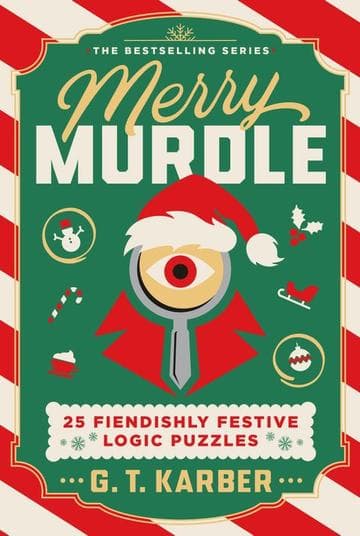
Merry Murdle
G. T. Karber · 25 festive mysteries
A missing Santa sends Deductive Logico into a run of Christmas cases dated December 1 to 25. The clues still work across a Murdle grid. A fact about a person can rule out a location or weapon, and the exclusions you make have to agree with each other.
The dates give you a natural stopping point after each case. They also make it easy to leave the book alone for a few days and solve several in order when you come back. The holiday story carries over, while the next grid starts fresh.
2
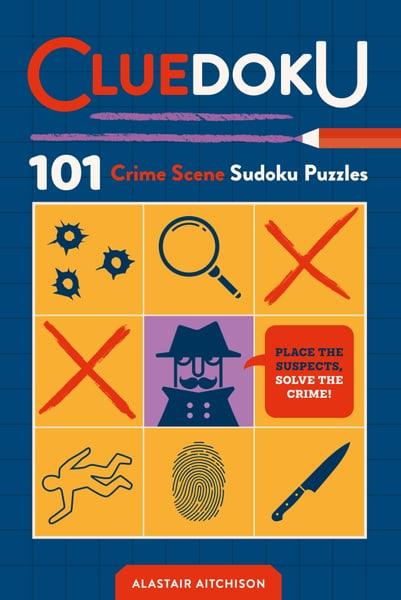
Cluedoku
Alastair Aitchison · 101 crime-scene puzzles
The floor plan is a nine-by-nine grid with the crime location already marked. Witness statements narrow the possible squares for nine lettered suspects, and every row and column must contain exactly one. A doorway or wall can change how a statement applies to the map.
In the cases I solved, the satisfying moment came when a placement made a witness statement clearer. I also hit some sharp jumps in difficulty. If an earlier placement goes wrong, the row and column it blocks can make several later deductions worth checking again. Each new floor plan gives you a clean start.
3
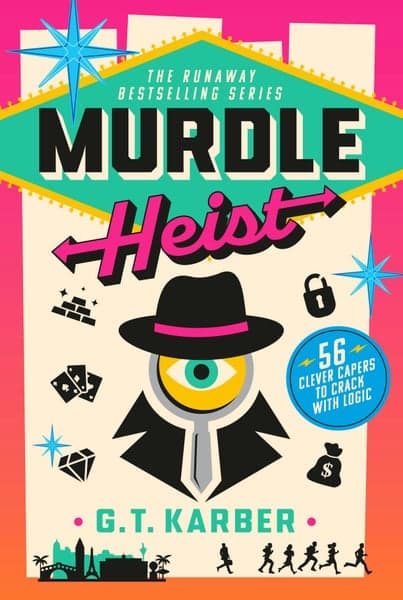
Murdle Heist
G. T. Karber · 56 jobs to plan
Miss Ruby has a crew to assemble and the Red Mask to outwit. You use the clues to decide who takes which job and how the crew gets past its obstacles. A job given to one person can change what everyone else is free to do.
I solved all 56 capers. I liked putting a plan together, especially when one assignment cleared up several others. The more crowded grids sometimes felt fiddly or repeated a deduction I'd already made in an earlier case. A caper gives you a place to stop, and the rivalry gives the next one some momentum.
4
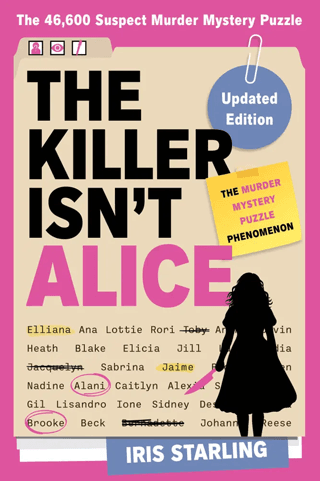
The Killer Isn't Alice
Iris Starling · One case, 46,600 names
Alice leaves a dossier of suspects and 18 clues. Some clues rule out a section of the list, while others hinge on how a name is written or where it appears. Every pass removes possibilities from the same pool until one name fits the evidence.
A natural stopping point is the end of a pass through the dossier. A note of which clue you applied and where you stopped can spare you a second pass over the same names. My guide to Alice explains how the original and September 2026 puzzles use this method with different lists.
5
Murdoku
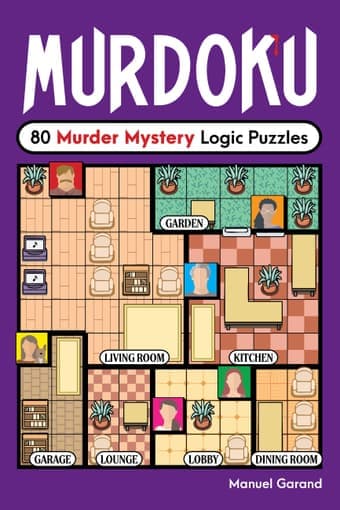
Manuel Garand · 80 illustrated crime scenes
Clues about rooms, objects, and other people tell you where the suspects could stand. The illustrated grid allows at most one person per row and column. Place the victim along with the suspects to work out who was alone with them in the same area.
Cluedoku starts from a marked crime location. In Murdoku, working out where the victim was is itself a deduction. You may spend a while moving between an object in the drawing and a positional clue. Those placements belong to this scene, so the next case leaves the old layout behind.
6
Search and Solve: Murder Mystery
Agnes Knight · Word searches and case files
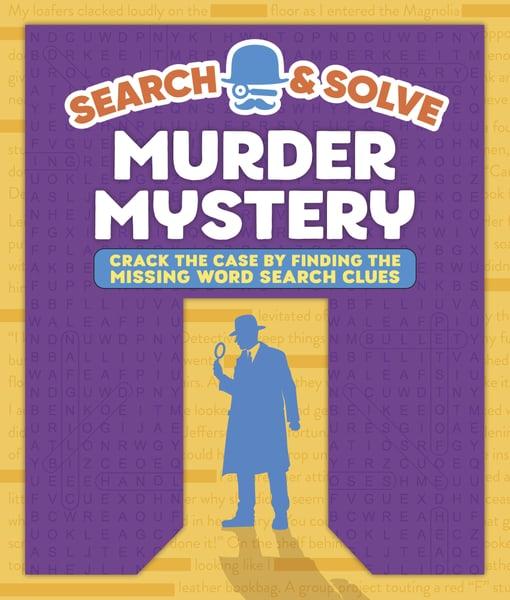
More than 30 investigations are drawn from the files of missing detective D. H. Myers. Key words have been blacked out. Finding them in a word search lets you fill the gaps and read evidence that was missing from the file. The U.S. publication date is November 17, 2026.
The work comes in two stages. Finding a word gives you something to put back into the case, and then you have to see what the restored detail means. A file has a built-in pause between collecting the words and reading the evidence together.
7
Murdle: Volume 1
G. T. Karber · 100 cases with Deductive Logico
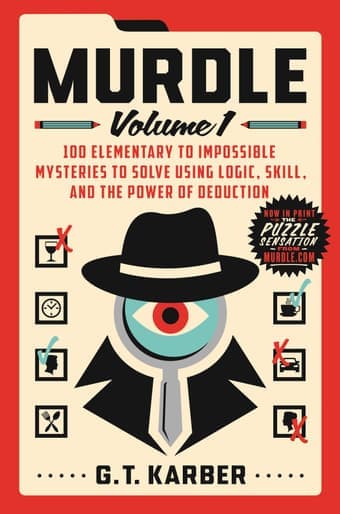
Each case starts with a set of suspects, weapons, and locations. In the classic volumes I solved, the grid let me use a fact about one category to check a pairing in another. The cases range from simple exclusions to chains of clues that take more care to follow.
This is the clearest example here of a grid used to reconstruct a crime across categories. It has a larger mystery connecting the cases, but you can finish a grid and stop without keeping its open possibilities in mind until the next session.
8
Murder Most Puzzling
Stephanie von Reiswitz · 20 illustrated cases
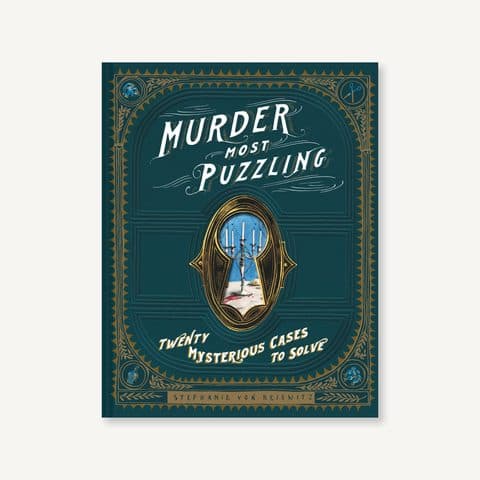
An illustrated mystery gives you a scene and a short account of what happened. A detail in the picture can change how you read that account. The book moves from one setting to another, with gothic art and a dry sense of humor holding the collection together.
In Murdoku the drawing is a space to fill under explicit rules. Here it is a scene to study, and part of the work is recognizing which detail deserves your attention. Each investigation stays within its own story and picture, even when the evidence takes a second look to notice.
9
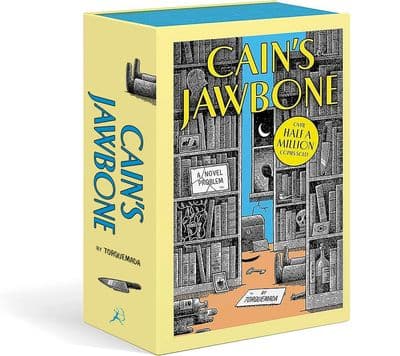
Cain's Jawbone
Edward Powys Mathers · One story in 100 fragments
The pieces of a murder story are out of order. A reference, a turn of phrase, or a detail about time may tell you which fragments belong together. The goal is an order that makes sense of the whole narrative and the six murders in it.
This is the furthest from a grid. A pair of passages can seem to fit and still conflict with something elsewhere in the story. Notes about why you grouped fragments can help you resume without treating a promising sequence as settled. It stays one literary problem from session to session.
What you come back to tomorrow
A grid keeps a visible record of the possibilities you've crossed out. An illustration has fewer built-in prompts for where to look next. In a word-search case, the words themselves are the record you bring back to the file. A useful place to pause depends on whether your progress is a mark on the grid, a detail in the picture, or a line of evidence you can now read.
A long investigation has a different cost of stopping. For Alice, the open question may be which names survived a particular clue. For Cain's Jawbone, it may be why you put two passages next to each other. A few words about the reasoning are more useful on your return than a bare page number.
A loose routine for December
One dated case from Merry Murdle can give the early part of the month a rhythm. On evenings when there's room to spread out, a dossier or a set of story fragments can stay in progress alongside it. A map or a word-search file offers a change when you want to put the longer investigation aside. The calendar can mark a place to start. The useful stopping point is whatever leaves you able to see your next deduction.
More sustained puzzles and mysteries after Alice · Puzzle books to try after Murdle Heist · More crime-scene and logic puzzles after Cluedoku
Sources
Sources for this guide
The authors and publishers explain the puzzle rules, settings, and publication details on these pages.
- Karber's Murdle series and the Merry Murdle dates
- Cluedoku and its sample pages at Macmillan
- Murdle Heist at Macmillan
- The Killer Isn't Alice at Little, Brown
- Manuel Garand's Murdoku rules and examples
- Search and Solve: Murder Mystery at Macmillan
- Murdle: Volume 1 at Macmillan
- Murder Most Puzzling at Chronicle Books
- Cain's Jawbone at Bloomsbury
Keep reading