What to read next
6 Books Like Cluedoku: More Ways to Solve a Mystery
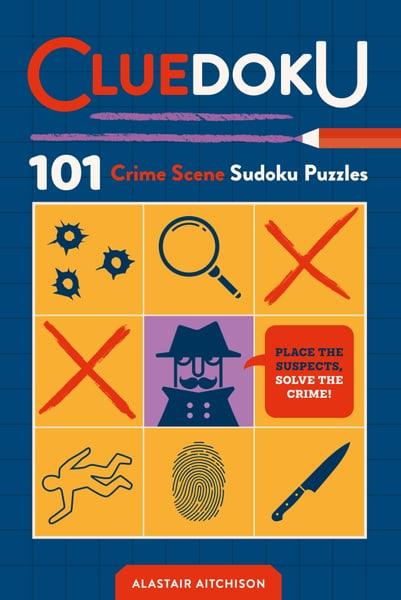
In the Cluedoku cases I solved, a witness's statement could be easy to understand and still leave a lot of possible squares. The pleasure was watching those possibilities disappear as I placed people on the floor plan. The books below keep different parts of that process, from studying the scene itself to testing clues against one very long list.
Read my review of Cluedoku by Alastair Aitchison.
The full shortlist
Why each book belongs here
Murdoku is closest to the floor-plan puzzles. The other five change what you cross off, what you look for, or how long you stay with a single case.
Murdoku
- Similar because
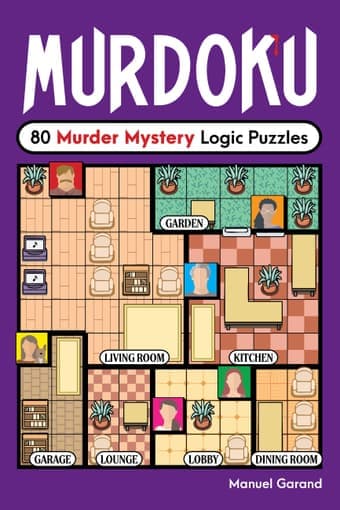
- Both books make the floor plan part of the puzzle. A statement about a room or someone's position narrows where a suspect can stand. Placing that person then takes a row and column away from the other candidates.
- Different because
- Murdoku gives you 80 full-color cases. You have to place the victim as well as the suspects, and the culprit is the person who was alone with the victim in the same area. Cluedoku marks where the crime happened at the start. In Murdoku the location you need to investigate is itself part of the solve.
Murdle: Volume 1
- Similar because
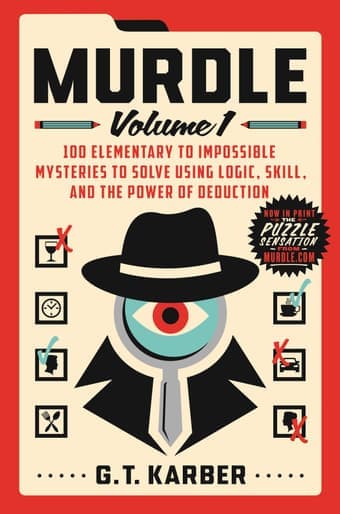
- In the classic Murdle books I solved, a clue could look unhelpful until another one ruled something out. Cluedoku has that same delayed payoff when a placement suddenly narrows a witness's statement.
- Different because
- Volume 1 uses its grid to pair suspects, weapons, and locations across 100 cases. Crossing out a weapon for one person changes the possible pairings without putting anyone in a particular square of a room. The difficulty can still build, but the grid records the investigation instead of doubling as a map.
Murdle Heist
- Similar because
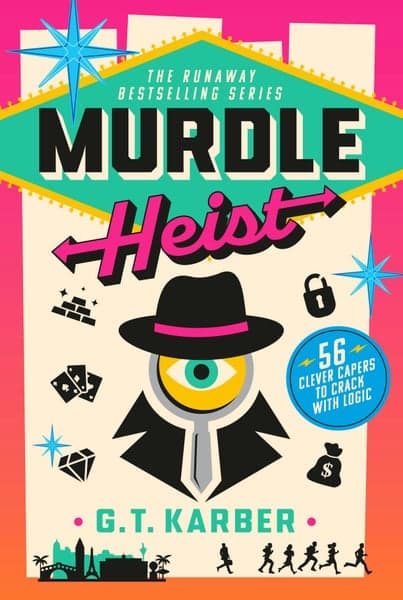
- In either book a decision can have consequences several clues away. Cluedoku makes a suspect's position affect every other person on that row and column. In Heist, one assignment can leave someone else with fewer jobs they can take.
- Different because
- Across 56 capers, you build a workable plan for Miss Ruby's crew by matching people to roles and accounting for obstacles. The extra conditions can get fiddly, as they can in Cluedoku, but here the work is to make the jobs fit together. A solved grid tells you what the crew can do.
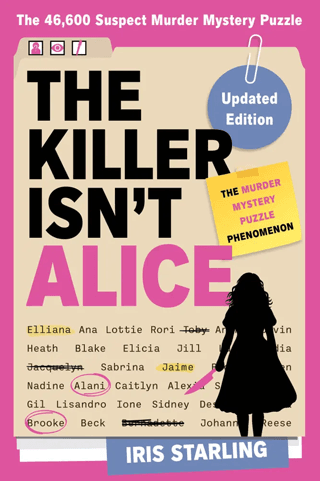
The Killer Isn't Alice
- Similar because
- You can rule out a candidate with one clue even if the other clues still fit. Cluedoku applies that idea to squares on a map. Alice applies it to names in a dossier, with clues that can hinge on where an entry appears or how a name is written.
- Different because
- The 18 clues narrow a list of 46,600 names in one sustained case. Cluedoku lets you leave a crowded grid behind when you start the next case. Alice keeps you in the same dossier, so it matters how reliably you record each elimination and how easily you can revisit it.
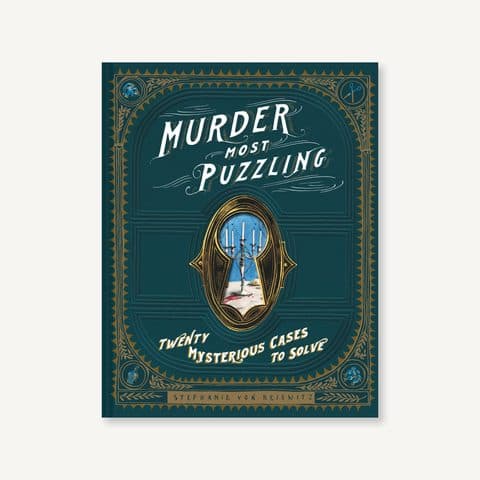
Murder Most Puzzling
- Similar because
- The scene deserves a look in both books. In Cluedoku a wall or a doorway can decide where a statement fits. These 20 illustrated mysteries ask you to read the story and study the picture together, looking for a detail that changes what might have happened.
- Different because
- There is no row-and-column procedure to tell you where to look next. The illustrations can hide useful information among atmospheric details. More of the work is deciding what counts as a clue before you can use it to test an explanation.
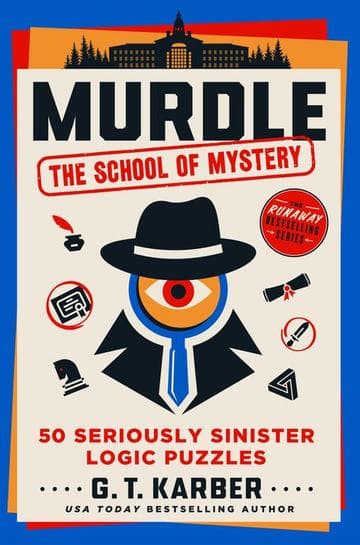
Murdle: The School of Mystery
- Similar because
- The detective setting gives written clues a reason to exist beyond filling a grid. At Deduction College, a case still asks you to test statements and match suspects, weapons, and locations. Solving means making all the clues fit the same account of the crime.
- Different because
- The 50 puzzles follow Logico's training, with illustrations and interlocking problems that carry details across cases. Cluedoku gives you a new floor plan to interpret each time. The school gives you more continuity between cases, while the individual deductions follow the usual Murdle categories.
Where the evidence lives
Murdoku keeps the map and the row-and-column rules. The Karber books move the deductions into a table of relationships, while Murder Most Puzzling lets a detail in the illustration change your reading of the story. Alice puts the evidence in a list you keep coming back to. The useful distinction is what you want to spend your time examining: a room, a set of pairings, a picture, or a dossier.
Compare Murdle, Murdoku, and Alice · The Murdle trilogy and separate adventures
Keep exploring
Explore another Books Like guide
Pick another book you know and see what to read next.