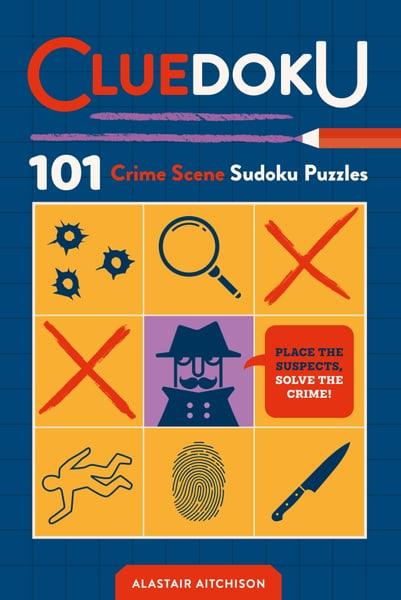
Should you read Cluedoku?
What works
The floor plan gives a witness statement somewhere to go. A clue about a doorway can reduce a whole room to a couple of plausible squares. I enjoyed the deductions where placing one person made sense of what someone else had said.
What may not work for you
A misplaced letter can rule out a square that a later clue needs. By the time the contradiction shows up, there may be several deductions to unwind. I found some cases more tiring than satisfying for that reason.
What goes into a Cluedoku square
Inspector Clueso frames each case with a brief account of the crime. The board is a nine-by-nine floor plan. You mark suspects by letter, placing exactly one in every row and every column. A room can hold several people. The statements can turn on which rooms share a wall, which ones are linked by a door, or what someone could see from their square. The crime is marked on the map, and the placements show who was next to that spot in the same room.
Sudoku's influence is in the placement rule. As soon as a suspect is fixed in one square, every other suspect loses that row and column. I liked it when that bit of housekeeping sent me straight back to the testimony with a new lead. When it led to another round of grid checks, I felt farther away from the case.
Fair clues, uneven difficulty
The cases generally grew harder as I went, with a few jumps that made me take a break. In the ones I solved, the statements usually gave me a way forward without guessing. The harder moments often came from keeping several possible positions in play until a row or column settled which one could work.
The floor plans and casts change, which keeps the case files from looking alike. Some of the deductions felt familiar once I'd seen the same kinds of clues a few times. A new setting is fun to look at. It only changes the solve when the layout makes you use the clue differently.
How it differs from Murdle and Murdoku
When I solved the classic Murdle books, my marks paired things like a suspect and a weapon. In Cluedoku, a mark stands for a place where someone might have been. That makes it closer to Murdoku, which also uses rows and columns to limit positions on an illustrated scene. Murdoku asks you to place the victim as well as the suspects and determine who was alone with them. Cluedoku starts with a marked crime location and asks you to work out who was beside it.
The Murdle, Murdoku, and Alice comparison goes deeper into those solving formats. My books like Cluedoku guide compares six other ways to work through the evidence.
Make the next decision