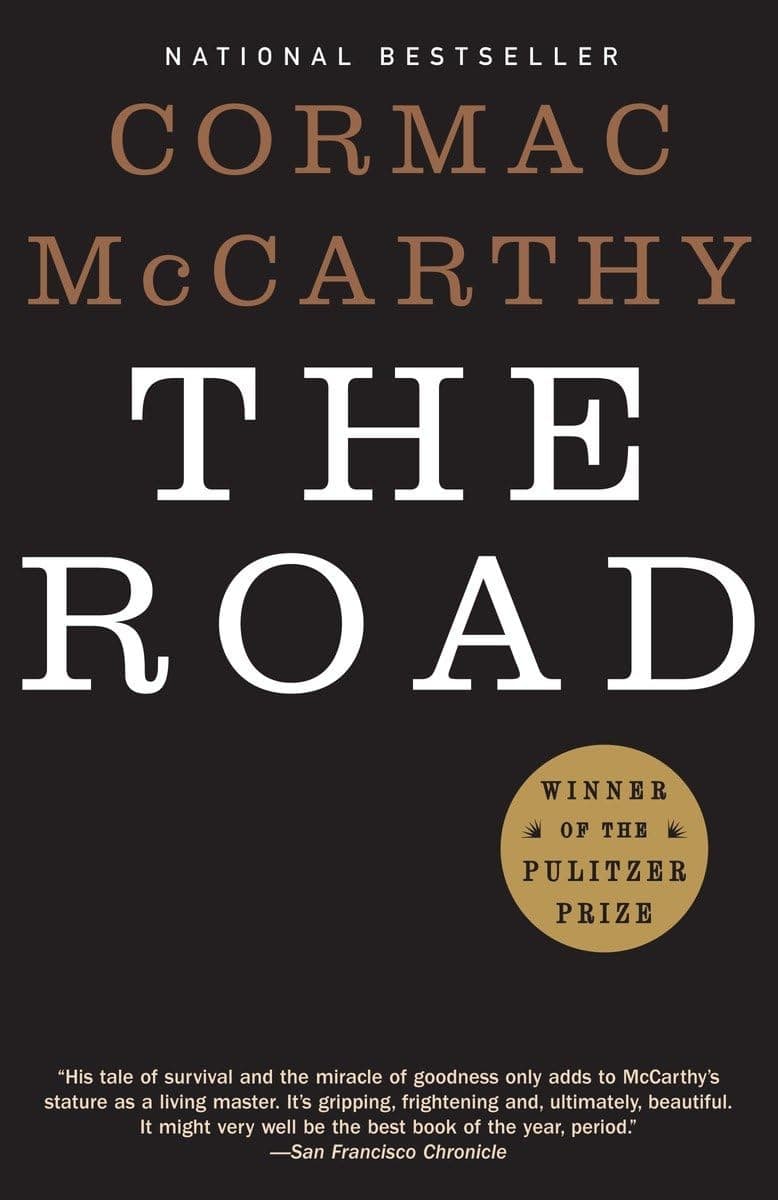
Should you read The Road?
What works
The father and son's repetitive acts of checking food, shelter, fire, and one another turn survival into relationship. Moral questions matter because every merciful choice carries a physical cost.
What may not work for you
The woman in the family's history receives little space beyond despair, and the deliberately anonymous world can feel emotionally narrowing when every encounter serves the same test of trust.
What may test your patience
The middle journey repeats cold, hunger, hiding, and abandoned structures with few markers of progress. That exhaustion is deliberate, but it can make the road feel as endless to the reader as to the pair.
Does the ending reward the effort?
Yes. The ending refuses easy consolation while preserving the book's distinction between survival alone and the values that make survival worth handing forward.
Reading The Road closely
The Road follows a father and son through a burned, ash-covered America. Almost nothing is left except their love for each other, and McCarthy tests that bond without turning hope into easy reassurance.
Instead of heavy exposition, the novel trusts readers to absorb the apocalypse through abandoned houses, quiet landscapes, and sudden danger. That minimalist approach keeps tension sharp, similar to other survival driven books in our existential fiction archive.
The emotional core is the bond between the man and the boy. Their simple exchanges capture fear, compassion, and the fragile idea of carrying the fire even when humanity feels lost. Peter Heller's The Dog Stars tests a related question through wilderness, flight, a human-dog bond, and a more openly hopeful search for connection.
Three useful comparisons
The Handmaid's Tale
The Handmaid's Tale explains more of its social catastrophe and uses memory as resistance. Choose it for gendered institutions; choose The Road for radical scarcity and the ethics of one relationship.
Best for: Readers interested in reproductive control, memory, religious authoritarianism, and narrators whose uncertainty is part of their resistance.
Never Let Me Go
Never Let Me Go is equally preoccupied with tenderness under an inescapable fate, but its calm social world hides violence rather than displaying ruin. It is quieter and more relational.
Best for: Readers who value quiet speculative fiction, friendship, memory, and emotional implication over plot-driven rebellion.
Moby-Dick
Moby-Dick turns a journey through danger into abundance of voice and knowledge. The Road moves in the opposite direction, stripping the travel narrative until almost nothing remains but love and weather.
Best for: Patient readers who enjoy maximalist classics, maritime labor, philosophical comedy, and books willing to abandon plot for inquiry.
Make the next decision