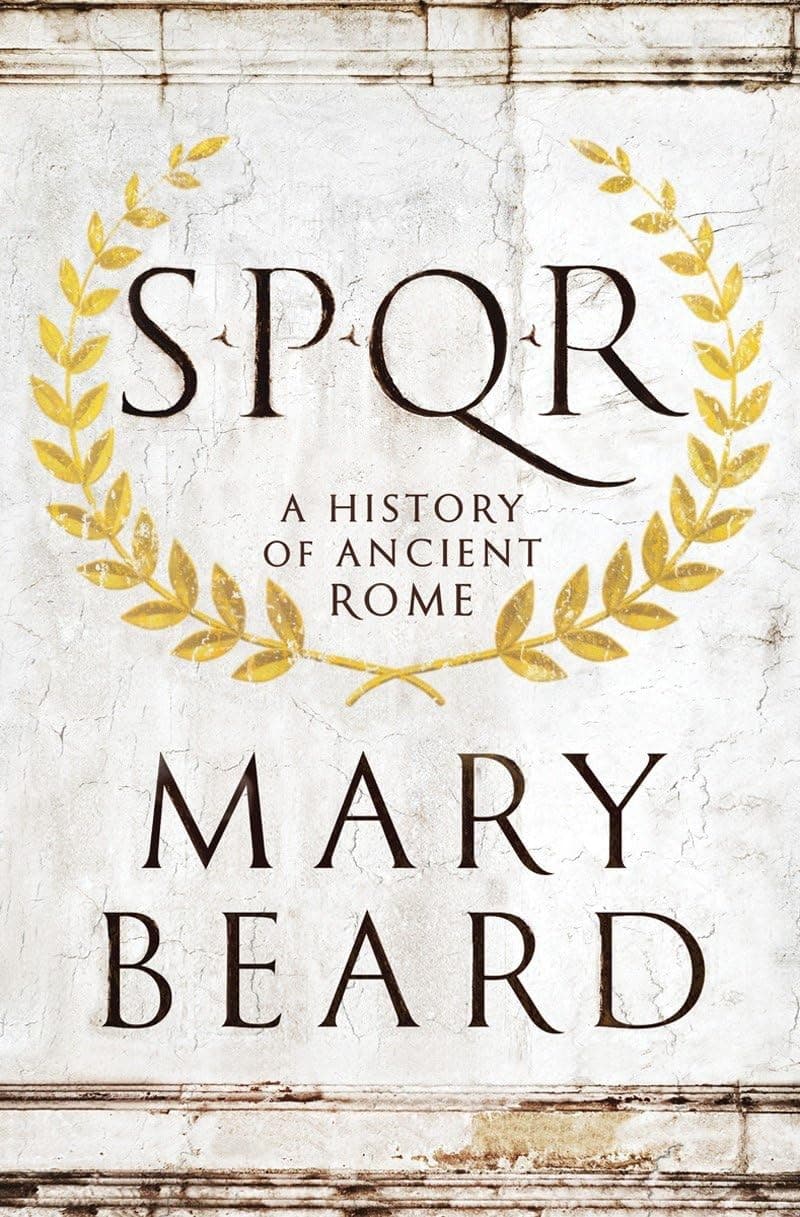
Should you read SPQR: A History of Ancient Rome?
What works
Beard keeps citizenship, class, slavery, and ordinary urban life beside politics, using gaps and contradictions in the sources as part of the history.
What may not work for you
The chronology moves backward and forward. Anyone expecting a complete run of military campaigns or imperial history may find Beard's selection idiosyncratic.
What may test your patience
The middle density of names, institutions, and competing source accounts rewards a timeline or map; reading quickly makes Beard's thematic structure harder to see.
Does the ending reward the effort?
Yes. Ending with the expansion of citizenship completes the book's central question about who counted as Roman rather than merely stopping at a famous emperor.
Reading SPQR: A History of Ancient Rome closely
Mary Beard tells Rome’s history from the late Republic back to its uncertain beginnings and forward to the early third century. Instead of running through every ruler in order, she uses key moments such as Cicero’s consulship, civil conflicts, and the reign of Augustus to examine power, violence, and public debate.
One of the things that separates this SPQR book from standard Roman overviews is the way Beard pulls apart the stories we think we know. She pauses to explain how late, biased, and fragmentary our sources are, why the legends of Romulus, the rape of Lucretia, and other famous episodes cannot simply be read as fact, and what they reveal instead about Roman anxieties. Throughout the book she threads in inscriptions, graffiti, and provincial evidence so the reader hears more than just the voices of senators and generals.
Citizenship is the central thread. Beard keeps asking who counted as Roman at different moments, how rights spread beyond the city, and how slavery, migration, and local identities complicated that label. Everyday details such as housing, food, religion, and work appear beside debates about democracy and empire, giving ordinary life a place within the institutional history.
The prose is conversational, but the scope requires readers to keep track of names, periods, and competing interpretations. It is a better fit for someone who wants a substantial, argument-driven history than for someone seeking a short chronology of emperors and battles.
For a narrower next step, browse the Mary Beard bibliography. For cross-author comparisons, use Books Like SPQR or the history collection.
Scope and historical method
The narrative opens with Cicero in 63 BCE, moves back to Rome’s beginnings, and reaches the empire-wide grant of citizenship in 212 CE.
Beard repeatedly distinguishes later legend from available evidence, showing the limits of literary sources alongside inscriptions, graffiti, and provincial material.
Reading commitment and reader fit
SPQR is approachable in style but substantial in length and argument. A simple timeline or name list can help readers moving through it over several weeks.
It is strongest for general readers interested in citizenship, social class, evidence, and everyday life, not only military expansion or imperial biography.
Three useful comparisons
Sapiens
Sapiens offers greater scope and cleaner patterns; SPQR offers far better visibility into uncertainty and source criticism.
Best for: General readers wanting a provocative historical overview and willing to verify its broad claims through more focused scholarship.
Fire and Blood
Fire & Blood imitates contested historical sources inside fantasy, making it an entertaining fictional companion to Beard's method.
Best for: Targaryen enthusiasts and readers who enjoy dynastic pseudo-history, unreliable sources, and political succession more than close viewpoint fiction.
The Great Train Robbery
The Great Train Robbery turns researched history into a procedural novel; choose it for narrative momentum rather than historiography.
Best for: Readers who enjoy procedural heists, Victorian settings, and research woven into the mechanics of a crime.