Author profile
Mary Beard: books, reviews, and where to start
Mary Beard is a classicist who writes about ancient Rome with scholarly depth, public wit, and persistent attention to whose voices survive in the archive.
Biography and criticism
Rome without the marble pedestal
Beard's histories are accessible because they reveal uncertainty and ordinary life, not because they turn the ancient world into a collection of modern celebrities.
A classicist in public
Mary Beard was born in Shropshire in 1955, studied at Newnham College, Cambridge, and developed an academic career in classics at Cambridge. Her work spans Roman social history, literature, inscriptions, material culture, and the history of classical reception. She also became a major public educator through television, reviews, lectures, blogging, and debate.
Her public style combines authority with visible uncertainty. Beard shows where evidence is missing, where an inscription permits several readings, and where a famous anecdote survives because later writers needed it. This does not weaken history. It lets readers see historical method rather than receiving the past as a finished spectacle.
Citizens, streets, and excluded voices
SPQR covers Roman history from foundation stories through citizenship and imperial rule, shifting attention from a parade of emperors toward institutions and the changing meaning of being Roman. Pompeii reconstructs urban life from buildings, graffiti, food, waste, commerce, and bodies without pretending the preserved city is an untouched time capsule.
Women & Power connects ancient patterns of silencing to modern public speech, while also inviting debate about analogy across time. Beard's wit makes scholarship welcoming, but she does not eliminate difficulty. SPQR is the broad starting point; Pompeii the best demonstration of evidence assembled from daily life. Her central lesson is that the ancient world becomes more interesting when certainty and grandeur stop screening out ordinary people.
The books in context
How the work develops on the page
These notes connect the biography to specific choices in the books. Each title links to the full spoiler-free review.
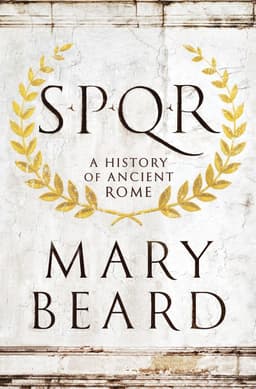
In SPQR: A History of Ancient Rome, Mary Beard tells the story of Rome from the late Republic back to its hazy beginnings and forward to the early third century, when citizenship was extended to every free inhabitant of the empire. Instead of running through every emperor in order, she picks key moments such as Cicero's consulship, civil conflicts, and the reign of Augustus to show how power, violence, and public debate shaped the city. The result is a narrative history that feels big in scope but anchored in concrete people, places, and arguments.
One of the things that separates this SPQR book from standard Roman overviews is the way Beard pulls apart the stories we think we know. She pauses to explain how late, biased, and fragmentary our sources are, why the legends of Romulus, the rape of Lucretia, and other famous episodes cannot simply be read as fact, and what they reveal instead about Roman anxieties. Throughout the book she threads in inscriptions, graffiti, and provincial evidence so the reader hears more than just the voices of senators and generals.
Citizenship is the central thread. Beard keeps asking who counted as Roman at different moments, how rights spread beyond the city, and how slavery, migration, and local identities complicated that label. Everyday details like housing, food, religion, and work appear beside debates about democracy and empire, so you come away with a sense of how ordinary people lived under a state that could be both brutally exploitative and surprisingly flexible. If you are specifically interested in SPQR themes of citizenship, empire, and everyday life in ancient Rome, those are the questions that keep returning in almost every chapter.
Readers who wonder whether SPQR is hard to read usually find that the challenge is length rather than jargon. The prose is conversational and often sharp, but it is a solid six hundred page history that expects you to keep track of names, dates, and arguments. It suits adults and older teens who enjoy narrative non fiction and do not mind moving slowly through dense chapters, and it is a strong entry point if you know a little about Rome from school or pop culture and want a fuller picture.
If this SPQR by Mary Beard review leaves you curious, and you start looking for books like SPQR, a good next step is more narrative Roman history or Beard's own work on Pompeii and Roman emperors, which zoom in on specific cities and rulers. You can also compare it with historical fiction on our site once you are ready to feel the period through story as well as evidence. When you are ready to read the book itself, you can secure your copy of SPQR on Amazon and then browse our non fiction shelves for more big picture history.
Beard states what a source claims, identifies when it was written and whose interests it served, then offers a provisional reading rather than hiding the interpretive work.
Beard keeps citizenship, class, slavery, and ordinary urban life beside politics, using gaps and contradictions in the sources as part of the history.
The chronology moves backward and forward, and readers seeking military campaigns or a complete imperial narrative may find the selection idiosyncratic.
The middle density of names, institutions, and competing source accounts rewards a timeline or map; reading quickly makes Beard's thematic structure harder to see.
Yes. Ending with the expansion of citizenship completes the book's central question about who counted as Roman rather than merely stopping at a famous emperor.
Fire & Blood imitates contested historical sources inside fantasy, making it an entertaining fictional companion to Beard's method.
The Great Train Robbery turns researched history into a procedural novel; choose it for narrative momentum rather than historiography.
A clear, argumentative overview of roughly a thousand years of Roman history that starts in 63 BCE and reaches the empire wide grant of citizenship in 212 CE.
A focus on how Romans thought about citizenship, power, and identity rather than just a list of emperors and battles.
Myth busting explanations that show what ancient sources can and cannot tell us about famous episodes in early Roman history.
Readers who want an accessible but serious Roman history to read before or after visiting Rome, watching historical dramas, or studying the subject in class.
Adults and older teens comfortable with long narrative non fiction who like authors that share their working methods and questions, not just finished conclusions.
Book clubs interested in talking about citizenship, democracy, and empire with plenty of concrete examples from the ancient world.
Keep a simple list of recurring names such as Cicero, Caesar, Augustus, and a few key emperors so you do not lose track of who is who.
Read a chapter, then check a map of the Roman world to see where the action is happening and how far Roman power stretched at that point in the story.
Pair SPQR with a documentary series or museum visit so that statues, inscriptions, and ruins mentioned in the book are easier to picture.
SPQR works best for readers who want a substantial but approachable history rather than a simple timeline of emperors and battles. Beard pays close attention to citizenship, social class, evidence, and everyday life, making the book especially rewarding for curious general readers, students, and book groups willing to pause over competing interpretations of Rome.
This SPQR: A History of Ancient Rome review looks at how Mary Beard retells a thousand years of Roman history through citizenship, power, and everyday life rather than a simple rise and fall story.
Read the complete reviewWhere to begin
A good place to start with Mary Beard

SPQR: A History of Ancient Rome
4.6 / 5SPQR is a substantial, skeptical history of Rome that teaches readers how evidence is argued over instead of delivering a parade of settled facts.
Bibliography
Books by Mary Beard
Reviewed titles open directly on Book Review Guide. Other editions and works remain marked until a full review is published.

Reviewed
SPQR: A History of Ancient Rome
Not reviewed yet
SPQR
Not reviewed yet
Literacy in the Roman world
Not reviewed yet
Religions de Rome
Not reviewed yet
Age of Caesar
Not reviewed yet
El triunfo romano
Not reviewed yet
Parthenon
Not reviewed yet
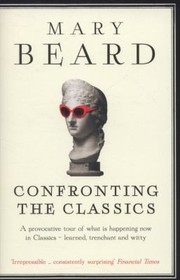
Confronting the Classics

Not reviewed yet
The Invention Of Jane Harrison
Not reviewed yet
Fires of Vesuvius

Not reviewed yet
La civilización en la mirada

Not reviewed yet
Pompeii

Not reviewed yet
Civilisations
Not reviewed yet
Invention of Jane Harrison

Not reviewed yet
Frauen und Macht
Not reviewed yet
El mundo clásico, una breve introducción

Not reviewed yet
Woman as a Force in History

Not reviewed yet
All in a Dons Day

Not reviewed yet
How to Manage Your Slaves by Marcus Sido

Not reviewed yet
Doce césares

Not reviewed yet
Confronting The Classics Traditions Adventures And Innovations
Not reviewed yet
Mythos in Mythenloser Gesellschaft

Not reviewed yet
Mujeres y poder
Not reviewed yet
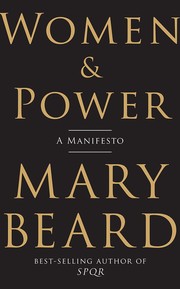
Women & Power

Not reviewed yet
Einleitung in Die Lateinische Philologie
Not reviewed yet
Don's World

Not reviewed yet
Twelve Caesars
Not reviewed yet
The nurse in public health
Not reviewed yet
Roman Guide to Slave Management

Not reviewed yet
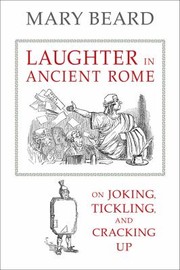
Laughter in Ancient Rome

Not reviewed yet
Roman Triumph

Not reviewed yet
Civilisations : How Do We Look/The Eye of Faith

Not reviewed yet
The Silver Caesars
Not reviewed yet
Traditions Adventures And Innovations
Not reviewed yet
La herencia viva de los clásicos
Not reviewed yet
Laughter in Ancient Rome Sather Classical Lectures
Not reviewed yet
Gifford Lectures

Not reviewed yet
Pompeji
Not reviewed yet
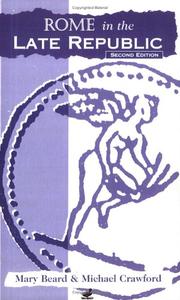
Rome in the Late Republic

Not reviewed yet
Colosseum


Not reviewed yet
Kleopatras Nase
Not reviewed yet
Death of Ivan Ilyich and Confession
Not reviewed yet
La risa en la Antigua Roma
Not reviewed yet
Time Travelers

Not reviewed yet
Kadın ve İktidar-Bir Manifesto


Not reviewed yet
Pompéi
Not reviewed yet
Women and Power
Bibliographic records: Open Library.
Reviewed bibliography
Mary Beard books reviewed here
Every title below has a complete, spoiler-free review. Scores are our editorial ratings, not visitor averages.

20164.6 / 5
SPQR: A History of Ancient Rome
A History of Ancient Rome
SPQR is a substantial, skeptical history of Rome that teaches readers how evidence is argued over instead of delivering a parade of settled facts.
As an Amazon Associate, I earn from qualifying purchases.
Keep exploring