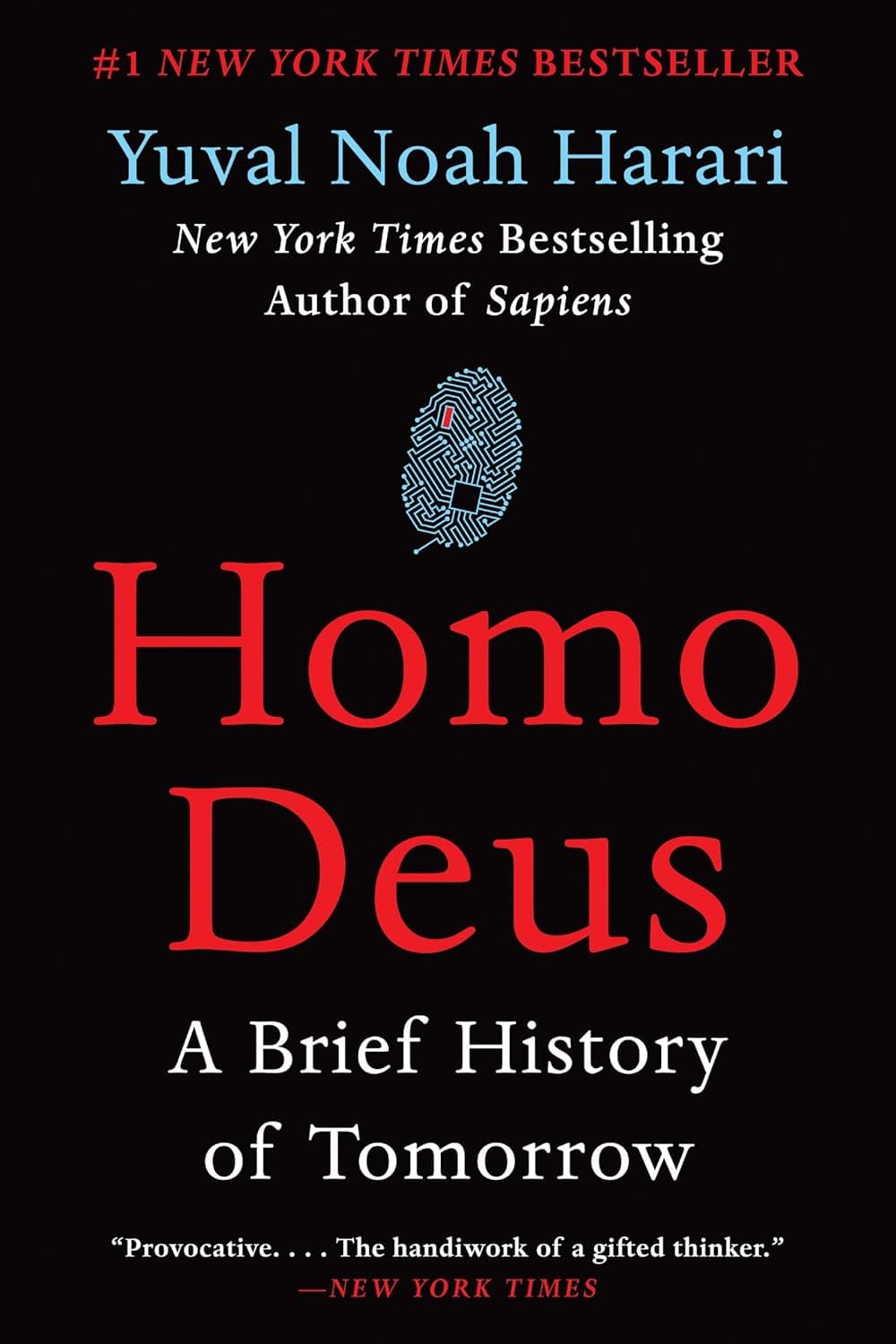
Should you read Homo Deus?
What works
The book identifies a genuine tension between humanist ideas of autonomous choice and technologies designed to predict, influence, or redesign behavior.
What may not work for you
Dataism becomes an overly elastic label, future scenarios slide between metaphor and forecast, and historical simplifications carry more weight than they should.
What may test your patience
The middle recaps themes from Sapiens before the future-facing argument fully begins; readers familiar with the earlier book may feel they are waiting for the promised subject.
Does the ending reward the effort?
The final questions are sharper than the predictions that precede them. The book closes productively if treated as provocation rather than a reliable map of what comes next.
Reading Homo Deus closely
Homo Deus turns from the past toward several possible human futures, including data-driven decisions, bioengineered elites, and new ideas about religion and meaning.
Harari organises the book around emerging "religions" of data, biotechnology, and algorithms. Concepts like dataism, artificial intelligence, and genetic engineering are introduced in accessible language before he pushes them toward sharp ethical questions and thought experiments.
The narrative dips into capitalism, neuroscience, religion, and computer science, linking them into a single, very readable argument.
Homo Deus works best as a starting point for arguments about AI, biotechnology, and humanism, not as a reliable forecast.
What the argument does well
Explains ideas like dataism, techno humanism, and algorithmic governance in straightforward terms.
Connects biotechnology, artificial intelligence, and ethics into one continuous, accessible argument.
Offers speculative scenarios that ask readers to think about what kind of future they actually want.
Three useful comparisons
Sapiens
Sapiens is the stronger starting point because its historical synthesis supplies the assumptions Homo Deus projects forward.
Best for: General readers wanting a provocative historical overview and willing to verify its broad claims through more focused scholarship.
21 Lessons for the 21st Century
21 Lessons narrows the horizon to present political and technological problems, though it remains broad rather than practical.
Best for: Use it as an accessible conversation starter about current global anxieties, not a final answer to them.
The Selfish Gene
The Selfish Gene develops one scientific framework in greater depth and makes its evidentiary reasoning more visible.
Best for: General readers ready for a substantial, argument-driven introduction to evolution from the gene's-eye view.