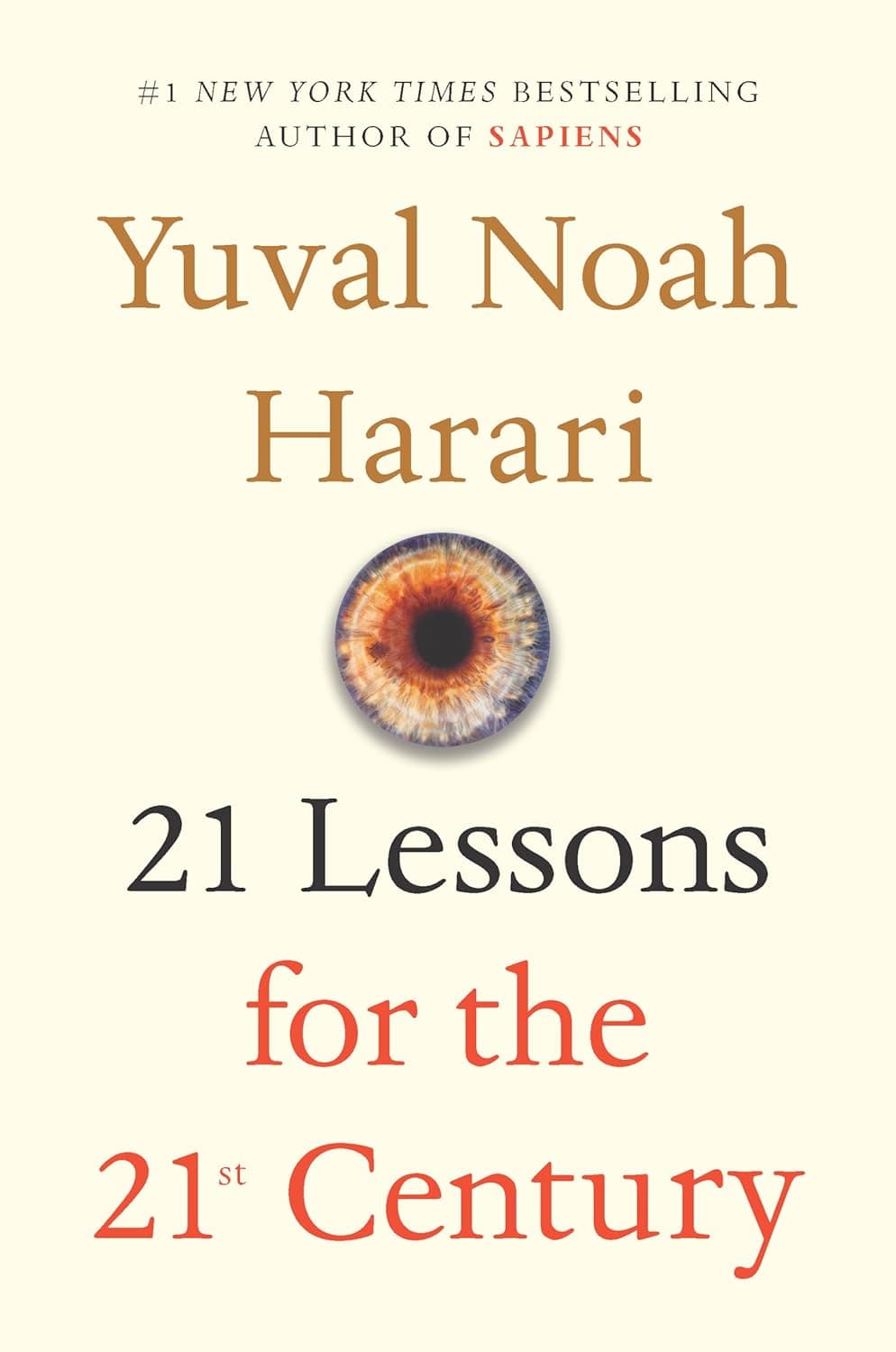
Should you read 21 Lessons for the 21st Century?
What works
Harari connects technology, nationalism, education, religion, migration, and political confusion in clear chapters that give discussion groups immediate points of entry.
What may not work for you
The essays vary in depth, revisit claims from the earlier books, and frequently diagnose vast problems without offering evidence or solutions at a comparable scale.
What may test your patience
The repeated return to uncertainty and data power creates thematic unity but also makes later chapters feel like variations on a position established early.
Does the ending reward the effort?
The turn toward meditation is sincere but loosely connected to the geopolitical analysis, making the close personal rather than intellectually cumulative.
Reading 21 Lessons for the 21st Century closely
21 Lessons for the 21st Century takes on the noise of AI headlines, political shocks, and constant notifications. Harari organizes the book around 21 questions about power, technology, and meaning rather than one sustained story or argument.
The book is organized into five parts: the technological challenge, the political challenge, despair and hope, truth, and resilience. Harari moves from automation and artificial intelligence to nationalism, religion, fake news, education, and meditation. The chapters on work, data, and liberty ask what happens when algorithms know us better than we know ourselves, while the political essays examine nationalism, immigration, and global cooperation.
Later sections tackle terrorism, war, and despair, then turn to truth in an age of propaganda, post truth, and science fiction, before ending with resilience through education and mindfulness. Harari is strongest when he connects abstract trends like AI, big data, and ecological risk to everyday questions about jobs, news feeds, and anxiety. Some arguments feel broad or provocative on purpose, yet even when you disagree the framework makes it easier to talk about what really worries you in the twenty first century.
If you have already read Sapiens and Homo Deus and are wondering whether 21 Lessons for the 21st Century is worth reading after Sapiens, the answer depends on what you want next. It adds less new history or far future speculation and more present day guidance about how to think, vote, work, and raise children in a world of constant disruption. Read in that light, as a set of main ideas explained for citizens rather than as a prediction book, it rounds out the trilogy by sitting between past and future at the messy point where decisions are actually made.
Taken together, Sapiens shows where we came from, Homo Deus explores where we might be going, and 21 Lessons for the 21st Century asks what to do now. Start with Sapiens for background, move to Homo Deus for future possibilities, then finish with 21 Lessons as a guide to the present.
Three useful comparisons
Sapiens
Sapiens offers a clearer central narrative and is the better introduction to Harari's recurring ideas.
Best for: General readers wanting a provocative historical overview and willing to verify its broad claims through more focused scholarship.
Homo Deus
Homo Deus focuses more consistently on technological futures, though its predictions are more speculative.
Best for: Choose it for an accessible debate starter about algorithms and humanism, not a technical account of artificial intelligence or biotechnology.
The Anxious Generation
The Anxious Generation addresses one present problem with a more focused causal claim and a concrete policy agenda, albeit a contested one.
Best for: Worth reading for parents, teachers, and school leaders who want concrete ideas, provided they also want to hear the researchers who challenge Haidt's causal claims.