A self-published beginning
James Islington is an Australian fantasy writer who developed The Shadow of What Was Lost outside a traditional contract and first published it independently. Its reception led to wider publication and the completed Licanius Trilogy. Those books announce his interest in time, identity, foreknowledge, and promises whose moral meaning changes when the future appears fixed.
The trilogy is built around long-delayed revelations that change the meaning of earlier scenes, and its ending tries to pay off decisions planted several books before. Remembering small details is part of the pleasure, though the accumulated explanations can make characters feel like pieces in a timeline.
The Hierarchy becomes personal
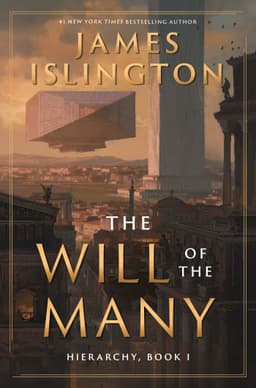
The Will of the Many begins the Hierarchy series with Vis entering an elite academy inside a Roman-inflected empire. Its political system extracts Will through an explicit pyramid of human submission, making hierarchy a material magic rather than background theme. Vis's intelligence is immediate, but his multiple loyalties ensure that competence does not equal control.
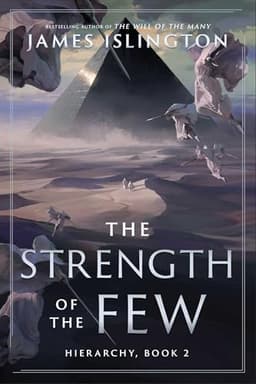
Islington writes clear action, training, puzzle, and late-book escalation. The Strength of the Few enlarges the consequences without making the first academy merely prologue. New readers should choose The Will of the Many for the fastest opening and most accessible protagonist. Licanius suits those who want completed time-based plotting. Islington's central fascination is the point at which a system's elegant logic becomes evidence against its legitimacy.
Scion changes genre and starts a separate sequence
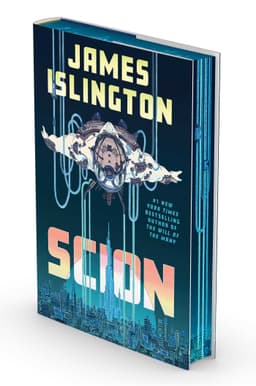
Scion moves from epic fantasy into cyberpunk science fiction. Islington's official site labels it Scion #1 and lists it separately from The Will of the Many, The Strength of the Few, and The Justice of One under Hierarchy. The same catalog keeps the completed Licanius books in their own numbered group, treating them as three distinct series.
Readers can choose among those paths by form as well as setting. The Will of the Many opens the ongoing academy and political epic; The Shadow of What Was Lost begins the completed Licanius Trilogy; Scion offers a 240-page science-fiction entry point with its own protagonist and premise. The first two Hierarchy volumes and Scion have reviews here.
Islington constructs fantasy around information that will change the meaning of earlier scenes. A rule, memory, identity, or institutional claim is introduced clearly enough to be stored, then returned to when the reader has acquired a different frame. This creates the pleasure associated with puzzle narratives, but the machinery works only if revelation changes a relationship rather than merely proving that the author planned ahead.
The Will of the Many improves on the accessibility of his earlier epic work by fastening its system to Vis's immediate needs. The academy, hierarchy, and transfer of power can be learned through what he must conceal and accomplish. His prose favors clarity over ornament, which helps a complicated plot move, though supporting characters can initially feel organized by function. Islington is most effective when competence stops being a shortcut. Vis may understand the game faster than others, but every successful deception increases the number of people from whom an honest self must remain hidden.