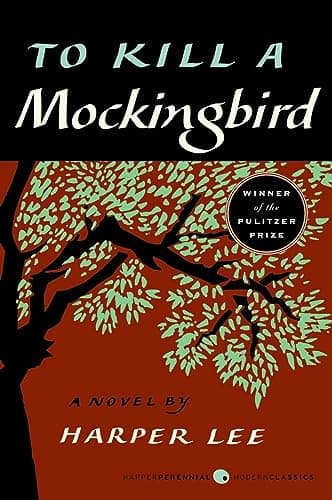
Should you read To Kill a Mockingbird?
What works
Scout's narration catches what adults normalize without always knowing how to interpret it. Humor, neighborhood fear, family loyalty, and courtroom injustice therefore belong to one developing moral world.
What may not work for you
Tom Robinson receives less interior life than the white characters debating his fate, and Atticus's moral authority can simplify the community's racial violence into a test of individual decency.
What may test your patience
The first half spends substantial time on school, neighbors, and the children's fascination with Boo Radley before the trial dominates. Those chapters build Maycomb, but readers expecting an immediate courtroom novel may find them diffuse.
Does the ending reward the effort?
Yes. The final return to Boo connects the children's private mythology with the book's larger demand that they see people beyond inherited stories.
Reading To Kill a Mockingbird closely
To Kill a Mockingbird is narrated by Scout Finch, whose memories of childhood move from games and neighborhood mysteries toward the trial in which her father defends Tom Robinson, a Black man falsely accused by a white woman. Her limited understanding allows readers to see how prejudice is taught through ordinary habits as well as public violence.
The novel's empathy and moral clarity made it enormously influential, but modern readers should also examine its limits: Black characters are often seen through a white child's perspective, and Atticus occupies more narrative space than the people most endangered by the racist system.
Childhood beside injustice
Scout's voice makes adult hypocrisy visible without turning her into an all-knowing observer. The contrast between lessons about fairness and Maycomb's conduct drives the novel.
Reading it critically today
Its historical importance and emotional force remain real. Pairing it with work by Black writers offers perspectives the novel does not fully provide.
Three useful comparisons
The Book Thief
The Book Thief also follows a child learning how ordinary communities accommodate cruelty, but its wartime setting and unusual narrator create a more openly stylized story about words and complicity.
Best for: Best for older teens and adults who want a slow, lyrical wartime novel about a foster family, the uses of language, and the cost of small acts of decency.
The Great Gatsby
The Great Gatsby uses a reflective narrator to expose privilege from closer to adulthood. Choose it for class and self-invention; choose Mockingbird for childhood, law, and community morality.
Best for: Readers drawn to concise literary tragedy, unreliable admiration, class, reinvention, and prose that rewards rereading.
The Handmaid's Tale
The Handmaid's Tale places injustice inside the narrator's own constrained body and language. It is a harsher choice for readers interested in how law converts prejudice into daily ritual.
Best for: Readers interested in reproductive control, memory, religious authoritarianism, and narrators whose uncertainty is part of their resistance.