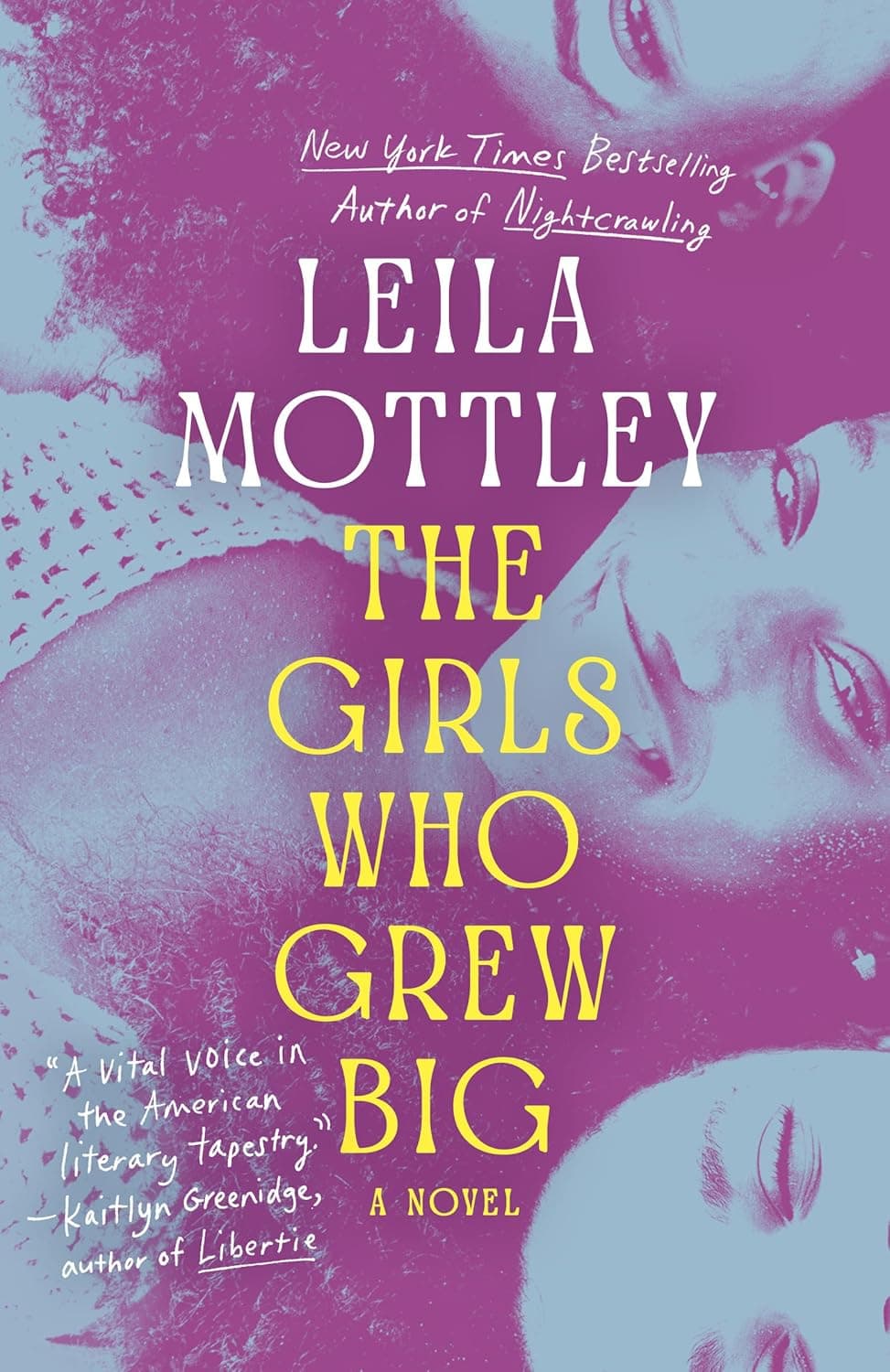
Should you read The Girls Who Grew Big?
What works
Adela, Emory, Simone, and the other Girls have distinct pressures and desires, while Padua Beach gives their makeshift support network a vivid social and physical setting.
What may not work for you
The number of lives occasionally limits how deeply a secondary rupture can develop, and the book's emotional intensity leaves little neutral space between crises.
What may test your patience
Adela's arrival introduces an established web of mothers, children, relatives, and loyalties that takes several chapters to distinguish.
Does the ending reward the effort?
Yes. Growth means changed relationships and harder self-knowledge, not a moral verdict on motherhood or a sentimental promise that solidarity fixes poverty.
Reading The Girls Who Grew Big closely
Sixteen-year-old Adela arrives in Padua Beach pregnant and separated from the future she imagined in Indiana. What she finds on the Florida panhandle is not an inspirational support group arranged for her benefit. Simone, Emory, and the other young mothers already have children, loyalties, resentments, and private plans. Adela must learn their history before she can understand what belonging to the Girls will ask of her.
Mottley is strongest when motherhood appears as continuous labor rather than a symbol. Emory brings her newborn to high school because graduation still matters to her. Simone raises twins and faces another pregnancy while her red truck becomes a gathering place for children and friends. Feeding, transport, childcare, sex, work, and exhaustion occupy the same narrative space, which makes the girls' ambitions feel more credible than any speech about resilience could.
The alternating viewpoints also refuse to turn teenage mothers into a single social argument. Adela has the habits of a competitive swimmer and the anger of someone exiled from her own life. Emory wants education without pretending the institutions around her are flexible. Simone can be generous, territorial, reckless, and perceptive within a few pages. Their friendship is valuable precisely because it includes envy, failed attention, and choices that the others cannot repair.
Padua Beach gives the novel a humid, unstable physical world. Water promises release but also danger; storms and crowded homes make privacy temporary. Mottley often moves from lyrical descriptions of bodies and landscape into blunt group dialogue, preserving the distance between how the girls are viewed and how young they sometimes feel together. A few dramatic set pieces press the symbolism too hard, and the accumulation of crises can leave secondary relationships underdeveloped.
Even so, the book's emotional argument holds. Family rejection, limited money, sexuality, and public judgment shape maternal choice without wholly defining any character. The conclusion does not reward the Girls by making every practical problem disappear, nor does it punish them to prove a lesson. It asks what growing up means when adult responsibility arrives before adult authority, then lets solidarity remain necessary, imperfect, and more persuasive than sentiment.
Three useful comparisons
The Women
The Women also builds survival through female solidarity, but Mottley is less melodramatic and more attentive to class, youth, and daily caregiving.
Best for: Adult historical-fiction readers prepared for graphic injury, death, addiction, PTSD, sexism, and a deliberately intense account of Vietnam-era nurses.
The Handmaid's Tale
The Handmaid's Tale turns reproduction into state control; Mottley stays in a recognizable community where judgment, money, family, and friendship shape maternal choice.
Best for: Readers interested in reproductive control, memory, religious authoritarianism, and narrators whose uncertainty is part of their resistance.
Keeper of Lost Children
Keeper of Lost Children offers a broader historical saga about children and belonging, while Mottley remains close to contemporary young mothers speaking for themselves.
Best for: Choose it for a multi-timeline story about postwar Germany, Black American soldiers, German women, mixed-race children, adoption records, and the people allowed to decide where a child belongs.