
Author profile
Leila Mottley: books, review, and bibliography
Leila Mottley writes lyrical, politically alert fiction about young Black women navigating institutions that claim to protect communities while exploiting their vulnerability.
Biography and criticism
Youth, survival, and the city that looks away
Mottley's early success should not obscure the formal confidence with which she joins intimate voice to housing, policing, money, and public abandonment.
An Oakland debut written young
Leila Mottley was born in Oakland in 2002 and became the city's youth poet laureate before her first novel, Nightcrawling, was published when she was nineteen. The novel follows Kiara, a teenager carrying rent, family instability, and care responsibilities while becoming entangled in sexual exploitation by police officers. Mottley places systemic violence inside immediate calculations about food, housing, and who can be trusted.
The lyrical prose gives Kiara an interior life larger than the roles imposed on her. Beauty does not make the harm abstract. It records the attention the surrounding institutions refuse to offer.
Girls, growth, and public judgment
The Girls Who Grew Big extends Mottley's interest in young women judged through motherhood, sexuality, and community narratives. She writes groups without assuming solidarity is easy. Affection can coexist with rivalry, shame, and unequal capacity.
Because the career is young, fixed claims about a lifelong style would be artificial. The available books show a writer drawn to water, bodies, city space, improvised family, and the political meaning of care. Nightcrawling is the essential beginning. Read slowly enough to notice that the lyrical line and the administrative fact are working together: the beauty makes a life audible, while the fact identifies who benefited from not listening.
Lyricism beside an administrative fact
Nightcrawling places poetic perception beside bills, rent, police procedure, and the requirements of caring for a child. The contrast prevents lyricism from becoming a haze around exploitation. Kiara can see beauty and still need money by morning. Her language records a full consciousness that the institutions around her reduce to a category convenient for punishment or disbelief.
Oakland is not generic urban danger. Streets, transit, housing pressure, neighborhood memory, and law enforcement create a specific geography of exposure. Mottley writes the city with attachment as well as anger, which matters because critique is not delivered by a visitor who sees only damage. The same place can contain community and the structures harming it.
The Girls Who Grew Big shifts from one young woman's isolation toward a group. Community offers practical knowledge and recognition, but it does not dissolve jealousy, judgment, or unequal resources. Mottley is wary of asking solidarity to appear automatically among people who share one stigmatized experience. Connection must be negotiated while each person carries a different history of being watched.
Mottley's sentences sometimes load a moment with imagery when its plain facts are already powerful. Her stronger passages use a lyric image to sharpen what happened, then return attention to the character instead of making her stand for every young woman in a similar position.
Voice under the pressure of public interpretation
Mottley's young women are watched by institutions and communities that believe they already know the story. A police report, news account, courtroom narrative, neighborhood rumor, or adult judgment can convert a complicated life into an example. Her fiction pushes back by granting the character a language more expansive than the label. Kiara's lyric perception in Nightcrawling is not evidence that suffering has made her noble. It is evidence that the official description has failed to record the mind of the person being described.
The Girls Who Grew Big looks at that pressure through a group. Shared experience gives the girls knowledge they cannot find elsewhere, but it does not make them interchangeable. Money, family support, resentment, and ambition change what each one can imagine. Mottley is most convincing when the girls can be generous and unfair in the same chapter, because solidarity does not erase conflict.
Where to begin
The Leila Mottley book reviewed here
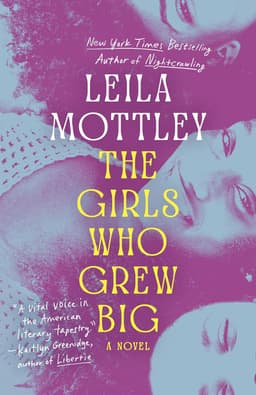
The Girls Who Grew Big
4.6 / 5The Girls Who Grew Big writes teenage mothers as complicated young women building a community, not as warnings arranged around a single decision.
Bibliography
Books by Leila Mottley
Reviews and book guides open on Book Review Guide. The full list comes from the linked bibliography source.
Reviewed
The Girls Who Grew Big
Not reviewed yet
Girls Who Grew Big
Not reviewed yet
Nachtschwärmerin
Not reviewed yet
Arpenter la nuit
Not reviewed yet
Woke up No Light
Not reviewed yet
QuIP

Not reviewed yet
Nightcrawling
Bibliographic source: Open Library.
Books on this site
Leila Mottley reviews and guides
20254.6 / 5
The Girls Who Grew Big
A Novel
The Girls Who Grew Big writes teenage mothers as complicated young women building a community, not as warnings arranged around a single decision.
As an Amazon Associate, I earn from qualifying purchases.
Keep exploring