Author profile
Cara Bastone: books, reviews, and where to start
Cara Bastone writes contemporary romance about grief, repair, and ordinary competence, paying close attention to the slow moment when another person begins to feel safe.
Biography and criticism
Romance paced by listening rather than conquest
Bastone's work is less interested in glamorous transformation than in the practical intimacy of messages, errands, shared routines, and people learning how to remain present.
A romance reader becomes a novelist
Cara Bastone lives in Brooklyn and has described a long attachment to romance, beginning with paperbacks borrowed from her grandmother. Her published career includes the Forever Yours novels, audio-first romantic comedies such as Call Me Maybe and Sweet Talk, and later work that gives grief and recovery more room beside the central relationship. The range is not a departure from romance. It is an exploration of how different formats change intimacy.
Audio work sharpened an existing strength. Bastone builds attraction through voice, interruption, misunderstanding, and the revealing detail a person chooses while apparently discussing something else. A relationship can develop before characters share physical space, which requires dialogue to carry temperament rather than merely information. The result is warm without being weightless.
Promise Me Sunshine and the time grief takes
Promise Me Sunshine centers a heroine whose life has not resumed after loss. The novel does not treat romance as the cure waiting to be administered by the correct man. Grief alters attention, appetite, patience, and the ability to imagine a future. Love becomes meaningful because it respects that altered reality rather than demanding a more convenient version of the grieving person.
Bastone's prose favors clarity and emotional sequence. She lets a kind action remain small, then shows how repetition changes its meaning. Her conflicts are strongest when two decent people have incompatible capacities, not when a villain or arbitrary secret manufactures delay. Readers who want aggressive banter or dramatic external stakes may find the patience quiet. Those who value earned trust will recognize how much craft is required to make a walk, a call, or a returned message carry consequence.
The ethics of the gentle hero
Bastone's heroes are often attractive through attention rather than dominance. They listen, notice, repair, and perform care without converting it into a debt. That ideal can become too frictionless if competence hardens into perfection, but the best books preserve boundaries and mistakes. Being safe does not mean always knowing the right thing. It means responding when the wrong thing causes harm.
Call Me Maybe is the cleanest introduction to her comic and audio-friendly side. Promise Me Sunshine is the better choice for readers who want grief treated as a continuing condition. Across both modes, Bastone understands that romance is partly a change in tempo. Characters stop rushing to perform an acceptable life and begin noticing the life actually happening between them.

The books in context
How the work develops on the page
These notes connect the biography to specific choices in the books. Each title links to the full spoiler-free review.
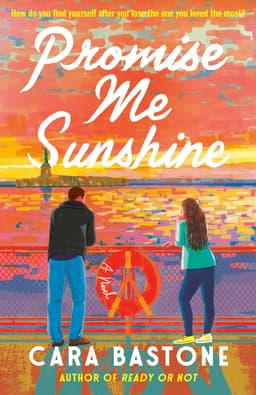
This spoiler free Promise Me Sunshine by Cara Bastone review follows Lenny, a woman whose life has quietly fallen apart after the death of her best friend from cancer. Instead of going home to the apartment they shared, she drifts between temporary nanny jobs, rides the Staten Island Ferry all night, and does whatever she can to avoid sitting alone with her grief. When she meets Miles, the grumpy but surprisingly observant uncle of one of the kids she watches, he offers a strange bargain: he will help her work through the "live again" list her friend left behind if Lenny helps him show up better for his niece.
Most of the book lives in the small, everyday moments that come out of that deal. Miles walks Lenny through tiny, manageable steps toward living again, like eating regular meals, sleeping somewhere safe, and doing one thing from the list that is not about death. In return, Lenny nudges him into uncomfortable conversations with his family, forces him to see how much his niece actually needs him, and gradually becomes the person who understands the shape of his own losses. It is a slow burn in every sense, more about mutual caretaking and quiet jokes on late night trains than big speeches or dramatic declarations.
Because many readers will search for Promise Me Sunshine trigger warnings, it is worth saying clearly that the book sits very close to grief, cancer, anxiety and the exhaustion that comes with trying to function while you are barely holding it together. There are mentions of past illness, death of a best friend, complicated family dynamics and some panic spiral moments, but the story is written to feel ultimately comforting and hopeful rather than punishing. On the romance side, Promise Me Sunshine spice level and age rating land in the adult contemporary range, with one open door scene near the end that is more emotionally vulnerable and a bit awkward than graphic, and overall the tone fits mature older teens and adults who are comfortable with frank intimacy wrapped in heavy themes.
If you are wondering whether you need to read Ready or Not before Promise Me Sunshine, the short answer is no. They share an author, a New York vibe and an interest in characters who are doing real emotional work, but this is a standalone that makes full sense on its own. You can come to Lenny and Miles fresh and then go back to Ready or Not if you want more of Bastone’s mix of mutual pining, slow build trust and low drama conflict. If you are ready to see whether this grief filled but hopeful slow burn is for you, you can pick up Promise Me Sunshine on Amazon and then explore our contemporary romance collection for more healing centered love stories.
Bastone keeps the prose conversational and attentive to routine, using ferry rides, food, and childcare to show recovery through behavior rather than grand declarations.
Lenny and Miles help each other through meals, childcare, sleep, family conversations, and a list of manageable tasks, so affection grows from repeated care rather than rescue fantasy.
Miles can be almost implausibly perceptive, and the novel occasionally explains an emotional lesson after the scene has already communicated it.
The slow burn remains focused on mourning and daily survival for a long stretch, which may frustrate readers expecting early romantic escalation.
Yes. Love expands Lenny's willingness to live without asking her to finish grieving or replace the friend she lost.
People We Meet on Vacation is brighter, more travel-driven, and built on years of friendship; Promise Me Sunshine stays closer to immediate grief and practical care.
Funny Story uses sharper banter and a more social rebuilding arc, while Bastone allows sadness to set a quieter pace.
Love by the Book treats friendship as its primary love story; Promise Me Sunshine uses romance and family care to reopen a life narrowed by bereavement.
A grief heavy but ultimately hopeful slow burn about a woman learning to live again after losing the person who knew her best.
A grumpy uncle and list making nanny dynamic where caretaking, small routines and shared jokes slowly turn into something more.
New York settings that actually matter to the story, from late night ferry rides to looping subway trips that mirror how stuck Lenny feels in her own head.
Readers who want a contemporary romance that leans as much into healing, therapy vibes and found family as it does into the love story.
Fans of Ready or Not, Emily Henry or Abby Jimenez who enjoy emotional, character driven plots where humor and grief sit side by side.
Book clubs looking for a novel that talks openly about mourning, mental health and second chances while still delivering a satisfying happy ending.
Promise Me Sunshine spends a lot of time with grief, including the death of a best friend from cancer, complicated memories and the way mourning can derail work, housing and relationships.
There are references to illness, hospital stays, panic spirals, insomnia and characters who feel barely functional at times, though the narrative keeps its focus on coping and support rather than graphic details.
Readers who are especially sensitive to stories about cancer or recent loss may want to time this read carefully, but many will find comfort in how Bastone shows different, valid ways of grieving.
This Promise Me Sunshine review looks at a grief soaked but hopeful contemporary romance where Lenny, lost after her best friend’s death from cancer, teams up with a grumpy uncle who offers to help her work through a "live again" list if she helps him show up for his niece.
Read the complete reviewWhere to begin
A good place to start with Cara Bastone

Promise Me Sunshine
4.4 / 5Promise Me Sunshine is a romance about grief before it is a cure for grief, and that distinction gives its tenderness unusual patience.
Bibliography
Books by Cara Bastone
Reviewed titles open directly on Book Review Guide. Other editions and works remain marked until a full review is published.

Reviewed
Promise Me Sunshine
Not reviewed yet
Seatmate

Not reviewed yet
Sweet Talk

Not reviewed yet
Ready or Not

Not reviewed yet
Call Me Maybe

Not reviewed yet
Flirting with Forever
Not reviewed yet
When We First Met
Not reviewed yet
Can't Help Falling
Not reviewed yet
Just a Heartbeat Away
Bibliographic records: Open Library.
Reviewed bibliography
Cara Bastone books reviewed here
Every title below has a complete, spoiler-free review. Scores are our editorial ratings, not visitor averages.

20254.4 / 5
Promise Me Sunshine
A Novel
Promise Me Sunshine is a romance about grief before it is a cure for grief, and that distinction gives its tenderness unusual patience.
As an Amazon Associate, I earn from qualifying purchases.
Keep exploring