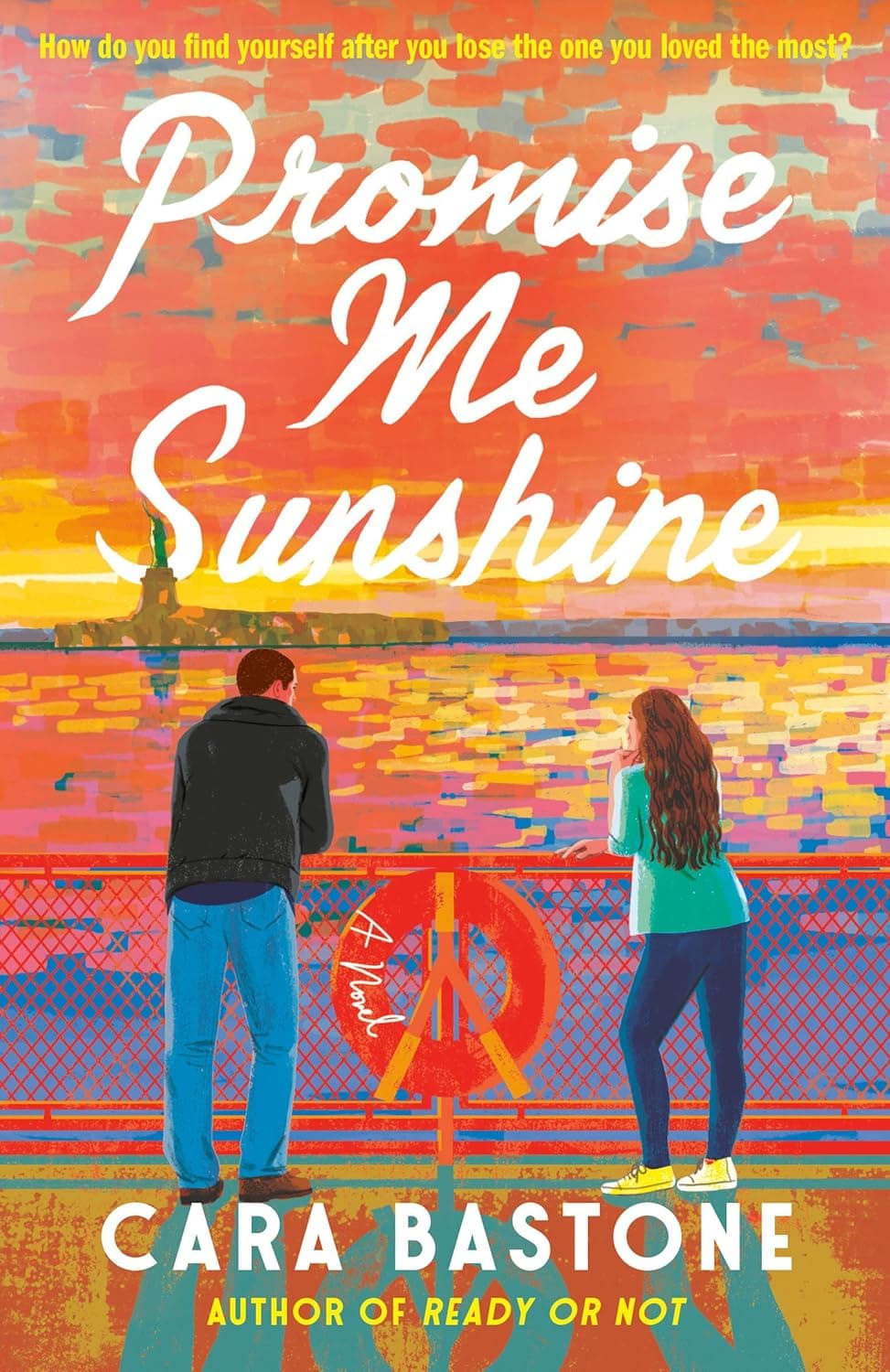
Should you read Promise Me Sunshine?
What works
Lenny and Miles help each other through meals, childcare, sleep, family conversations, and a list of manageable tasks, so affection grows from repeated care rather than rescue fantasy.
What may not work for you
Miles can be almost implausibly perceptive, and the novel occasionally explains an emotional lesson after the scene has already communicated it.
What may test your patience
The slow burn remains focused on mourning and daily survival for a long stretch, which may frustrate readers expecting early romantic escalation.
Does the ending reward the effort?
Yes. Love expands Lenny's willingness to live without asking her to finish grieving or replace the friend she lost.
Reading Promise Me Sunshine closely
Lenny's life has quietly fallen apart after her best friend dies from cancer. She avoids their shared apartment, drifts between nanny jobs, and rides the Staten Island Ferry all night rather than sit alone with her grief. Miles, the observant uncle of one child she watches, offers a bargain: he will help with her friend's "live again" list if Lenny helps him become a better uncle.
Most of the book lives in the small, everyday moments that come out of that deal. Miles walks Lenny through tiny, manageable steps toward living again, like eating regular meals, sleeping somewhere safe, and doing one thing from the list that is not about death. In return, Lenny nudges him into uncomfortable conversations with his family, forces him to see how much his niece actually needs him, and gradually becomes the person who understands the shape of his own losses. It is a slow burn in every sense, more about mutual caretaking and quiet jokes on late night trains than big speeches or dramatic declarations.
The book sits very close to grief, cancer, anxiety and the exhaustion that comes with trying to function while you are barely holding it together. There are mentions of past illness, death of a best friend, complicated family dynamics and some panic spiral moments, but the story is written to feel ultimately comforting and hopeful rather than punishing. The romance includes one open door scene near the end that is more emotionally vulnerable and a bit awkward than graphic.
You do not need to read Ready or Not before Promise Me Sunshine. They share an author, a New York setting, and an interest in characters doing real emotional work, but this is a standalone.
Grief, Trigger Warnings And Emotional Weight
Promise Me Sunshine spends a lot of time with grief, including the death of a best friend from cancer, complicated memories and the way mourning can derail work, housing and relationships.
There are references to illness, hospital stays, panic spirals, insomnia and characters who feel barely functional at times, though the narrative keeps its focus on coping and support rather than graphic details.
Readers who are especially sensitive to stories about cancer or recent loss may want to time this read carefully, but many will find comfort in how Bastone shows different, valid ways of grieving.
Three useful comparisons
People We Meet on Vacation
People We Meet on Vacation is brighter, more travel-driven, and built on years of friendship; Promise Me Sunshine stays closer to immediate grief and practical care.
Best for: Adult romance readers wanting years-long friendship, opposites, travel, banter, longing, and moderate emotional angst.
Funny Story
Funny Story uses sharper banter and a more social rebuilding arc, while Bastone allows sadness to set a quieter pace.
Best for: Adult romance readers wanting forced proximity, small-city community, humor, books, friendship, and emotionally available growth.
Love by the Book
Love by the Book treats friendship as its primary love story; Promise Me Sunshine uses romance and family care to reopen a life narrowed by bereavement.
Best for: Readers of contemporary women's fiction who want female friendship, creative work, family conflict, loneliness, humor, and love that is not organized around one couple.