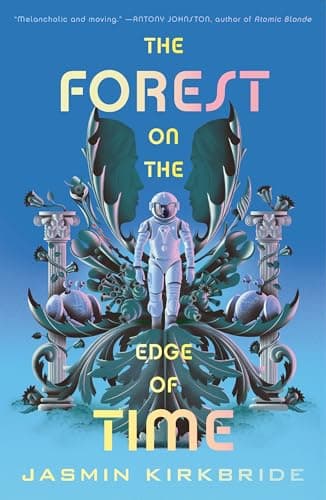
Should you read The Forest on the Edge of Time?
What works
The forest is never just scenery. It holds memories, records damage, and forces family members from different eras to decide what they are willing to preserve for people they may never meet.
What may not work for you
Some of the ecological symbolism is explained too plainly, while the rules for changing the past stay looser than the emotional consequences.
What may test your patience
The jumps between eras are initially disorienting. The book settles once the family connections become clear and changes in the forest provide landmarks.
Does the ending reward the effort?
Yes. The ending refuses the easy fantasy that one brave intervention can repair history, and instead asks what can still be cared for and passed on.
Reading The Forest on the Edge of Time closely
The Forest on the Edge of Time treats its forest as more than a backdrop for time travel. It records what earlier generations damaged or protected, so every trip across time carries a question about who will pay for a choice made now.
The family relationships give those questions their force. Kirkbride is better at showing altered paths, plants, and memories than at setting firm rules for temporal cause and effect. Readers who need an airtight puzzle may be frustrated; readers who care about inheritance and climate responsibility have more to hold onto.
A forest changed by time
Recurring plants, weather, and paths make changes to the timeline visible before anyone explains them. The device is simple and effective.
Where it may lose readers
The early jumps between eras can be hard to place, and the ecological meaning is sometimes stated after the imagery has already made it clear.
Three useful comparisons
Permafrost
Permafrost is shorter, colder, and structured as a tense temporal mission; Kirkbride gives ecology and family obligation more room than suspense mechanics.
Best for: A concise climate and time-travel story with an older protagonist, ethical tension, and a strong ending.
Children of Time
Children of Time examines stewardship across planetary evolutionary scale, while The Forest on the Edge of Time keeps responsibility within human generations and one living boundary.
Best for: Readers who like big evolutionary ideas, nonhuman viewpoints, and long time scales more than a conventional hero's journey.
When We Were Real
When We Were Real treats cosmic uncertainty with humor and a road-trip ensemble; Kirkbride is quieter, greener, and more invested in inheritance.
Best for: Readers of philosophical science fiction who want a road trip, ensemble humor, grief, friendship, visible glitches, and emotional stakes larger than a puzzle solution.