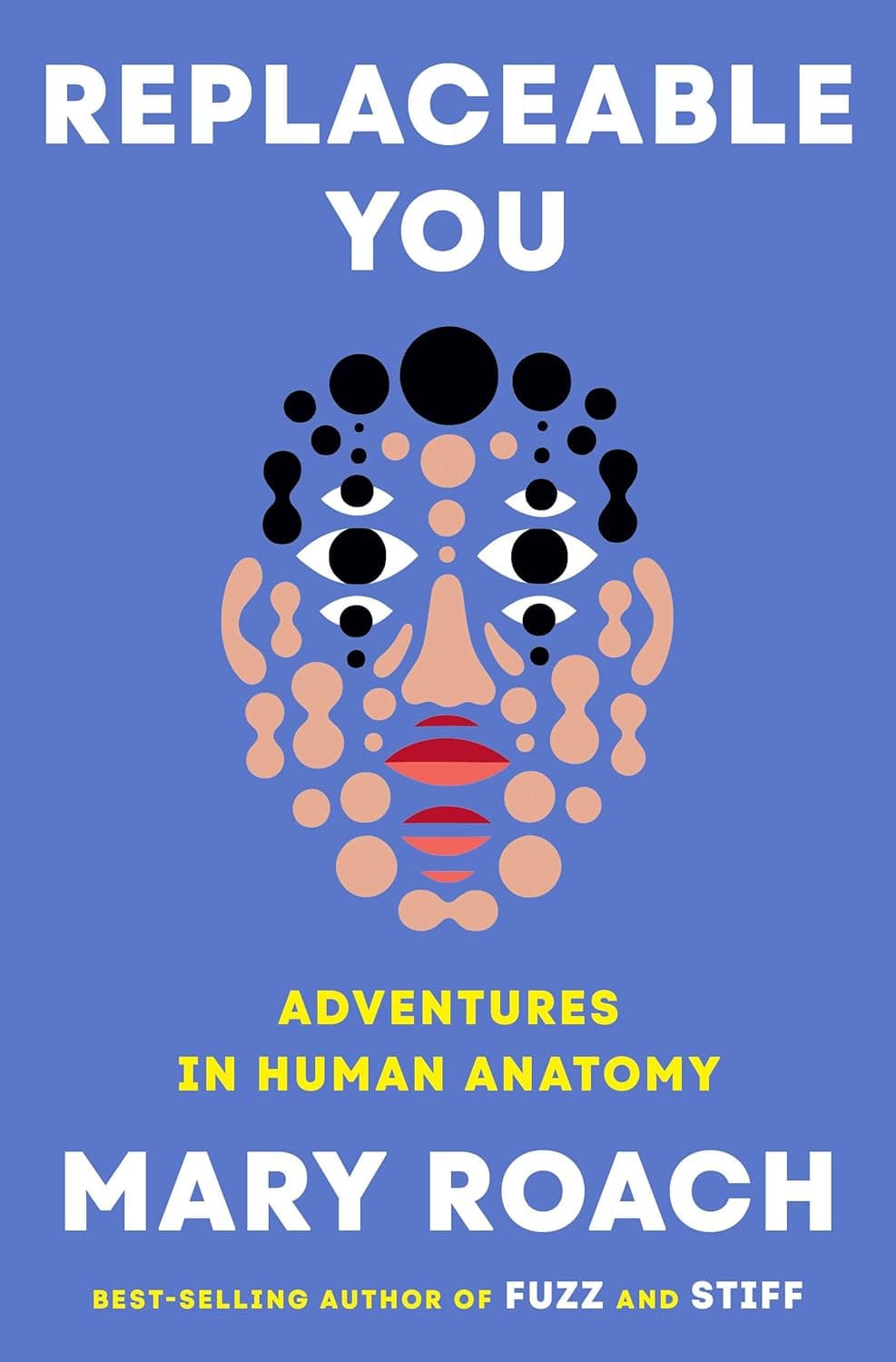
Should you read Replaceable You?
What works
Roach follows laboratories, procedures, failures, and patients closely enough to distinguish working medicine from optimistic publicity without draining the subject of wonder.
What may not work for you
The episodic tour can feel scattered, and humor occasionally arrives near vulnerable experiences where some readers may want more tonal restraint.
What may test your patience
Technical chapters vary in narrative energy depending on access to a vivid patient or experiment; the book is better read as connected reports than one accelerating argument.
Does the ending reward the effort?
The close leaves replacement as a set of tradeoffs rather than a science-fiction promise, an honest payoff for a field defined by partial success.
Reading Replaceable You closely
Replaceable You follows transplant surgeons, prosthetics engineers, and patients to ask what happens when a heart, limb, joint, or piece of skin can be repaired or replaced. Mary Roach treats the subject as a tour of human ingenuity without forgetting that every clever device belongs to a vulnerable body.
Each chapter stays close to a particular body part or procedure, from artificial joints and engineered skin to donor hearts and high-tech implants. The book is less interested in memorizing anatomy than in the practical mess of making a replacement work for one person.
Roach explains complex procedures through concrete images and questions that a curious nonspecialist might actually ask. Her jokes break up the heavier scenes, though the digressions can make the book feel less orderly than a conventional medical overview. No medical background is required.
The reporting does not hide the physical reality of medicine. Operating rooms, intensive care, tissue labs, serious injuries, and donor material appear regularly. Roach is respectful rather than sensational, but squeamish readers should still expect blood and surgical detail.
Fans of Stiff or Gulp will recognize the mix of morbid curiosity, patient reporting, and odd questions. For a wider scientific view, compare Cosmos, Homo Deus, or The Body by Bill Bryson. Our popular science collection has more books about anatomy, medicine, and the people working inside both.
What Replaceable You does well
A guided tour of modern human anatomy that focuses on what can be repaired or swapped out rather than rattling off Latin names for every structure.
Narrative nonfiction built from vivid case studies, patient stories, and lab visits instead of abstract theory or textbook style explanation.
A funny but empathetic tone that balances curiosity about gruesome details with consistent respect for patients, donors, and medical staff.
Where to go next
Pair Replaceable You with broader popular science like Cosmos or Homo Deus to compare big picture views of humanity with the fine print of anatomy and surgery.
Look up reputable hospital or medical society websites when a particular procedure fascinates you and you want a deeper technical explanation than the book provides.
Use our popular science shelf to find other narrative nonfiction that mixes biology, ethics, and everyday human stories.
Three useful comparisons
Five Patients
Five Patients uses hospital cases to examine medicine as an institution; Roach focuses more on experimental repair and reporter-led encounters.
Best for: Readers interested in medical history, hospital systems, and Crichton's nonfiction roots.
The Andromeda Strain
The Andromeda Strain turns biomedical procedure into fictional crisis, ideal when you want systems and suspense rather than reportage.
Best for: Hard-edged outbreak science fiction for anyone who values laboratory procedure and containment systems over sentiment.
The Selfish Gene
Dawkins develops a theoretical argument; Roach remains tactile, contemporary, and centered on how research actually feels to people.
Best for: General readers ready for a substantial, argument-driven introduction to evolution from the gene's-eye view.