Author profile
Mary Roach: books, reviews, and where to start
Mary Roach writes popular science by asking the impolite practical question, following experts into laboratories, archives, training grounds, and bodily situations where abstract knowledge becomes awkwardly real.
Biography and criticism
The science writer who checks what the body is actually doing
Roach's humor opens difficult subjects, but her best work depends on reporting discipline and respect for the people whose labor makes the joke possible.
Reporting from the strange practical edge
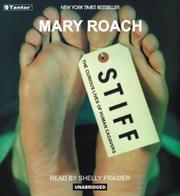
Mary Roach was born in New Hampshire in 1959, studied psychology, and developed through magazine and editorial work before Stiff examined the scientific uses and physical afterlives of human cadavers. The book established a method: choose a subject surrounded by embarrassment or euphemism, locate the people who handle it materially, and ask the question polite conversation edits out.
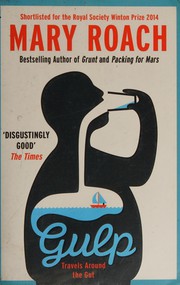
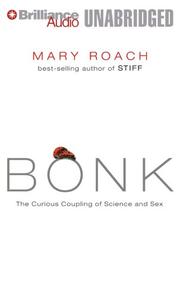
Spook investigates attempts to study the afterlife; Bonk examines sex research; Packing for Mars focuses on the bodily logistics of space travel; Gulp follows digestion; Grunt studies military science; Fuzz considers conflict between people and wildlife. The subjects vary, but institutions become understandable through their overlooked practical problems.
What the joke permits
Roach uses self-deprecation, footnotes, sensory detail, and comic timing to lower the barrier around death, sex, waste, injury, and animal control. Humor works when it is directed at her own discomfort or the absurdity of the problem. It is riskier when a vulnerable person or culture becomes the colorful surface of the report.
Her prose remains grounded because she travels, watches, interviews, and admits what she does not know. Packing for Mars is the broadest entry for readers attracted to engineering and bodies; Stiff the defining early book. Roach's contribution is epistemic as much as comic: if a grand project depends on toilets, tissue, smell, boredom, and people doing strange jobs, those details are not beneath the science. They are where the science must succeed.
The books in context
How the work develops on the page
These notes connect the biography to specific choices in the books. Each title links to the full spoiler-free review.
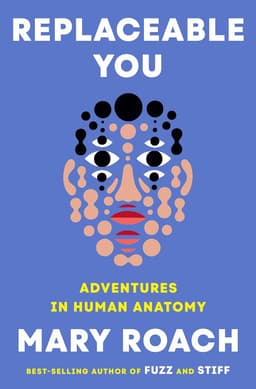
In this spoiler free Replaceable You by Mary Roach review for non medical readers, the focus is on why a book about hearts, limbs, and organs feels more like a tour of human ingenuity than a dry anatomy class. Roach follows transplant surgeons, prosthetics engineers, and patients whose bodies have been broken or rebuilt, and turns their stories into a narrative about how far we will go to stay alive and stay ourselves.
Instead of an abstract lecture on human anatomy, each chapter locks onto a replaceable part, from artificial joints and engineered skin to donor hearts and high tech implants. The through line is simple: when a body piece fails, someone somewhere is trying to design a fix. You get enough chapter by chapter orientation to follow the book's arc without spoiling every case study, so this review aims to give you an overview of the main sections and key ideas rather than a beat by beat summary.
Mary Roach keeps the language plain and conversational, explaining complex procedures in images you can actually picture. Jargon is translated, jokes break up the heavier scenes, and there are quick context explanations that make it clear you do not need a medical background to follow what is going on. If you are mainly wondering whether Replaceable You works as an accessible introduction to human anatomy and medical innovation, the answer is yes, as long as you enjoy curiosity driven digressions and a lot of odd questions.
At the same time, the book does not hide the messy side of medicine. There are descriptions of operating rooms, intensive care units, tissue labs, and what happens to donor material once it leaves a body. The tone stays respectful rather than shocking, but if you are sensitive to blood, surgical detail, or stories about severe injury and illness, you should know that those elements appear regularly. Roach often pauses to acknowledge squeamish readers, which helps, yet the material still earns a soft content warning for gore and medical details.
If you like the mix of morbid curiosity and big picture science in books like Stiff or Gulp, this anatomy tour sits comfortably alongside them and other popular science titles on your shelf. Readers who finished broader overviews such as Cosmos, Homo Deus, or The Body by Bill Bryson and now want to zoom in on what can be repaired, replaced, or upgraded in the human body will find plenty to underline here. When you are ready to explore it in full, you can pick up your copy of Replaceable You on Amazon and then browse our popular science guides for more anatomy and medicine focused reads.
Roach builds scenes from interviews and physical detail, then uses a dry aside to translate discomfort or jargon without pretending the science is simple.
Roach follows laboratories, procedures, failures, and patients closely enough to distinguish working medicine from optimistic publicity without draining the subject of wonder.
The episodic tour can feel scattered, and humor occasionally arrives near vulnerable experiences where some readers may want more tonal restraint.
Technical chapters vary in narrative energy depending on access to a vivid patient or experiment; the book is better read as connected reports than one accelerating argument.
The close leaves replacement as a set of tradeoffs rather than a science-fiction promise, an honest payoff for a field defined by partial success.
Five Patients uses hospital cases to examine medicine as an institution; Roach focuses more on experimental repair and reporter-led encounters.
The Andromeda Strain turns biomedical procedure into fictional crisis, ideal when you want systems and suspense rather than reportage.
Dawkins develops a theoretical argument; Roach remains tactile, contemporary, and centered on how research actually feels to people.
A guided tour of modern human anatomy that focuses on what can be repaired or swapped out rather than rattling off Latin names for every structure.
Narrative nonfiction built from vivid case studies, patient stories, and lab visits instead of abstract theory or textbook style explanation.
A funny but empathetic tone that balances curiosity about gruesome details with consistent respect for patients, donors, and medical staff.
Non medical readers who want an approachable overview of how prosthetics, organ transplants, and other body repairs actually work in real hospitals.
Fans of Mary Roach's earlier books and readers of popular science like The Body or Being Mortal who enjoy storytelling with strong reporting and memorable scenes.
Book clubs and students interested in ethics around organ donation, experimental treatments, and what makes a person feel like themselves after major medical interventions.
Pair Replaceable You with broader popular science like Cosmos or Homo Deus to compare big picture views of humanity with the fine print of anatomy and surgery.
Look up reputable hospital or medical society websites when a particular procedure fascinates you and you want a deeper technical explanation than the book provides.
Use our popular science shelf to find other narrative nonfiction that mixes biology, ethics, and everyday human stories.
This Replaceable You by Mary Roach review for non medical readers looks at how surgeons, engineers, and patients try to repair and replace broken body parts in ways that feel human rather than purely mechanical.
Read the complete reviewWhere to begin
A good place to start with Mary Roach

Replaceable You
4.2 / 5Replaceable You makes regenerative medicine approachable through curiosity and comic detail, while remaining alert to the people behind futuristic claims.

Bibliography
Books by Mary Roach
Reviewed titles open directly on Book Review Guide. Other editions and works remain marked until a full review is published.

Reviewed
Replaceable You

Not reviewed yet
Stiff
Not reviewed yet
Science Ink

Not reviewed yet
Kadavra
Not reviewed yet
For the People
Not reviewed yet
Spook
Not reviewed yet
Animal Vegetable Criminal

Not reviewed yet
Gulp
Not reviewed yet
My Planet

Not reviewed yet
Grunt

Not reviewed yet
Ruh Gercekten Var mi?

Not reviewed yet
Macchabées (French Edition)

Not reviewed yet
Ale kosmos!
Not reviewed yet
Packing for Mars
Not reviewed yet
Six Feet Over
Not reviewed yet
Packing for Mars for Kids

Not reviewed yet
Fuzz

Not reviewed yet
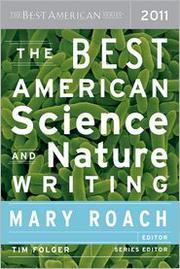
Best American Science and Nature Writing 2011

Not reviewed yet
Crossed Genres Issue 11

Not reviewed yet
Ik ga naar Mars en neem mee...
Not reviewed yet
Da bao qu huo xing

Not reviewed yet
Bonk
Bibliographic records: Open Library.
Reviewed bibliography
Mary Roach books reviewed here
Every title below has a complete, spoiler-free review. Scores are our editorial ratings, not visitor averages.

20254.2 / 5
Replaceable You
Adventures in Human Anatomy
Replaceable You makes regenerative medicine approachable through curiosity and comic detail, while remaining alert to the people behind futuristic claims.
As an Amazon Associate, I earn from qualifying purchases.
Keep exploring