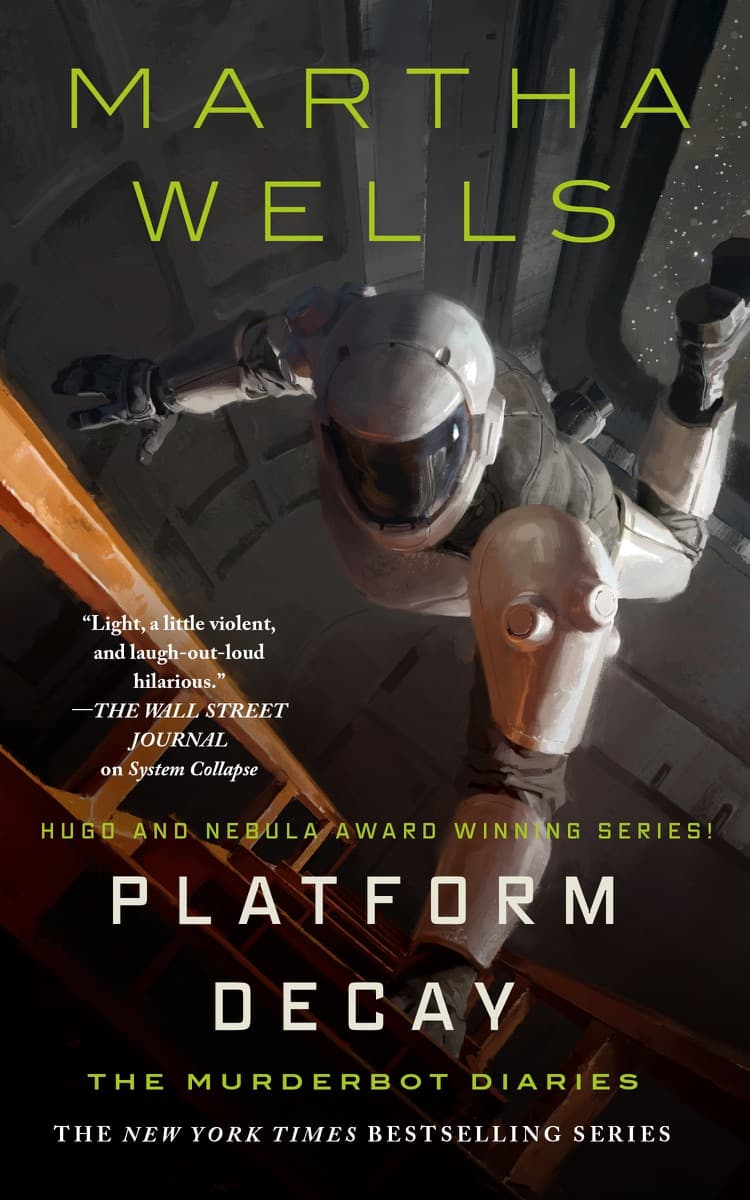
Should you read Platform Decay?
What works
Unfamiliar humans, children, tight routes, and corporate systems deny Murderbot the comfort of its established team, making every act of protection feel newly chosen.
What may not work for you
Readers primarily invested in the recurring Preservation cast may miss their presence, and the station's action geometry can be difficult to picture at full speed.
What may test your patience
The mission assumes emotional knowledge accumulated across the series, so its opening logistics carry less weight if Murderbot's earlier decisions are unfamiliar.
Does the ending reward the effort?
Yes. The rescue resolves its immediate danger while leaving Murderbot's uneasy relationship with responsibility productively unsettled.
Reading Platform Decay closely
Platform Decay sends Murderbot back toward the Corporation Rim for a rescue it chose to join, which is already a meaningful complication for a SecUnit that prefers clear contracts, predictable exits, and minimal eye contact. The mission places it among unfamiliar humans, including children, on a station built to make movement and trust equally difficult.
Martha Wells keeps the series’ defining balance intact: Murderbot’s internal commentary is dry and defensive, while its actions repeatedly reveal how deeply it cares. The humor is not separate from the anxiety. Every complaint about humans, plans, or feelings becomes a way of measuring the distance between the identity Murderbot claims and the person it continues to become.
The station gives the rescue a contained, physical shape. Corporate infrastructure, hidden routes, and dangerous vertical spaces turn navigation into part of the suspense, while the unfamiliar group prevents Murderbot from relying only on established relationships. The result feels more like a pressured survival mission than a galaxy-spanning expansion of the series.
This is book eight of The Murderbot Diaries. The immediate rescue can be followed on its own, but the emotional context works much better after Network Effect and System Collapse. New readers should begin with All Systems Red to understand Murderbot’s history, its relationships, and why volunteering matters.
A rescue built around reluctant care
The central pleasure is watching Murderbot solve practical problems while insisting that emotional ones are outside its job description. Unfamiliar adults and children remove the comfort of its usual circle and make protection a choice rather than an extension of an existing bond.
Pacing, humor, and accessibility
Wells writes in a quick first-person voice shaped by interrupted thoughts, threat assessments, media references, and uncomfortable self-awareness. The action is easy to follow, but the emotional shorthand assumes some familiarity with the series.
Three useful comparisons
Mickey7
Mickey7 is a more standalone and openly philosophical story about a disposable worker; Platform Decay offers the richer emotional payoff of a long-running artificial-person narrative.
Best for: Science-fiction readers wanting cloning, hostile-planet survival, corporate exploitation, existential questions, and dark humor in a compact standalone story.
Project Hail Mary
Project Hail Mary builds suspense through explained science and optimistic cooperation, while Wells favors tactical perception, social anxiety, and mistrust of corporate systems.
Best for: The best fit is someone who likes optimistic hard science fiction, first contact, high-stakes problem solving, and an emotionally satisfying partnership.
Shards of Earth
Shards of Earth expands into factional space opera with a large found family; Platform Decay is tighter, funnier, and physically confined.
Best for: Go here for a found-family crew, diverse aliens, political factions, salvage work, and large-scale space-opera danger.
Series buying note
Would the collection be the better buy?
These are useful only when you want several books in the same run. The notes below spell out what each package includes and, just as importantly, what it leaves out.

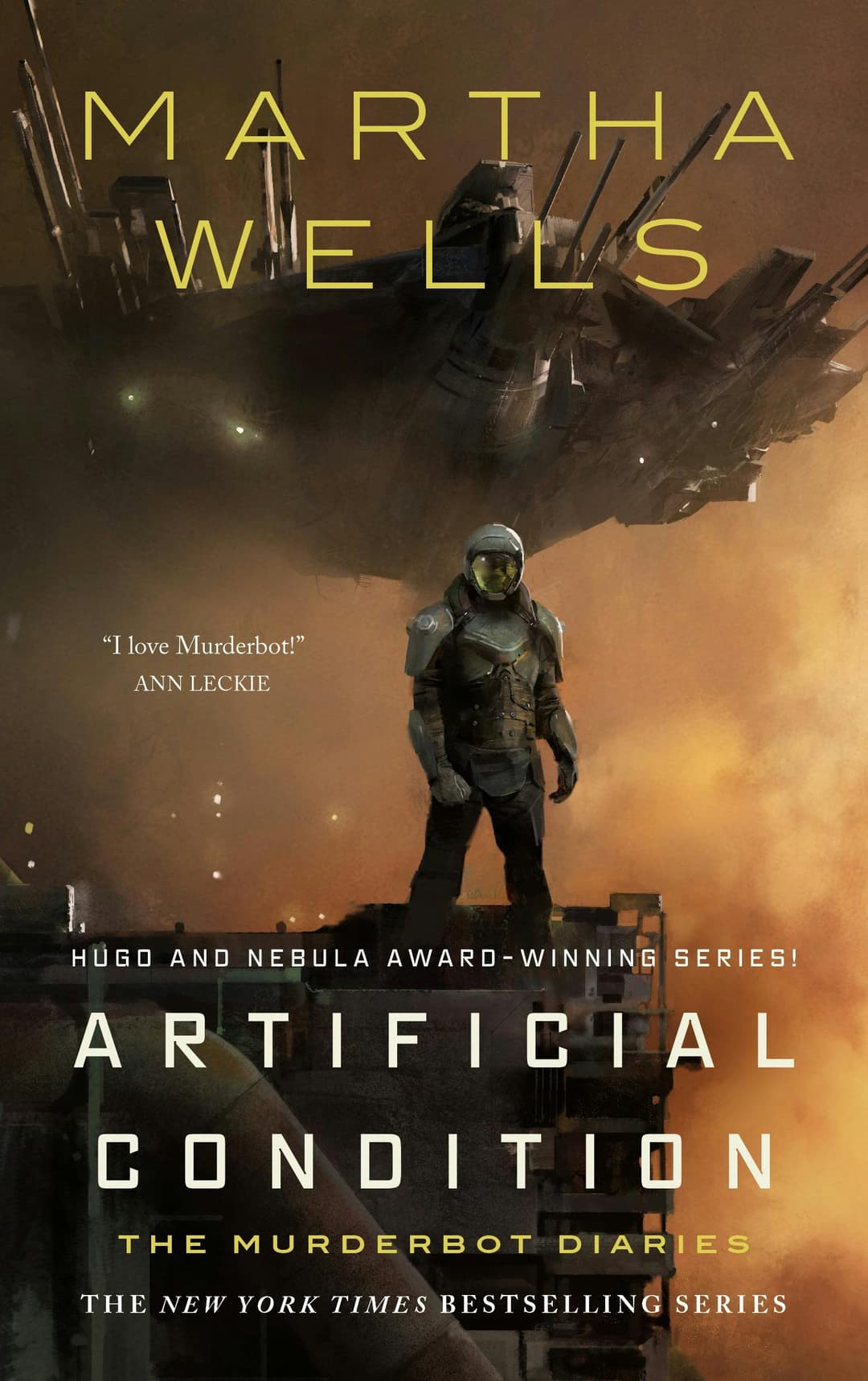
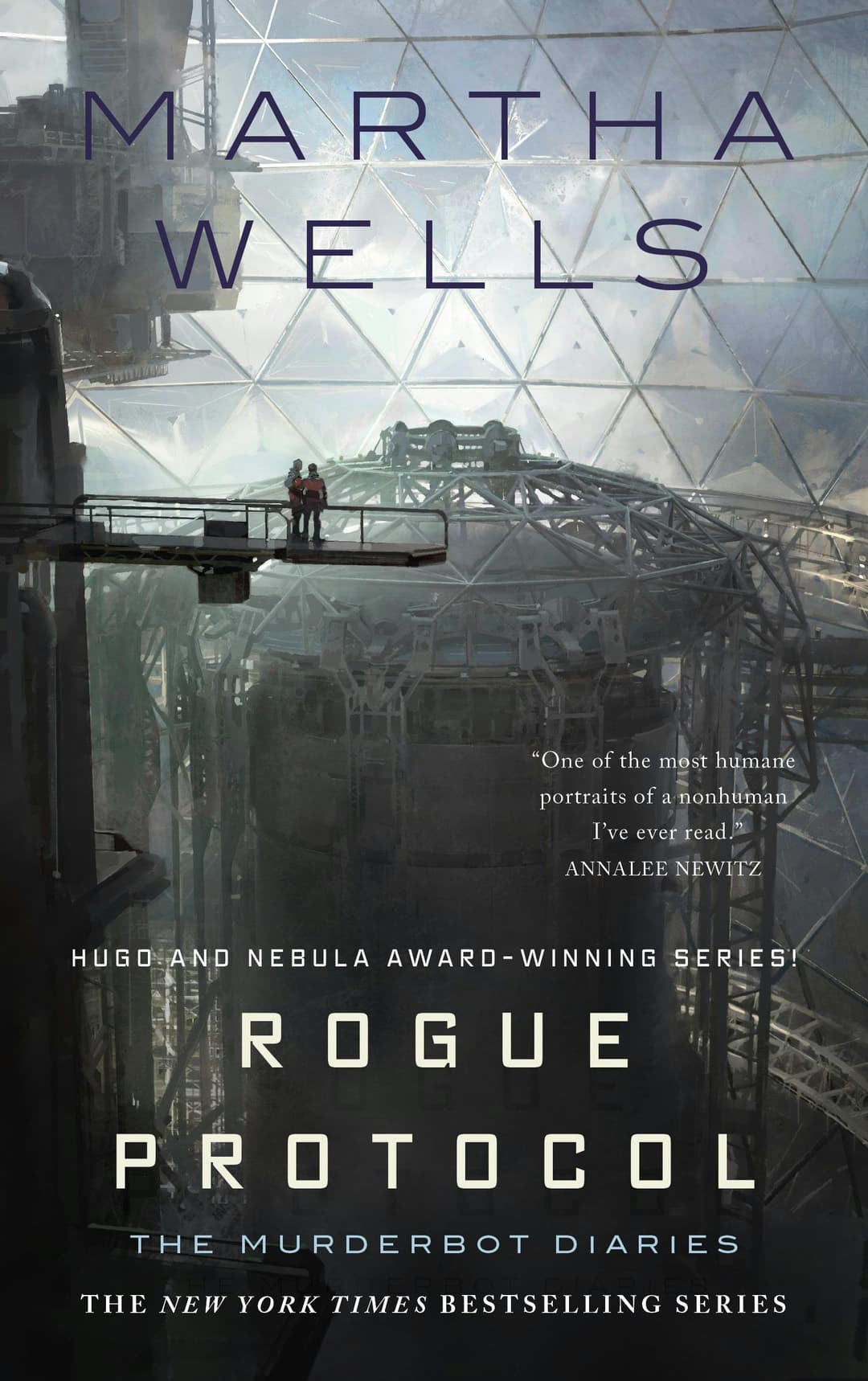
Seven-book hardcover collection
The Murderbot Diaries 7-Book Hardcover Set
This hardcover run takes Murderbot from All Systems Red through System Collapse, keeping the four early novellas and the later full-length novel together.
Included: All Systems Red, Artificial Condition, Rogue Protocol, Exit Strategy, Network Effect, Fugitive Telemetry, System Collapse
Our buying note: All Systems Red is short enough to test before making the larger purchase. Platform Decay comes after the seven books in this collection and must be bought separately.