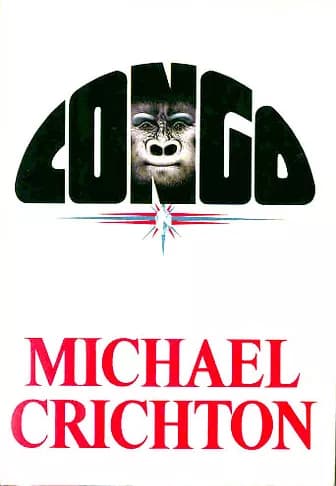
Should you read Congo?
What works
Amy's signing, satellite logistics, corporate competition, volcanic geography, and expedition equipment give the journey several interacting technical pressures.
What may not work for you
African people and places are filtered through colonial adventure conventions, characterization is thin, and the lost-city dangers accumulate implausibly.
What may test your patience
Corporate briefing and travel preparation occupy a long opening before the expedition's field problems take over.
Does the ending reward the effort?
The escape delivers spectacle and closes the diamond race, though geological intervention resolves more than the characters do.
Reading Congo closely
Congo begins after an expedition near the lost city of Zinj is killed during a transmitted video feed. Earth Resources Technology Services sends Karen Ross toward the site to secure valuable diamonds before a rival consortium, while primatologist Peter Elliot joins with Amy, a gorilla who communicates through signs and has recurring memories that may point toward the ruins.
The novel combines satellite communication, corporate competition, linguistics, animal cognition, volcanology, and expedition adventure. Crichton keeps the technology grounded in an early-1980s vision of remote operations, which now feels historical but still demonstrates how information can direct people from far away without making a dangerous landscape controllable.
Its depiction of Africa, local politics, and the expedition's priorities contains dated and colonial assumptions that deserve criticism. Amy remains the most memorable character because her communication complicates any simple boundary between human intention and animal intelligence. Readers who accept the period framing will find a fast jungle thriller about organizations treating knowledge, species, and ruins as resources.
Amy as communicator
Her sign language and emotional life are central evidence, not a charming addition to the expedition.
A corporate race into Zinj
Ross must balance survival against a company clock that values diamonds and competitive advantage.
Technology meets an uncontrollable landscape
Remote data improves decisions but cannot remove weather, terrain, animals, or incomplete interpretation.
Three useful comparisons
Micro
Micro also sends scientists into a lethal tropical environment, with miniaturization and far more biological detail.
Best for: Go here for science adventure, miniaturized survival, Hawaiian ecology, body danger, and rapid set pieces.
As an Amazon Associate, I earn from qualifying purchases.
The Venom Business
The Venom Business is shorter pulp focused on snakes and smuggling rather than a large scientific expedition.
Best for: Readers of vintage crime pulp and Crichton completists interested in snakes, smuggling, and early procedural detail.
As an Amazon Associate, I earn from qualifying purchases.
Jurassic Park
Jurassic Park is more coherent, better characterized, and sharper about corporate systems failing around animal life.
Best for: Adult and mature teen readers who want a fast, violent dinosaur story with sustained attention to genetics, automation, and corporate denial.
As an Amazon Associate, I earn from qualifying purchases.