Author profile
Richard Dawkins: books, reviews, and where to start
Richard Dawkins made gene-centered evolution vivid to general readers, combining explanatory metaphor with polemical confidence that has clarified biology and also generated avoidable simplifications.
Biography and criticism
The powerful metaphor and its argumentative afterlife
Dawkins's scientific writing is strongest when it explains selection step by step. It is more divisive when the same combative voice moves from biology into religion and public controversy.
Ethology and the gene's-eye view
Richard Dawkins was born in Nairobi in 1941, grew up in England, and studied zoology at Oxford under ethologist Nikolaas Tinbergen. Academic work on animal behavior preceded The Selfish Gene in 1976. The book explains natural selection through the differential survival of replicators, treating organisms as vehicles built through evolutionary history.
The word selfish is metaphorical, not a claim that genes possess motives or that people ought to behave selfishly. Dawkins repeatedly says so, yet the title's force guarantees misunderstanding. Concepts such as kin selection, reciprocal behavior, and evolutionary stability become readable because he builds examples carefully and uses vivid thought experiments.
From explanation to polemic
The Extended Phenotype develops the scientific argument more technically, while The Blind Watchmaker explains how cumulative selection can produce apparent design. Later books increasingly address religion, culminating in The God Delusion. The polemical style brought a large audience and often treated complex religious, historical, and philosophical traditions with less patience than biological mechanisms receive.
Dawkins's public statements beyond his core expertise have also drawn criticism, including comments about gender and identity. A balanced profile separates the explanatory achievement from the assumption that success in one field confers equal authority everywhere. The Selfish Gene remains the essential entry, read with current evolutionary biology and care about its metaphors. Its lasting lesson is methodological: complex cooperation can emerge from selection without needing a planner.
The books in context
How the work develops on the page
These notes connect the biography to specific choices in the books. Each title links to the full spoiler-free review.
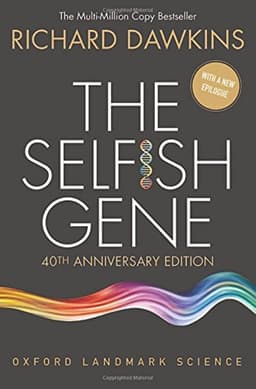
This spoiler free review of The Selfish Gene by Richard Dawkins focuses on the central idea: evolution seen from the point of view of genes rather than whole species or individual animals. Dawkins asks you to imagine genes as tiny units of information competing to be copied, with bodies as survival machines built to carry them. The tone is confident and sometimes provocative, but the explanations are aimed at curious general readers instead of professional biologists.
Across the chapters he explains how natural selection acts on genes, why close relatives are more likely to help one another, and how apparently selfless acts like alarm calls or worker animals that never reproduce can still emerge from gene level competition. Concepts such as kin selection, evolutionary stable strategies, and inclusive fitness are unpacked with thought experiments and animal case studies, so you can follow the logic even if you have never taken a formal course in biology.
For readers coming from books such as Sapiens or Homo Deus, The Selfish Gene remains a useful first serious encounter with evolutionary reasoning. Some details and examples show their age, and later research has refined parts of the account, but gene-centered analysis still provides an important framework for discussing behavior, cooperation, and conflict in nature.
Dawkins also spends time on ideas that leaked into wider culture, like memes as units of cultural imitation, and his sharp criticism of group selection. He contrasts a gene focused view of evolution with the more intuitive idea that species evolve “for the good of the group”, and shows with simple arguments why selection at the level of genes usually explains the data better. For non scientists this reads like a friendly debate that gradually clears up why selfish genes can still build cooperative societies.
The writing style is brisk, full of analogies, and laced with dry humor, which keeps the book readable even when the arguments become technical. Whether you end up agreeing with every claim or not, The Selfish Gene works as a long conversation about why living things look and behave the way they do. If you enjoyed the big picture history and future speculation in Sapiens and Homo Deus, this Selfish Gene review points you toward the more microscopic layer where those stories begin: the quiet competition of DNA across generations.
Dawkins builds thought experiments from vivid agents and then steps back to specify where the metaphor stops, a pattern that makes the prose memorable but rhetorically risky.
Dawkins uses replicators, vehicles, kin selection, and game strategies to make difficult evolutionary reasoning accessible without removing the underlying mechanism.
The personifying language around genes can sound more intentional than the biology, and later debates have complicated some emphases even where the central framework remains useful.
The extended examples of stable strategies and relatedness become technical; readers may need to slow down rather than expect the conversational opening to continue unchanged.
The later discussion of memes is historically influential but more speculative than the biological chapters, leaving the book with a provocative rather than equally demonstrated extension.
Sapiens ranges farther across human history but supports many claims less carefully; choose Dawkins for visible scientific reasoning.
Clear explanations of gene centered evolution that reframe altruism, cooperation, and competition in terms of information being copied.
Engaging examples and thought experiments that make ideas like inclusive fitness and reciprocal altruism feel intuitive rather than abstract.
Cultural impact through concepts such as selfish genes and memes, which still shape how people talk about human nature and evolution today.
Readers who enjoyed big idea non fiction like Sapiens or Homo Deus and now want a deeper look at how evolution actually works at the biological level.
Curious teens and adults who are comfortable with some technical vocabulary but prefer clear prose, concrete examples, and a strong narrative voice.
Book clubs and discussion groups interested in debating what evolution says, and does not say, about selfishness, cooperation, and moral choices.
Pair The Selfish Gene with broad history and future focused books to see how gene level processes connect to large scale human stories.
Look up short introductions to kin selection and evolutionary game theory if you want extra diagrams or visual aids while reading key chapters.
After finishing, compare Dawkins's arguments with more recent popular science on evolution to see which ideas have been strengthened, revised, or challenged.
This Selfish Gene review looks at Dawkins's gene centered view of evolution, how apparently selfish replicators can produce cooperation and altruism, and why this classic still matters if you are curious about human nature and biology.
Read the complete reviewWhere to begin
A good place to start with Richard Dawkins

The Selfish Gene
4.4 / 5The Selfish Gene is a powerful explanation of gene-centered evolution whose famous metaphor clarifies selection while inviting misunderstandings the book must repeatedly correct.
Bibliography
Books by Richard Dawkins
Reviewed titles open directly on Book Review Guide. Other editions and works remain marked until a full review is published.

Reviewed
The Selfish Gene
Not reviewed yet
International Cosmos Prize, 1997

Not reviewed yet
Cogento
Not reviewed yet
Abstracts of papers presented at the 1990 meeting on Evolution
Not reviewed yet
What Are You Optimistic About?
Not reviewed yet
ha-Gen ha-enokhiyi
Not reviewed yet
ha-Ṭipus ʻah ha-har ha-bilti-savir

Not reviewed yet
The Tinbergen legacy

Not reviewed yet
Capelão do Diabo

Not reviewed yet
La ciencia en el alma

Not reviewed yet
El relojero ciego
Not reviewed yet
Genetic Book of the Dead
Not reviewed yet
God
Not reviewed yet
Extended Phenotype
Not reviewed yet
Story of Life
Not reviewed yet
Fantasía de Volar

Not reviewed yet
El espejismo de Dios
Not reviewed yet
Escalada do Monte Improv�vel, A

Not reviewed yet
Die Schöpfungslüge

Not reviewed yet
Ateísmo para principiantes
Not reviewed yet
Devil's Chaplain

Not reviewed yet
Swiatelko w mroku

Not reviewed yet
Destejiendo el arco iris
Not reviewed yet
God's Utility Function

Not reviewed yet
Una luz fugaz en la oscuridad
Not reviewed yet
River Out of Eden 36 x Dumpbin
Not reviewed yet
Climbing Mount Improbable
Not reviewed yet
River Out of Eden

Not reviewed yet
O Relojoeiro Cego

Not reviewed yet
La fantasía de volar
Not reviewed yet
River Out of Eden 18-copy Dumpbin
Not reviewed yet
Der Erweiterte Phänotyp

Not reviewed yet
Young Oxford Library of Science

Not reviewed yet
Una curiosidad insaciable
Not reviewed yet
Ancestral Voices

Not reviewed yet
The Four Horsemen

Not reviewed yet
Caught in the Pulpit

Not reviewed yet
The Tanner lectures on human values
Not reviewed yet
Descent of Man
Not reviewed yet
Flights of Fancy
Not reviewed yet
Host Manipulation by Parasites
Not reviewed yet
ha-Hatsagah ha-gedolah ba-tevel

Not reviewed yet
The God Delusion

Not reviewed yet
Pocket Watchmaker
Not reviewed yet
Alabama Insert
Not reviewed yet
Oxford Book of Modern Science Writing
Not reviewed yet
Greatest Show on Earth
Not reviewed yet
Fresh Air : Faith, Reason and Doubt Lib/E
Not reviewed yet
Genius of Britain (Text Only)
Bibliographic records: Open Library.
Reviewed bibliography
Richard Dawkins books reviewed here
Every title below has a complete, spoiler-free review. Scores are our editorial ratings, not visitor averages.

20164.4 / 5
The Selfish Gene
A Classic on Genes and Evolution
The Selfish Gene is a powerful explanation of gene-centered evolution whose famous metaphor clarifies selection while inviting misunderstandings the book must repeatedly correct.
As an Amazon Associate, I earn from qualifying purchases.
Keep exploring