Author profile
Paulo Coelho: books, reviews, and where to start
Paulo Coelho writes spiritual fables in direct language, drawing on pilgrimage, personal reinvention, and the idea that a life becomes meaningful when a person learns to recognize its signs.
Biography and criticism
Pilgrimage, simplicity, and the universal sentence
Coelho's clarity has made him one of the world's most widely read novelists and the target of criticism from readers who find that same clarity reductive.
Rebellion, songs, and the road to Santiago
Paulo Coelho was born in Rio de Janeiro in 1947. His youth included conflict with his parents and periods in psychiatric institutions. He later participated in Brazilian counterculture, wrote lyrics with musician Raul Seixas, and was detained and tortured during the military dictatorship. After years across theatre, journalism, and music, a pilgrimage on the Camino de Santiago became the basis of The Pilgrimage and helped consolidate his literary vocation.
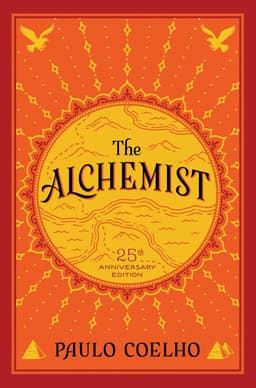
The Alchemist, first published in Portuguese in 1988, grew from modest beginnings into an international phenomenon. Santiago's search for treasure turns travel into a sequence of lessons about fear, attention, vocation, and what the novel calls a Personal Legend.
The invitation and the simplification
Coelho's prose uses short declarations, symbols, parable, and repeated spiritual principles. Translation-friendly clarity lets readers from different contexts place their own experiences inside the journey. The risk is that structural inequality, luck, and material constraint can disappear beneath the promise that the universe assists committed desire.
The Alchemist comforts many readers because it treats aspiration as worthy of attention. Others find its confidence evasive. Both responses arise from the same method. Begin there, then read The Pilgrimage for more autobiographical context or Veronika Decides to Die for a darker examination of prescribed life. Coelho's influence lies in making the novel function like a portable conversation about purpose, even when the answer is simpler than the life carrying the book.
Why the fable travels so easily
Coelho writes characters at a deliberate distance from dense social detail. Santiago can become a figure into whom readers place their own deferred ambition. Symbols such as desert, treasure, wind, heart, and journey remain broad enough to cross language and culture. This portability explains both the extraordinary reach and the frequent critical resistance.
The Alchemist uses repetition like instruction. An idea returns in altered circumstances until the protagonist can act on it. Readers who need the reminder experience clarity; readers alert to exceptions experience simplification. The novel's certainty about destiny can understate the role of luck, privilege, and obligations that cannot simply be abandoned.
Coelho's biography makes pilgrimage more than borrowed imagery. Movement, spiritual search, political repression, institutional conflict, and artistic reinvention all precede the fictional shepherd. Yet the novels transform experience into parable rather than documentary confession. The plainness is constructed to make a private lesson appear available to anyone.
A fair reading does not have to choose between universal wisdom and empty cliché. It can ask when the sentence opens a useful question and when it closes one prematurely. Coelho's value is often catalytic. The book prompts a decision or conversation, while the reader remains responsible for restoring the material complexity the fable intentionally set aside.
The books in context
How the work develops on the page
These notes connect the biography to specific choices in the books. Each title links to the full spoiler-free review.
In this review of The Alchemist, Paulo Coelho's modern fable is presented through its simple premise: a shepherd named Santiago leaves Spain for the Egyptian desert to follow a recurring dream and discover his personal legend.
The journey moves through busy markets, long caravans, and quiet oases. Each stop adds a new lesson about fear, trust, and staying open to opportunity. Readers curious about real world desert landscapes can pair the book with travel pieces such as National Geographic's Morocco desert guide.
Side characters, from Melchizedek to the crystal merchant and the alchemist himself, offer advice that gradually reshapes how Santiago sees risk and love. The short chapters and clear prose invite readers to pause, underline quotes, and reflect on how the story mirrors their own goals and doubts.
If you want a short, reflective novel about purpose, you can pick up The Alchemist on Amazon and visit our existential fiction shelf for more thoughtful, uplifting reads.
Coelho uses simple declarative prose, recurring maxims, and symbolic characters with few realistic details, keeping the reading experience closer to oral parable than psychological novel.
Santiago's journey gives abstract encouragement a clean narrative shape, and the recurring images of desert, treasure, and omens make the book easy to remember and discuss.
The philosophy often treats desire as proof of destiny and failure as insufficient listening, leaving little room for people whose circumstances cannot be overcome by faith or persistence.
Readers resistant to aphorisms may struggle once several mentors repeat the same lesson in different forms; the short length prevents the repetition from becoming overwhelming.
Yes on the level of fable: the final reversal completes the circular journey neatly, even if it reinforces the book's most convenient ideas about providence.
The Hobbit also sends a sheltered protagonist toward treasure, but offers richer characterization, danger, and comic worldbuilding instead of direct spiritual instruction.
The Narrow Road Between Desires is another brief, approachable fable about desire and consequence, but its clever narrator leaves more room for moral ambiguity.
A Christmas Carol is the stronger short fable when you want transformation grounded in social responsibility and concrete action rather than private destiny.
A shepherd named Santiago journeys from Spain to the Egyptian desert to pursue his recurring dream and discover his personal legend.
Read the complete reviewWhere to begin
A good place to start with Paulo Coelho

The Alchemist
3.8 / 5The Alchemist is an inviting fable whose clarity comforts many readers, though its confidence in destiny simplifies luck, labor, and material constraint.
Bibliography
Books by Paulo Coelho
Reviewed titles open directly on Book Review Guide. Other editions and works remain marked until a full review is published.

Reviewed
The Alchemist
Not reviewed yet
Zahir
Not reviewed yet
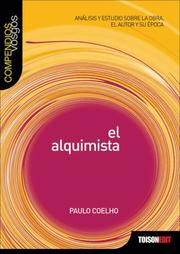
El Alqumista
Not reviewed yet
Alchemist
Not reviewed yet
Paulo Coelho
Not reviewed yet
Am Ufer des Rio Piedra saß ich und weinte
Not reviewed yet
Veronika decides to die

Not reviewed yet
Veronika Decide Morir

Not reviewed yet
Sulla sponde del fiume Piedra mi sono seduta e ho pianto

Not reviewed yet
O Alquimista

Not reviewed yet
Amor
Not reviewed yet
Und die Liebe hört niemals auf
Not reviewed yet
Diário de um mago

Not reviewed yet
Sparknotes The Alchemist
Not reviewed yet
Alchemik (polish)
Not reviewed yet
Zahir (Romanian Language)
Not reviewed yet
La sorcière de Portobello
Not reviewed yet
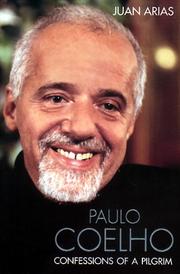
Las confesiones del peregrino

Not reviewed yet
Eleven Minutes

Not reviewed yet
Nelabais un senjorita Prima

Not reviewed yet
Peregrino, El

Not reviewed yet
La Quinta Montana
Not reviewed yet
Pilgrimage
Not reviewed yet
Manual of the Warrior of Light

Not reviewed yet
Dnevnik maga
Not reviewed yet
Alquimista

Not reviewed yet
Brida

Not reviewed yet
Kazanan Yalnızdır
Not reviewed yet
Once Minutos

Not reviewed yet
Vijetā akelā
Not reviewed yet
Veronika decide morrer
Not reviewed yet
Peregrino a compostela, diario dun mago
Not reviewed yet
Fifth Mountain

Not reviewed yet
La espía

Not reviewed yet
Simyaci - Mini Kitap
Not reviewed yet
Like the Flowing River

Not reviewed yet
Mabŏp ŭi sun'gan
Not reviewed yet
Camino del Arco
Not reviewed yet
Guerrier de Lumière
Not reviewed yet
Brida SPA

Not reviewed yet
O Alquimista - Edicao Comemorativa Exclusiva

Not reviewed yet
As valkírias
Not reviewed yet
Ekalvir

Not reviewed yet
Vida

Not reviewed yet
Hippi
Not reviewed yet
Libertad

Not reviewed yet
Don Supremo, El

Not reviewed yet
Warrior of the Light Lib/E
Not reviewed yet
Valkyries
Bibliographic records: Open Library.
Reviewed bibliography
Paulo Coelho books reviewed here
Every title below has a complete, spoiler-free review. Scores are our editorial ratings, not visitor averages.

20063.8 / 5
The Alchemist
Inspirational Fable Review
The Alchemist is an inviting fable whose clarity comforts many readers, though its confidence in destiny simplifies luck, labor, and material constraint.
As an Amazon Associate, I earn from qualifying purchases.
Keep exploring