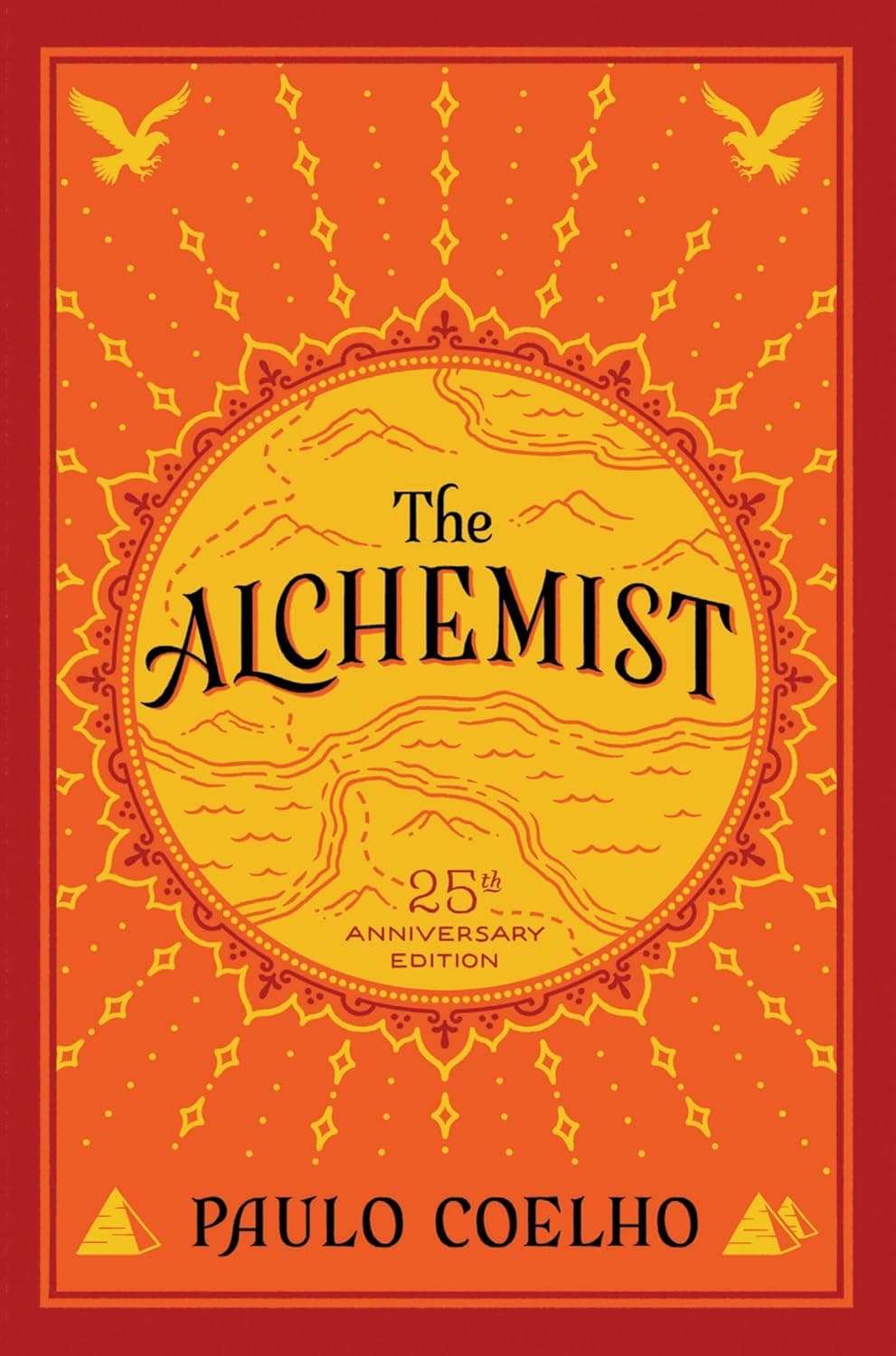
Should you read The Alchemist?
What works
Santiago's journey gives abstract encouragement a clean narrative shape, and the recurring images of desert, treasure, and omens make the book easy to remember and discuss.
What may not work for you
The philosophy often treats desire as proof of destiny and failure as insufficient listening, leaving little room for people whose circumstances cannot be overcome by faith or persistence.
What may test your patience
Readers resistant to aphorisms may struggle once several mentors repeat the same lesson in different forms; the short length prevents the repetition from becoming overwhelming.
Does the ending reward the effort?
Yes on the level of fable: the final reversal completes the circular journey neatly, even if it reinforces the book's most convenient ideas about providence.
Reading The Alchemist closely
The Alchemist begins with a simple premise: a shepherd named Santiago leaves Spain for the Egyptian desert to follow a recurring dream and pursue what the book calls his Personal Legend.
The journey moves through busy markets, long caravans, and quiet oases. Each stop adds a new lesson about fear, trust, and staying open to opportunity. Readers curious about real world desert landscapes can pair the book with travel pieces such as National Geographic's Morocco desert guide.
Side characters, from Melchizedek to the crystal merchant and the alchemist himself, offer advice that gradually reshapes how Santiago sees risk and love. The short chapters and clear prose invite readers to pause, underline quotes, and reflect on how the story mirrors their own goals and doubts.
Our existential fiction shelf has more reflective fiction.
Three useful comparisons
The Hobbit
The Hobbit also sends a sheltered protagonist toward treasure, but offers richer characterization, danger, and comic worldbuilding instead of direct spiritual instruction.
Best for: Families, younger readers, and adults wanting an accessible classic adventure with humor, danger, and moral weight.
The Narrow Road Between Desires
The Narrow Road Between Desires is another brief, approachable fable about desire and consequence, but its clever narrator leaves more room for moral ambiguity.
Best for: Kingkiller readers wanting a compact Bast story with faerie bargains, village comedy, and ethical mischief.
A Christmas Carol
A Christmas Carol is the stronger short fable when you want transformation grounded in social responsibility and concrete action rather than private destiny.
Best for: Newcomers to Dickens, families comfortable with ghostly imagery, and rereaders who want more social anger than most adaptations preserve.