Author profile
Fyodor Dostoevsky: books, reviews, and where to start
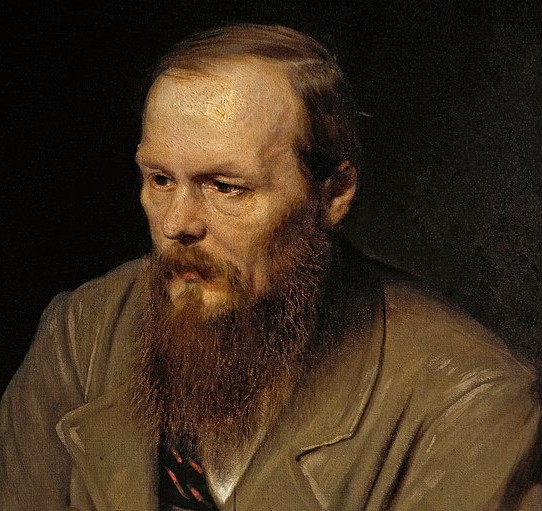
Fyodor Dostoevsky wrote novels of moral emergency in which ideas become voices, voices become relationships, and no theory survives untouched by humiliation, money, faith, illness, or desire.
Biography and criticism
The novelist who made argument dramatic
Execution trauma, Siberian imprisonment, gambling, debt, journalism, and Orthodox faith shaped Dostoevsky's work, but his greatness lies in refusing to reduce a person to any one explanation.
A sentence of death interrupted
Fyodor Dostoevsky was born in Moscow in 1821 and trained as a military engineer before turning toward literature. Poor Folk brought early recognition. In 1849 he was arrested for participation in the Petrashevsky Circle, subjected to a staged execution, and reprieved only at the final moment before being sent to Siberian penal labor and military service. The experience altered his politics, religious thought, and understanding of people under extreme coercion.
After returning to literary life, Dostoevsky wrote amid epilepsy, bereavement, debt, editorial pressure, and compulsive gambling. He sometimes produced major work at extraordinary speed because contracts and creditors left little room. These facts explain urgency but not the novels by themselves. He transformed personal extremity into dramatic structures where several incompatible consciousnesses retain force.
Ideas with bodies and bad timing
Notes from Underground attacks rational schemes of human behavior through a narrator who will injure his own interests to preserve the sensation of freedom. Crime and Punishment gives Raskolnikov a theory of exceptional people, then submits the theory to heat, hunger, debt, pride, murder, and unwanted human connection. The Idiot places radical goodness in a social world capable of admiring and destroying it.
Dostoevsky's scenes are crowded, interruptive, and emotionally volatile. Characters confess, perform, provoke, retract, and suddenly understand that another person has been listening differently. The prose in translation can feel repetitive or feverish, but repetition is often the sound of a mind unable to release the argument that protects it.
The final polyphony
Demons turns political ideology into conspiracy, vanity, generational conflict, and spiritual vacancy. The Brothers Karamazov gathers patricide, inheritance, sensual rivalry, monastic life, doubt, and responsibility into his largest moral composition. Ivan's arguments against providential order are not weakened into straw men so that faith can win easily. Alyosha's response is lived through relation rather than delivered as a conclusive proof.
Dostoevsky died in 1881 after achieving broad public recognition. Crime and Punishment is the most accessible major entrance; Notes from Underground the compact key to his quarrel with rational egoism; The Brothers Karamazov the fullest destination. His novels remain demanding because they deny readers the comfort of judging an idea outside the compromised person who needs it.
The books in context
How the work develops on the page
These notes connect the biography to specific choices in the books. Each title links to the full spoiler-free review.
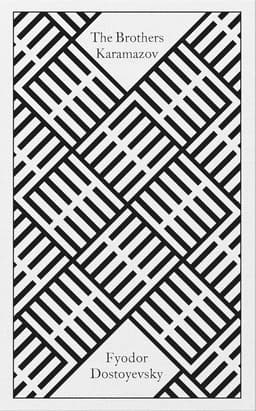
This spoiler free review of The Brothers Karamazov focuses on the core premise: three very different brothers, a violent and selfish father, and a murder that turns their family drama into a public trial about guilt, justice, and what a life without God might look like. You get enough plot and atmosphere to decide if this classic Russian novel is for you without spoiling the key reveals.
At heart it is a novel about faith, doubt, and responsibility. Dmitri burns with jealousy and appetite, Ivan wrestles with philosophy and the problem of evil, and Alyosha tries to live out a simple, active love influenced by a gentle monk. Around them, side characters argue about miracles, freedom, and whether morality survives if you remove God. That mix of family mess and big questions makes this a good choice if you are looking for The Brothers Karamazov summary plus the main themes of faith, doubt, and moral responsibility.
In terms of difficulty, The Brothers Karamazov can feel heavy at first because of Russian names, long conversations, and philosophical detours. It is not as immediately accessible as a short modern novel, but if you are comfortable with slow burn classics like Crime and Punishment or Les Misérables, you will likely be fine here. Many readers find that treating it as four linked parts and an epilogue, reading a little each day, makes the experience much less intimidating.
This book suits thoughtful older teens and adults who enjoy character driven stories where people argue, joke, confess, and break down in long scenes. If you are wondering whether The Brothers Karamazov is worth reading today, the answer is yes if you like fiction that takes religion and skepticism seriously and does not offer simple answers. The questions Ivan raises about suffering, justice, and belief still echo through modern debates.
If you decide to try it, you can secure your copy of The Brothers Karamazov on Amazon and then explore our classic literature shelf and existential fiction recommendations for more novels that sit at the edge between story, philosophy, and spiritual crisis.
Voices interrupt, exaggerate, confess, reverse themselves, and address imagined judges. The prose often feels overheated because Dostoevsky lets thought happen as social performance instead of polished reflection.
Dostoevsky gives faith, doubt, sensual appetite, resentment, and responsibility distinct human voices. Ivan's arguments do not disappear when Alyosha remains faithful, and Alyosha's compassion is tested by people rather than abstractions.
The novel repeats motives and emotional declarations at great length, while the narrator's tonal shifts can make minor figures feel caricatured beside the central brothers.
The monastery conversations and later courtroom speeches extend far beyond the amount of plot they carry. Both sections are thematically central, but they demand tolerance for argument as dramatic action.
Yes. The legal plot does not produce complete moral accounting, so the final emphasis on memory and responsibility offers a modest human answer rather than a tidy solution.
The Trial also makes judgment central, but removes the stable family, crime, and theological debate that Dostoevsky provides. Kafka is shorter, colder, and deliberately without explanatory ground.
Moby-Dick matches the scale, tonal variety, and willingness to interrupt narrative for philosophical inquiry. Choose Melville for obsession and the sea; Dostoevsky for family guilt and faith.
The Road reduces moral philosophy to choices made by a father and son under scarcity. It offers comparable seriousness in a radically leaner form with almost no social debate.
Long but rewarding conversations about faith, doubt, freedom, and the problem of evil that show why this is a cornerstone of philosophical fiction.
Readers who enjoy deep, character driven classics and are curious about Russian literature that mixes theology, crime, and psychology.
People asking whether The Brothers Karamazov is hard to read and worth the effort if you are interested in questions about God, justice, and personal guilt.
Book clubs that like long novels full of scenes to argue about, from tavern fights and courtroom speeches to quiet moments in monasteries and sickrooms.
Modern readers can approach it part by part, treating each section as a mini novel with its own emotional focus and set of questions.
It pairs well with short secondary material, like summaries of the key chapters or brief introductions to Dostoevsky, if you want context for the religious and political background.
If you finish and want more books like The Brothers Karamazov, you can move to other Russian classics or explore our existential fiction list for shorter, similarly intense reads.
This Brothers Karamazov review looks at a turbulent Russian family where jealousy, faith, and doubt spiral into murder, a public trial, and searching conversations about guilt and God.
Read the complete reviewWhere to begin
A good place to start with Fyodor Dostoevsky

The Brothers Karamazov
4.7 / 5The Brothers Karamazov is disorderly, funny, repetitive, and profound; its ideas matter because every argument is attached to a damaged family relationship.
Reading order and buying help
Reading guides featuring Fyodor Dostoevsky
Bibliography
Books by Fyodor Dostoevsky
Reviewed titles open directly on Book Review Guide. Other editions and works remain marked until a full review is published.

Reviewed
The Brothers Karamazov
Not reviewed yet
Brothers Karamazov
Not reviewed yet
Demons
Not reviewed yet
White Nights and Other Stories
Not reviewed yet
The Friend of the Family
Not reviewed yet
White Nights
Not reviewed yet
Fyodor Dostoevsky Collection

Not reviewed yet
Crime and Punishment
Bibliographic records: Open Library.
Reviewed bibliography
Fyodor Dostoevsky books reviewed here
Every title below has a complete, spoiler-free review. Scores are our editorial ratings, not visitor averages.

18804.7 / 5
The Brothers Karamazov
A Novel in Four Parts and an Epilogue
The Brothers Karamazov is disorderly, funny, repetitive, and profound; its ideas matter because every argument is attached to a damaged family relationship.
As an Amazon Associate, I earn from qualifying purchases.
Keep exploring