Author profile
Kazuo Ishiguro: books, reviews, and where to start
Kazuo Ishiguro writes restrained novels about memory, service, self-deception, and lives organized around an idea whose cost becomes visible only when revision is nearly impossible.
Biography and criticism
The quiet catastrophe inside a controlled voice
Ishiguro changes genre and setting while returning to narrators who tell their stories carefully enough to reveal what care is hiding.
Nagasaki remembered from England
Kazuo Ishiguro was born in Nagasaki in 1954 and moved to Britain as a child when his oceanographer father took a research position. The family initially imagined the move as temporary, so Japan remained both remembered place and possible return. Ishiguro studied English and philosophy, worked in social settings, and completed the creative-writing course at the University of East Anglia.
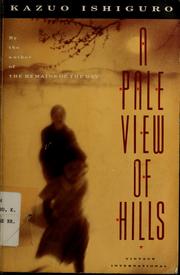
A Pale View of Hills and An Artist of the Floating World explore memory, responsibility, and postwar Japan without pretending autobiography. The Remains of the Day shifts to an English butler whose professional dignity has structured a life of political blindness and emotional refusal.
What the narrator almost says
Ishiguro's narrators are unreliable without being tricksters. Their omissions and revisions are methods of living with themselves. Plain, courteous sentences acquire pressure because a word is corrected or an anecdote returns under a different light. The reader performs emotional inference in the space the speaker protects.
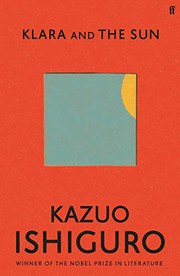
Never Let Me Go uses speculative biology but withholds the explanatory spectacle expected from science fiction. The clones' limited horizon makes institutional cruelty ordinary. Klara and the Sun later gives an artificial friend a precise but incomplete social vision. Begin with The Remains of the Day for the purest control or Never Let Me Go for genre and grief. Ishiguro's Nobel-recognized achievement lies in making restraint active: silence is not empty when a whole life is working to maintain it.
The books in context
How the work develops on the page
These notes connect the biography to specific choices in the books. Each title links to the full spoiler-free review.
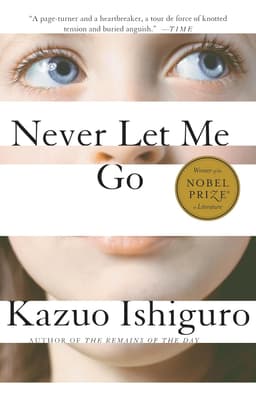
This spoiler free Never Let Me Go review follows Kathy H as she looks back on her childhood at Hailsham, a sheltered English boarding school where art projects, health checks, and vague warnings define everyday life. Ishiguro lets the speculative premise seep in slowly, so at first you are reading a memory driven coming of age story before realising how tightly controlled Kathy, Ruth, and Tommy's futures have always been.
The narration lives in the gaps and hesitations of memory. Kathy circles back to the same conversations, half finished arguments, and small humiliations, trying to understand why her friendship with Ruth feels so tangled and why Tommy remains such a painful fixed point. If you are interested in Never Let Me Go themes of memory and identity explained in plain language, the way she tells her story shows how people edit their own past to make unbearable truths feel softer.
Instead of heavy science talk, the book leans on social details and setting. Teachers hint around the real purpose of Hailsham, guardians debate how much the students should know, and rumours about the outside world build a quiet sense of dread. It works both as a dystopian novel about bodies treated as resources and as literary fiction about class, care work, and who gets to be seen as fully human.
It is also a deeply emotional read. The love triangle between Kathy, Ruth, and Tommy is full of pettiness, kindness, jealousy, and regret, which makes the final chapters hit harder than any single plot twist. If you are picking Never Let Me Go for a book club and worrying about the ending meaning, you can expect a subdued, bittersweet finish that opens space for debate about whether the characters acceptance of their fate is tragic, dignified, or both.
In terms of age rating, the prose is very readable for older teens, but the emotional weight and quiet depiction of sex, illness, and loss will land best with mature readers who are ready for a sad, reflective story rather than a fast paced thriller. If that mix of dystopian stakes, slow burn character work, and ethical questions appeals to you, Never Let Me Go earns its place among modern classics.
Ishiguro has Kathy correct the order of memories, address an imagined listener, and treat devastating facts as shared background. The calm conversational voice reveals how thoroughly the institution has shaped what seems speakable.
The friendships among Kathy, Ruth, and Tommy remain petty, loving, jealous, and unfinished. Their ordinary emotional mistakes prevent the novel's ethical problem from becoming a sterile thought experiment.
Kathy's circling memories can feel overly controlled, and readers wanting active resistance may find the characters' acceptance frustrating even when it is central to the design.
The Hailsham chapters linger on exchanges, rumors, art, and small childhood disputes before the institution's purpose becomes explicit. The delayed clarity is essential, but it asks for trust in apparently minor memories.
Completely. The final scene gathers loss, fantasy, and Kathy's habit of controlled recollection into an image that is restrained enough to avoid emotional manipulation.
Brave New World explains its engineered society through satire and debate. Never Let Me Go stays with three lives inside one quiet corner of the system and is far more emotionally intimate.
The Handmaid's Tale features explicit authoritarian ritual and a narrator preserving forbidden memory. Ishiguro's characters face softer conditioning and less visible force, which makes their compliance more unsettling.
Frankenstein asks what a creator owes the life it brings into being through Gothic confrontation. Never Let Me Go turns the same question into institutional routine and withheld futures.
A quiet dystopian setting where the true horror arrives slowly through memories and social details rather than jump scares or big reveals.
A tightly drawn triangle between Kathy, Ruth, and Tommy that explores jealousy, loyalty, and the fear of wasting the limited time you are given.
Themes of memory, identity, medical ethics, and what counts as a meaningful life that give book clubs plenty to unpack without heavy scientific jargon.
Readers who enjoy literary dystopias where the emotional fallout matters more than intricate worldbuilding or high concept science.
Book clubs and classroom groups who want to talk about memory, consent, bioethics, and how people adapt to unfair systems that feel normal from the inside.
Fans of understated, melancholic novels who appreciate slow burn character work and are comfortable with a quietly devastating ending.
Ask each reader to choose one memory Kathy dwells on and discuss why she might be clinging to that moment and what it hides or reveals.
Compare the students acceptance of their future with the way real world societies talk about workers, patients, or marginalised groups whose choices are limited.
Pair the novel with a short article or talk on medical ethics so you can connect its speculative program to real debates about bodily autonomy and care.
This Never Let Me Go review follows Kathy, Ruth, and Tommy from their strange schooldays at Hailsham to an uneasy adulthood in a quiet dystopia about memory, love, and what it means to be human.
Read the complete reviewWhere to begin
A good place to start with Kazuo Ishiguro

Never Let Me Go
4.7 / 5Never Let Me Go is devastating because Kathy's gentle recollections normalize a system the reader can never accept.
Bibliography
Books by Kazuo Ishiguro
Reviewed titles open directly on Book Review Guide. Other editions and works remain marked until a full review is published.

Reviewed
Never Let Me Go

Not reviewed yet
Remains of the Day
Not reviewed yet
Klara och solen

Not reviewed yet
Crooner / Nocturne

Not reviewed yet
An Artist of the Floating World
Not reviewed yet
An Artist of the Floating World / The Remains of the Day

Not reviewed yet
The Buried Giant
Not reviewed yet
The Summer We Crossed Europe in the Rain

Not reviewed yet
Klara and the Sun / Never Let Me Go

Not reviewed yet
Klara and the Sun

Not reviewed yet
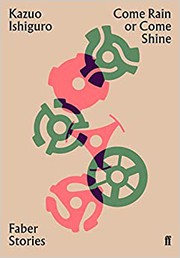
Come Rain or Come Shine

Not reviewed yet
The Remains of the Day

Not reviewed yet
My Twentieth Century Evening and Other Small Breakthroughs

Not reviewed yet
Nocturnes
Not reviewed yet
Early Japanese Stories

Not reviewed yet
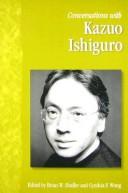
Conversations with Kazuo Ishiguro


Not reviewed yet
The Unconsoled

Not reviewed yet
A Pale View of Hills

Not reviewed yet
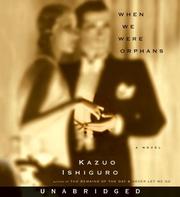
When We Were Orphans
Bibliographic records: Open Library.
Reviewed bibliography
Kazuo Ishiguro books reviewed here
Every title below has a complete, spoiler-free review. Scores are our editorial ratings, not visitor averages.

20064.7 / 5
Never Let Me Go
A Novel
Never Let Me Go is devastating because Kathy's gentle recollections normalize a system the reader can never accept.
As an Amazon Associate, I earn from qualifying purchases.
Keep exploring