Portrait of Jonathan Haidt

Author profile

Jonathan Haidt: books, reviews, and where to start

Jonathan Haidt is a social psychologist who writes about moral intuition, political division, institutional culture, and adolescent mental health through memorable models that invite both application and dispute.

Born 1963university teacherwriter

Biography and criticism

Moral intuition and the appeal of the explanatory model

Haidt's books succeed by turning research into metaphors readers can carry. Their influence makes the limits of those metaphors especially important.

From moral psychology to public argument

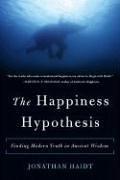
Jonathan Haidt was born in 1963, studied philosophy at Yale, and earned a doctorate in psychology at the University of Pennsylvania. Research in moral psychology led him to examine how intuitive judgment precedes conscious justification. The Happiness Hypothesis connects ancient moral traditions to contemporary research, while The Righteous Mind develops moral foundations theory and the image of an intuitive elephant guided imperfectly by a reasoning rider.

The metaphor explains why argument rarely changes a person by defeating stated reasons alone. Haidt writes generously about moral frameworks he does not share, a strength that helped the book travel across political audiences. Critics question the measurement, universality, and political application of the proposed foundations, reminding readers that a useful map is not the territory.

Institutions, phones, and causal confidence

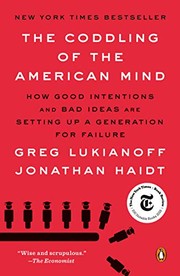
With Greg Lukianoff, The Coddling of the American Mind argues that certain protective habits can weaken resilience and public reasoning. The Anxious Generation connects adolescent distress to smartphones, social media, reduced independent play, and a changed childhood. The argument has energized parents and policymakers because it ends in practical proposals.

The same clarity can compress contested causal evidence. Trends in mental health differ across measures and populations, and technology interacts with family, economics, identity, and existing vulnerability. Readers should use Haidt to identify mechanisms worth testing rather than treating correlation as a closed verdict. The Righteous Mind is the strongest entry to his core scholarship; The Anxious Generation the clearest example of his later public-policy style.

The books in context

How the work develops on the page

These notes connect the biography to specific choices in the books. Each title links to the full spoiler-free review.

This spoiler free review and summary of The Anxious Generation by Jonathan Haidt focuses on his core claim that a phone based childhood has replaced a play based childhood, and that this great rewiring of daily life is tightly linked to rising anxiety and depression in teens. Haidt walks readers through graphs, timelines, and case studies to argue that the mental health curve bends sharply upward from around 2010, right when smartphones and social media became normal parts of adolescence.

The early chapters explain what childhood looked like before this shift. Haidt describes unsupervised outdoor play, walking to friends' houses, and local exploration as the training ground where kids learn to handle risk, conflict, and boredom. He frames this as an age of free range or play based childhood. Then he contrasts it with what he calls the phone based childhood, where many hours move indoors onto glowing screens, where social status updates never stop and parents feel pressure to monitor everything from a distance.

For parents who search for The Anxious Generation explained or key ideas from The Anxious Generation parents should actually apply, the most practical parts of the book are Haidt's four norms. He suggests no smartphones before roughly age fourteen, no social media before sixteen, phone free schools, and a conscious effort to restore unsupervised play and offline community for kids. The examples are written in plain language and feel aimed at busy parents, teachers, and school leaders rather than academic specialists.

Haidt also spends time on the data itself, which is where many of the criticisms live. He highlights correlations between social media use and teen mental health problems, especially for girls, and uses international comparisons to argue that this is not only an American story. Critics of The Anxious Generation point out that meta analyses often find much smaller or inconsistent links between screen time and well being, and they worry that over focusing on phones could distract from other pressures like school stress, family finances, or global news. The book acknowledges some of this pushback, but readers who want a full tour of the debate will still need to sample outside reviews and research.

If you read with those caveats in mind, The Anxious Generation works well as a parent friendly map of the problem and a starting point for family rules. Haidt blends moral psychology, stories from families, and straightforward advice so that adults who feel overwhelmed by tech can still come away with a short list of actions. If you want to dig deeper after this The Anxious Generation book review for parents, you can add The Anxious Generation to your Amazon cart and pair it with other nonfiction on youth mental health and technology to compare arguments and decide what fits your household or classroom best.

Haidt organizes graphs, developmental concepts, case studies, and policy recommendations around a memorable contrast between play-based and phone-based childhood.

Haidt joins individual family choices to school and policy coordination, explaining why parents cannot solve collective norms simply by exercising more discipline at home.

Correlational trends sometimes carry causal weight, alternative pressures receive less attention, and differences among platforms, children, and forms of use are compressed.

The central four reforms recur across chapters after they are already clear; the repetition aids advocacy more than analytical development.

The practical close is useful because it converts diagnosis into coordinated steps, provided readers treat the evidence as an evolving debate rather than a settled verdict.

Sagan supplies broader tools for testing public claims and is a useful methodological companion to Haidt's urgent argument.

21 Lessons ranges across many anxieties; Haidt is narrower, more actionable, and easier to challenge on specific evidence.

The Let Them Theory addresses personal boundaries rather than childhood systems and relies more on motivational reframing than research synthesis.

Frames the shift from a play based childhood to a phone based childhood as a central explanation for rising teen anxiety and depression.

Combines charts, timelines, and case stories so that busy parents can follow the argument without needing a statistics background.

Offers clear norms and conversation starters that turn a dense debate about smartphones and social media into concrete family and school decisions.

Parents, caregivers, and teachers who want a structured overview of how social media, smartphones, and overprotective parenting might be affecting kids born after the late 1990s.

School leaders and counselors looking for a readable summary to share with colleagues or parent groups when discussing phone free schools and online safety policies.

Older teens and young adults who are comfortable with non fiction and want to see how adults are talking about their phone use and mental health, especially in the United States and other wealthy countries.

Use the book as a base text for a parent discussion group, comparing Haidt's suggested norms with your local school policies and community expectations.

Pair The Anxious Generation with other titles on youth mental health and digital life so you can weigh different interpretations of the same data instead of relying on a single voice.

Invite teens to respond to selected chapters, asking which parts feel accurate, which feel exaggerated, and what boundaries around phones and social media might actually feel realistic to them.

This The Anxious Generation review looks at how Jonathan Haidt links the shift from play based childhoods to phone based childhoods with rising teen anxiety and depression, and which practical norms parents and schools might try in response.

Read the complete review

Where to begin

A good place to start with Jonathan Haidt

Cover of The Anxious Generation
Our highest-rated review

The Anxious Generation

4 / 5

The Anxious Generation identifies a real crisis in childhood and offers actionable reforms, but its phone-centered causal story is more certain than the research warrants.

Bibliography

Books by Jonathan Haidt

Reviewed titles open directly on Book Review Guide. Other editions and works remain marked until a full review is published.

Bibliographic records: Open Library.

Reviewed bibliography

Jonathan Haidt books reviewed here

Every title below has a complete, spoiler-free review. Scores are our editorial ratings, not visitor averages.

Cover of The Anxious Generation

20244 / 5

The Anxious Generation

How the Great Rewiring of Childhood Is Causing an Epidemic of Mental Illness

The Anxious Generation identifies a real crisis in childhood and offers actionable reforms, but its phone-centered causal story is more certain than the research warrants.

Read the review
See current formats on Amazon

As an Amazon Associate, I earn from qualifying purchases.