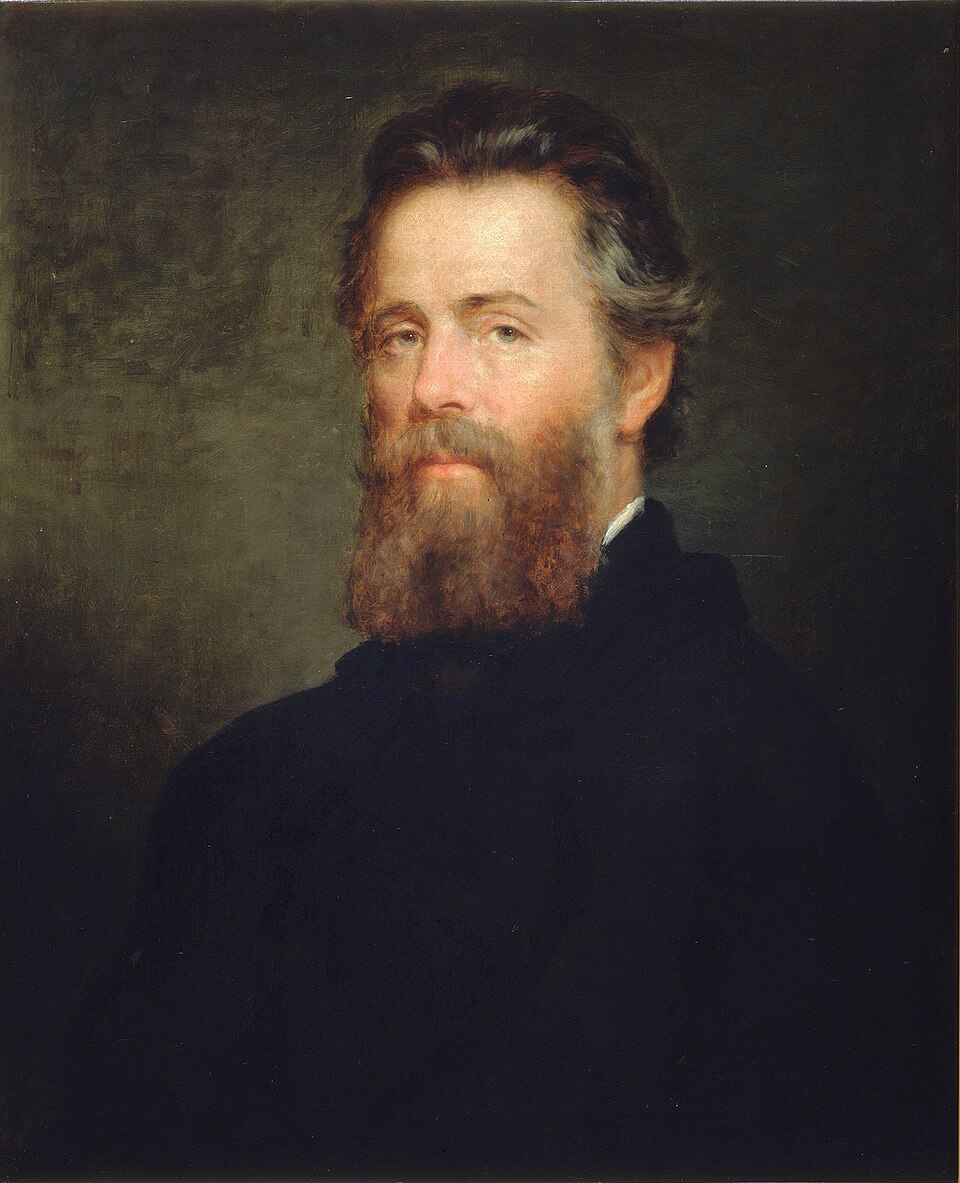
Author profile
Herman Melville: books, review, and bibliography
Herman Melville transformed seafaring experience, labor, religion, natural history, comedy, and obsession into fiction that repeatedly exceeds the categories meant to contain it.
Biography and criticism
The whale, the ship, and the book that refuses one form
Moby-Dick became canonical after Melville's death because later readers learned to value the very digressions and tonal collisions that frustrated its first audience.
Voyages turned into literary capital
Herman Melville was born in New York in 1819. Family financial collapse and his father's death pushed him through varied work before voyages on merchant, whaling, and naval ships supplied the material for his first books. Typee and Omoo used Pacific experience, adventure, and contested claims of truth to make him briefly successful.
His friendship with Nathaniel Hawthorne intensified the ambition of the whaling novel that became Moby-Dick in 1851. The book sold poorly and confused readers expecting a more ordinary maritime adventure. Later fiction and poetry did not restore his popular position, and Melville spent years working as a customs inspector.
Ishmael's inexhaustible book
Moby-Dick moves among narrative, sermon, drama, catalog, cetology, comedy, philosophy, labor, and visionary description. The digressions are the form. Ishmael attempts to know the whale through every available system while the whale exceeds each one. Ahab's monomania is dangerous partly because he converts uncertainty into a single personal meaning.
Melville's sentences can be Biblical, technical, theatrical, or suddenly intimate. Bartleby, the Scrivener compresses refusal into an office whose owner cannot understand a person outside usefulness. Billy Budd remained unfinished at Melville's death in 1891 and reached readers through later editorial reconstruction. Begin with Bartleby for compression or Moby-Dick for the full encounter. The difficulty is not a gate to prestige. It is the experience of a mind discovering that no one form can hold its subject.
A narrator who cannot stop adding another method
Moby-Dick keeps changing form because Ishmael cannot find one language adequate to the whale. Memoir, sermon, stage direction, taxonomy, labor report, joke, myth, and philosophical meditation each promise mastery and then reveal a limit. The digressions are not material surrounding the real chase. They are the book's argument that attention expands the object faster than knowledge can contain it.
Melville's shorter fiction compresses that problem into institutions. Bartleby's refusal exposes an office unable to imagine a person outside usefulness, while Benito Cereno traps a confident observer inside the racial assumptions through which he misreads a ship. The texts also carry the prejudices and blind spots of their century, so interpretive difficulty should not be mistaken for automatic moral wisdom. Melville remains powerful because narration itself becomes evidence. The speaker's certainty, delay, curiosity, or failure to see can matter as much as the event he believes he is reporting.
Where to begin
The Herman Melville book reviewed here
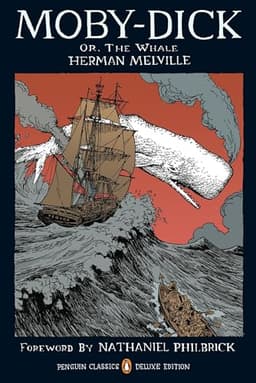
Moby-Dick
4.4 / 5Moby-Dick is magnificent, comic, obsessive, and exasperating in roughly equal measure; its digressions are the voyage, not interruptions to it.
Bibliography
Books by Herman Melville
Reviewed titles open directly on Book Review Guide. Other editions and works remain marked until a full review is published.

Reviewed
Moby-Dick
Not reviewed yet
Poems
Not reviewed yet
Beli kit, Moby Dick
Not reviewed yet
Kikeriki
Not reviewed yet
The poetry of the Negro, 1746-1970
Not reviewed yet
The story of Moby Dick
Not reviewed yet
Ukleta ostrva
Not reviewed yet
Mardi and a voyage thither
Not reviewed yet
Pierre
Not reviewed yet
Redburn, his first voyage

Not reviewed yet
Six Great Modern Short Novels
Not reviewed yet
The confidence-man
Not reviewed yet
White Jacket
Not reviewed yet
[Proofs of the illustrations to] Moby Dick, or The whale
Not reviewed yet
Melville's marginalia
Not reviewed yet
Omoo
Not reviewed yet
Moby Dick; or, The whale
Not reviewed yet
Moby Dick; or, The white whale
Not reviewed yet
Mardi
Not reviewed yet
Weeds and Wildings Chiefly
Not reviewed yet
Opere
Not reviewed yet
Mobi Dik, ili Belyĭ Kit
Not reviewed yet
Guía literaria de Roma
Not reviewed yet
Redburn
Not reviewed yet
A Thought on book-binding

Not reviewed yet
Forms of the Novella
Not reviewed yet
Melville's "Agatha" letter to Hawthorne
Not reviewed yet
Typee
Not reviewed yet
The Refugee
Not reviewed yet
Journal of Melville's voyage in a clipper ship
Not reviewed yet
Typee (SparkNotes Literature Guide)
Not reviewed yet
Moby-Dick SparkNotes Literature Guide
Not reviewed yet
Billy Budd (SparkNotes Literature Guide)
Not reviewed yet
Melville Stories (SparkNotes Literature Guide)
Not reviewed yet
American Literature for Christian Homeschoolers, Volume 2

Not reviewed yet
Selected Poems of Herman Melville

Not reviewed yet
Vier Monate auf den Marquesas-Inseln
Not reviewed yet
The experience of literature
Not reviewed yet
Arthur Gordon Pym, Benito Cereno, and related writings

Not reviewed yet
Moby Dick, un ensayo

Not reviewed yet
Great short stories of the masters
Not reviewed yet
Old New England
Not reviewed yet
Billy Budd, Sailor (an Inside Narrative)
Bibliographic records: Open Library.
Reviewed bibliography
Herman Melville books reviewed here
Every title below has a complete, spoiler-free review. Scores are our editorial ratings, not visitor averages.

20094.4 / 5
Moby-Dick
Or, The Whale
Moby-Dick is magnificent, comic, obsessive, and exasperating in roughly equal measure; its digressions are the voyage, not interruptions to it.
As an Amazon Associate, I earn from qualifying purchases.
Keep exploring