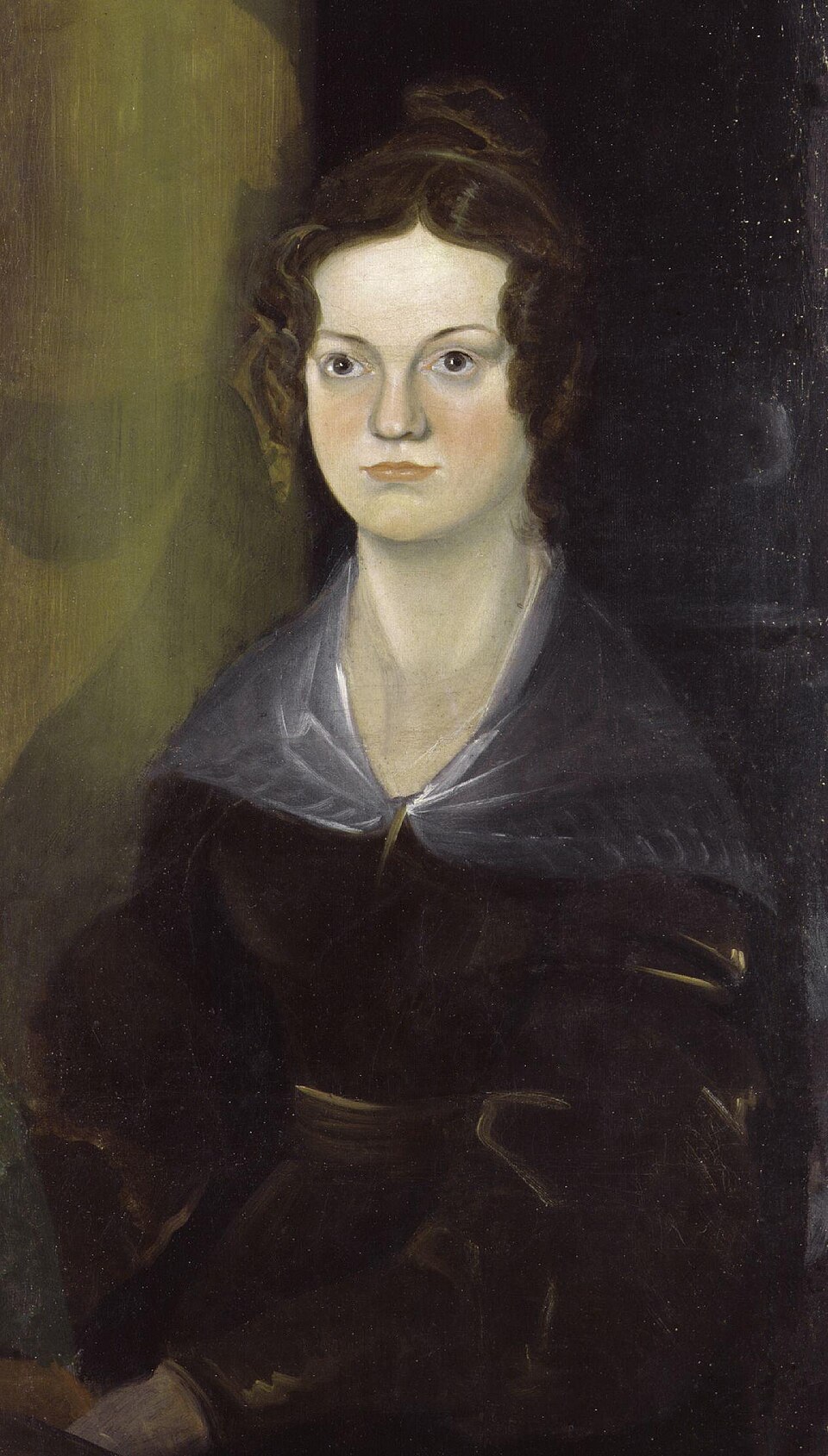
Author profile
Charlotte Brontë: books, review, and bibliography
Charlotte Brontë wrote from the narrow opportunities of a nineteenth-century clergyman's daughter and created heroines whose moral intelligence refuses to be confused with obedience.
Biography and criticism
A private imagination demanding public room
Jane Eyre made Brontë famous, but her juvenilia, teaching years, Brussels experience, sisters, losses, and later novels reveal a more difficult writer than the romance alone suggests.
Haworth and the invented kingdoms
Charlotte Brontë was born in 1816, the third child of Patrick Brontë and Maria Branwell Brontë. After her mother's early death, the family grew up at the parsonage in Haworth, beside a churchyard and within a landscape later romanticized as isolation itself. Four surviving siblings, Charlotte, Branwell, Emily, and Anne, created elaborate imaginary worlds from toy soldiers, newspapers, maps, poems, and miniature books. Angria and Gondal were not quaint rehearsals. They were long-running laboratories for political ambition, desire, betrayal, and voice.
The deaths of the two eldest Brontë sisters after illness at the Clergy Daughters' School gave Charlotte both grief and material she later reshaped in Jane Eyre's Lowood. She worked as a teacher and governess, positions that exposed the uneasy status of an educated woman paid to live inside another family's hierarchy. In Brussels she studied and taught at the Pensionnat Heger. Her attachment to Constantin Heger and the frustration of return informed the emotional geography of The Professor and Villette.
Currer Bell enters print
Charlotte, Emily, and Anne first published poetry under the names Currer, Ellis, and Acton Bell, choosing ambiguous pseudonyms because women writers were judged through assumptions the sisters wanted the work to confront before their sex. Charlotte's first submitted novel, The Professor, was rejected. Jane Eyre appeared in 1847 as an autobiography edited by Currer Bell and became an immediate success.
The novel's force lies in Jane's insistence that inward equality exists even when social power does not. She is poor, plain, employed, and repeatedly told that gratitude should silence judgment. Her first-person voice refuses. The romance with Rochester is compelling because it brings recognition and danger together. Jane will not accept love at the price of conscience or dependence at the price of self-respect. The Gothic machinery externalizes pressures already present in class, gender, property, and secrecy.
Loss and the harder later books
Within a short period Charlotte lost Branwell, Emily, and Anne. She outlived the creative household that had formed her and became responsible for managing its public memory. Shirley, published in 1849, widens toward industrial conflict and friendship between women, though its design is less concentrated than Jane Eyre. Villette, published in 1853, is stranger and more severe. Lucy Snowe controls what she tells the reader, observes others brilliantly, and protects herself through silence that can become distortion.
Villette demonstrates why Brontë should not be reduced to direct emotional confession. Her narrators stage disclosure. They use reserve, interruption, address, and retrospective arrangement to control intimacy. The reader feels close while remaining dependent on a speaker who may withhold the event that gives a scene its meaning. Brontë's prose can swell into Biblical cadence, visionary image, or sudden sarcasm, then narrow to the social violence of a glance.
Faith, anger, and the right to desire
Brontë's heroines are not modern secular individualists placed unchanged in Victorian settings. Their independence is argued through Christian conscience, duty, labor, and a belief in spiritual equality. At the same time, the novels are angry about the ways religion can be used to sanctify domination. Mr. Brocklehurst and St. John Rivers represent different forms of moral authority that treat a woman's life as material for someone else's purpose.
Charlotte married Arthur Bell Nicholls in 1854 and died during pregnancy in 1855, aged thirty-eight. Her short life has often been made into a legend of windswept genius, but the books are grounded in institutions she knew intimately: school, household, church, employment, and the literary market. Jane Eyre is the accessible beginning. Villette is the essential second book, because it turns the apparent directness of Jane's voice into something colder, less consoling, and formally more daring.
Where to begin
The Charlotte Brontë book reviewed here
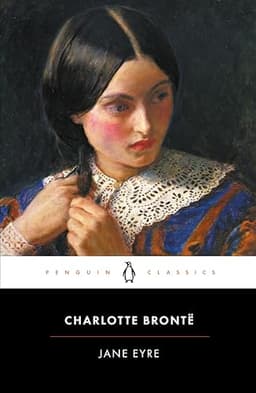
Jane Eyre
4.6 / 5Jane Eyre earns its romance by making dignity, work, faith, and independence matters Jane must settle before love can become acceptable.
Bibliography
Books by Charlotte Brontë
Reviewed titles open directly on Book Review Guide. Other editions and works remain marked until a full review is published.

Reviewed
Jane Eyre
Not reviewed yet
Juvenile magazine by Charlotte Brontë
Not reviewed yet
The four wishes
Not reviewed yet
Guía literaria de Londres
Not reviewed yet
The Shakespeare Head Brontë
Not reviewed yet
Villette
Not reviewed yet
Guía literaria del amor
Not reviewed yet
The professor, etc
Not reviewed yet
Stories from Angria, The professor, Emma, Poems
Not reviewed yet
Professor Charlotte Brontë
Not reviewed yet
Works of the Bronte Family
Not reviewed yet
Dzhen Eĭr
Not reviewed yet
The complete works of Charlotte Brontë and her sisters
Not reviewed yet
The Professor

Not reviewed yet
Jane Eyre (Everyman's library series-no.287)
Not reviewed yet
Charlotte Bronte - the Professor
Not reviewed yet
Shirley [Christmas Summary Classics]
Not reviewed yet
Charlotte Brontë
Not reviewed yet
Jane Eyre Ou les Memoires d'une Institutrice
Not reviewed yet
Poems by Currer Bell
Not reviewed yet
Shirley Volume 2
Not reviewed yet
Professeur, Par Currer Bell, Tr. Par H. Loreau...
Not reviewed yet
Biographical Notes on the Pseudonymous Bells
Not reviewed yet
Shirley
Not reviewed yet
Professor, by Currer Bell [Ed. by A. B. Nicholls]
Not reviewed yet
Villetter
Not reviewed yet
Wuthering Heights
Not reviewed yet
Ashworth
Not reviewed yet
Jane Eyre (Global Classics)
Not reviewed yet
Jane Eyre : (Charlotte Bronte Classics Collection)
Not reviewed yet
Dz︠h︡en Ei︠r︡
Not reviewed yet
Villette - Classic Book
Not reviewed yet
Charlotte Bronte - Shirley
Not reviewed yet
The works of Charlotte, Emily, and Anne Brontë
Not reviewed yet
Professor by Charlotte Bronte
Not reviewed yet
Professeur
Not reviewed yet
Jane Eyre, Die Waise Von Lowood
Not reviewed yet
Jane Eyre (Spanish Edition) (Special Edition)
Not reviewed yet
Shirley, A Tale By Charlotte Bronte
Not reviewed yet
Jane Eyre (Special Spanish Edition)
Not reviewed yet
Jane Eyre - Large Print Edition
Not reviewed yet
Jane Eyre : By Charlotte Bronte
Not reviewed yet
The poems of Charlotte Brontë & Patrick Branwell Brontë
![Cover of Jane Eyre, (Classic romances of literature. [vol. II])](https://covers.openlibrary.org/b/id/14992750-M.jpg)
Not reviewed yet
Jane Eyre, (Classic romances of literature. [vol. II])
Not reviewed yet
Saul and othe poems
Bibliographic records: Open Library.
Reviewed bibliography
Charlotte Brontë books reviewed here
Every title below has a complete, spoiler-free review. Scores are our editorial ratings, not visitor averages.

20064.6 / 5
Jane Eyre
An Autobiography
Jane Eyre earns its romance by making dignity, work, faith, and independence matters Jane must settle before love can become acceptable.
As an Amazon Associate, I earn from qualifying purchases.
Keep exploring