Author profile
Frank Herbert: books, reviews, and where to start
Frank Herbert wrote Dune from ecology, politics, religion, psychology, and suspicion of heroic power, creating an epic whose famous worldbuilding is inseparable from its warning.
Biography and criticism
Ecology, empire, and the danger of the charismatic hero
Herbert's varied working life fed a novel that refuses to keep environment, economy, belief, and family politics in separate compartments.
Journalism and the dunes of Oregon
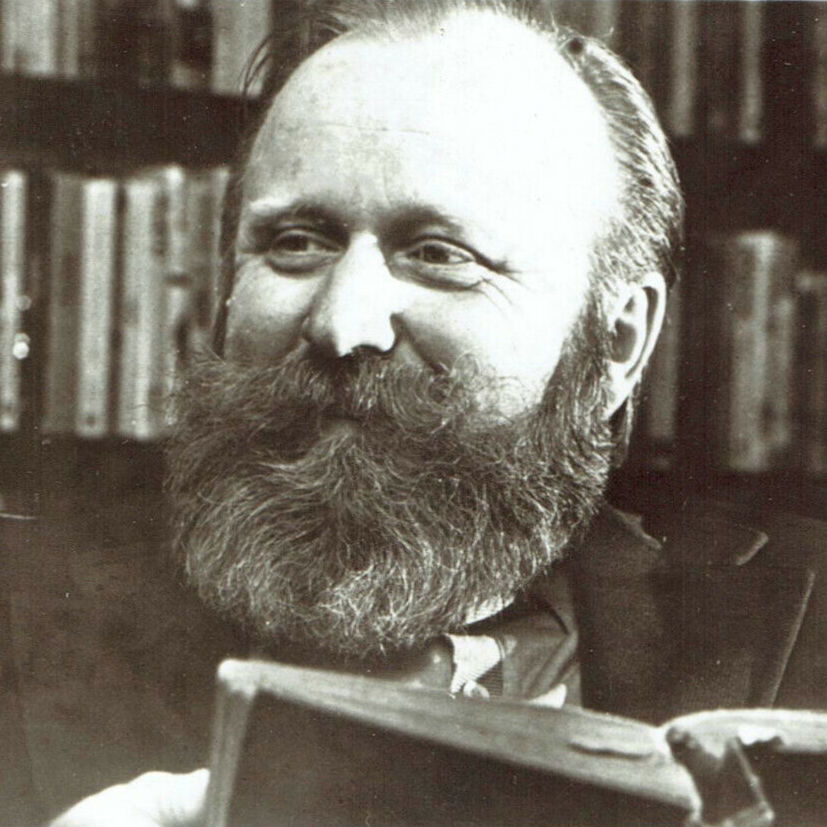
Frank Herbert was born in Tacoma, Washington, in 1920. He worked across journalism, photography, wartime service, political speechwriting, teaching, and other employment while developing fiction. A magazine assignment about efforts to stabilize Oregon sand dunes led him into years of research on ecology, human intervention, and the relationship between environment and social organization. The article was not completed in its intended form; the investigation became part of Dune.
Dune was serialized and then published as a novel in 1965 after rejections from numerous publishers. Its success grew gradually. Herbert did not merely invent a desert backdrop. Arrakis determines transport, housing, clothing, ritual, military possibility, economic monopoly, and religious expectation. Spice joins ecology to empire: whoever controls the substance controls the movement and planning of interstellar civilization.
Paul is not a simple savior
Paul Atreides receives the equipment of a heroic narrative: noble lineage, exile, exceptional training, prophetic capacity, and alliance with an oppressed people. Herbert uses those elements to expose the danger of charisma. Paul can foresee catastrophic consequences without finding a clean path outside the forces gathering around his image. The Fremen are not simply liberated by his rise; their faith and military power become available to an imperial project.
Later books make the warning more explicit. Dune Messiah examines the cost of victory, Children of Dune extends the dynastic trap, and God Emperor of Dune turns long-term control into a grotesque political experiment. Readers expecting repeated versions of the first novel's adventure often resist the sequels because Herbert deliberately denies that pleasure.
A demanding method of exposition
Herbert frequently begins scenes with unfamiliar terms and expects meaning to emerge through context, dialogue, epigraph, and repetition. This can make the opening difficult, but it keeps the world from feeling like a lecture delivered for a visitor. Point of view shifts within scenes reveal calculation beneath speech. Characters often think analytically about one another, producing tension even in formal conversation.
The method also has limits. Dialogue can sound ceremonial or overloaded with strategy, and the intellectual design sometimes outgrows emotional subtlety. Women possess formidable training and institutional power, especially through the Bene Gesserit, yet gender assumptions remain strongly marked by the period. Herbert died in 1986 after six Dune novels. The first remains the essential entrance, but Dune Messiah is necessary to understand the first book's politics. Together they explain his legacy: worldbuilding is not an inventory of invented facts. It is the demonstration that no fact about a society stays isolated from power.
The books in context
How the work develops on the page
These notes connect the biography to specific choices in the books. Each title links to the full spoiler-free review.
House Atreides accepts control of Arrakis knowing that the appointment is probably a trap. The planet's spice wealth makes it indispensable to the empire, while the cost of surviving its deserts gives the supposedly marginal Fremen a strength that the ruling houses consistently underestimate.
Paul begins as an unusually trained heir, not a finished savior. His education from Duke Leto and Lady Jessica gives him several ways to read danger, but his visions make every choice less secure because he can see possible futures without knowing how to avoid becoming trapped by them.
The book grows more suspicious of charisma as Paul's influence grows. Political calculation, religious expectation, and sincere loyalty become difficult to separate, which keeps the rise of a gifted protagonist from reading as a simple victory story.
Herbert frequently begins scenes without explaining unfamiliar terms. Their meaning becomes clear through dialogue and context, which makes the opening demanding but also keeps the world from feeling artificially explained.
Herbert makes ecology consequential. Water discipline shapes manners, military strategy, belief, and the value of the spice, so the worldbuilding keeps changing what characters can do rather than merely decorating the setting.
The novel often keeps the reader at an analytical distance. Important relationships can feel reported rather than lived, and some supporting characters disappear just as their conflicts become interesting.
The opening on Caladan and the first arrival on Arrakis introduce titles, factions, family histories, and unfamiliar terms before the plot provides enough context to sort them. The glossary helps, but constant checking can interrupt the rhythm.
Yes, though it is deliberately unsettling rather than triumphant. The immediate contest reaches a decisive turn, and the speed of that turn reinforces the novel's suspicion of heroic victory.
Unlike Dune, The Will of the Many introduces its political system more quickly and follows a more immediately accessible protagonist. Choose it if you want similar intrigue with a faster opening.
House of Suns offers an even larger sense of time and distance, but anchors it in a galactic murder mystery and a close relationship. Choose it for cosmic scale without dynastic prophecy or desert ecology.
Children of Time also connects environment, belief, and survival, but develops those ideas through evolutionary science and a nonhuman civilization. It is more explanatory than Dune and more openly interested in cooperation across difference.
Book clubs interested in talking about leadership, messiah figures, and revolutions that are not as simple as they first appear.
Create a small glossary of Fremen terms and Bene Gesserit phrases to see how language shapes loyalty and belief.
Sketch a simple map of key locations on Arrakis to visualize why each sietch, palace, and spice harvester matters strategically.
A sweeping Arrakis saga where noble houses, desert survival, and prescient power struggles collide in genre defining fashion.
Read the complete reviewWhere to begin
A good place to start with Frank Herbert

Dune
4.7 / 5Dune rewards its difficult opening because Arrakis is not background. Its water, religion, economy, and violence all push the same political tragedy.
Reading order and buying help
Reading guides featuring Frank Herbert
Bibliography
Books by Frank Herbert
Reviewed titles open directly on Book Review Guide. Other editions and works remain marked until a full review is published.

Reviewed
Dune


Not reviewed yet
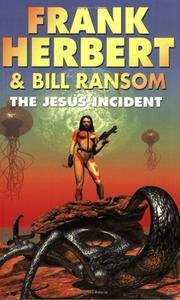
The Jesus Incident

Not reviewed yet
The Lazarus effect

Not reviewed yet
The Dosadi Experiment
Not reviewed yet
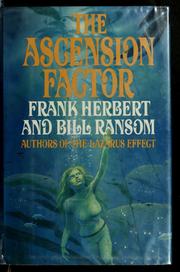
The ascension factor

Not reviewed yet
Dragon in the Sea
Not reviewed yet
Book of Frank Herbert
Not reviewed yet
Missing Link and Three More Stories
Not reviewed yet
Children of Dune
Not reviewed yet
Dune Coloring Book

Not reviewed yet
Dune - Tome 6 La maison des mères - Collector
Not reviewed yet
Dune (Edición Película) / Dune (Movie Tie-In)
Not reviewed yet
Frank Herbert

Not reviewed yet
Whipping Star The Green Brain The Eyes of Heisenberg
Not reviewed yet
Dune (SparkNotes Literature Guide)
Not reviewed yet
L. Ron Hubbard Presents Writers of the Future Volume 38
Not reviewed yet
Children of Dune. God Emperor of Dune
Not reviewed yet
Children of Dune (2 of 2)
Not reviewed yet
Dune Messiah (2 of 2)
Not reviewed yet
Dune Messiah (1 of 2)
Not reviewed yet
Novels by Frank Herbert
Not reviewed yet
Heiland (beterback)
Not reviewed yet
Children of Dune (1 of 2)
Not reviewed yet
Ḥolit
Not reviewed yet
The Nothing

Not reviewed yet
Great Classic Science Fiction Lib/E
Not reviewed yet
Herdeiras de Duna
Not reviewed yet
One Hundred
Not reviewed yet
Frank Herbert Classics Boxed Set
Not reviewed yet
Second Great Dune Trilogy
Not reviewed yet
Old Rambling House and Two Other Science Fiction Stories
Not reviewed yet
ʻEnaṿ shel Haizenberg
Not reviewed yet
Official Dune Colouring Book
Not reviewed yet
Old Rambling House
Not reviewed yet
DUNE : the Graphic Novel, Book 2
Not reviewed yet
Collected Stories of Frank Herbert
Not reviewed yet
Kokhav ha-malḳot
Not reviewed yet
The Book of Merlyn
Not reviewed yet
Dune (Movie Tie-In)
Not reviewed yet
Dosadi Experiment and the Eyes of Heisenberg
Not reviewed yet
Frank Herbert's Dune Saga 3-Book Deluxe Hardcover Boxed Set

Not reviewed yet
Nouvelles tome 1

Not reviewed yet
Chapterhouse Dune
Not reviewed yet
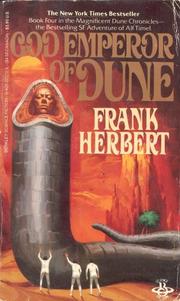
God Emperor of Dune
Not reviewed yet
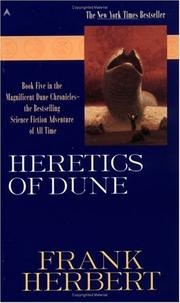
Heretics of Dune
Bibliographic records: Open Library.
Reviewed bibliography
Frank Herbert books reviewed here
Every title below has a complete, spoiler-free review. Scores are our editorial ratings, not visitor averages.

20204.7 / 5
Dune
Epic Science Fiction Classic
Dune rewards its difficult opening because Arrakis is not background. Its water, religion, economy, and violence all push the same political tragedy.
As an Amazon Associate, I earn from qualifying purchases.
Keep exploring