5 Crime Scene Puzzle Books for Aspiring Detectives
I’d start with Crime Seen to search illustrated scenes for clues or The Crime Scene Puzzle Book to work through forensic evidence. The two Murder Mystery Club books each keep one investigation going across dozens of puzzles.
The choices
Five puzzle books where you solve the crime
1
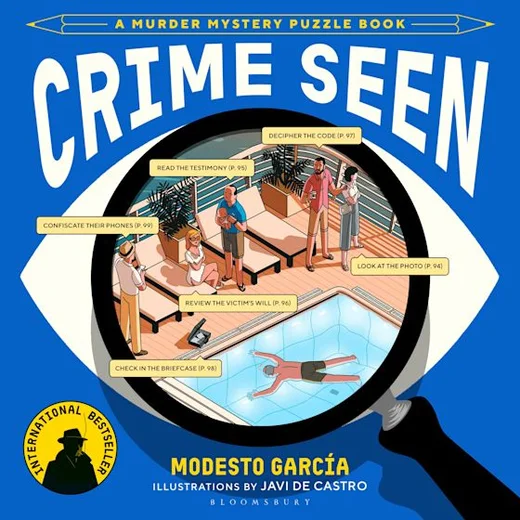
Crime Seen: A Murder Mystery Puzzle Book
Modesto García · 12 illustrated scenes
Each of the 12 independent cases starts with a scene you can scan like a detective at the door. Spot an object that seems out of place, then turn to its evidence page. A phone might give you a text exchange, while a discarded object may make you reconsider what happened in the room.
See more
You can inspect the clues in any order and use a mirror to uncover extra hints. The interaction is easy to learn, but building a case from scattered details takes more care than spotting the odd object in the first place. I’d jot down what I saw separately from what I think it means.
2
The Crime Scene Puzzle Book
Gareth Moore & Laura Jayne Ayres · 25 separate cases
The 25 cases change crime as well as puzzle type, moving among thefts, heists and unexplained deaths. You might compare fingerprints in one file and read a toxicology report or decipher a note in the next. The evidence arrives as material to interpret, with specific questions to answer about the case.
See more
The short files make it easy to stop between investigations. I’d expect the difficulty to vary more by evidence type than by the case number. Reading a report for an inconsistency and teasing meaning from a coded note use different skills.
3
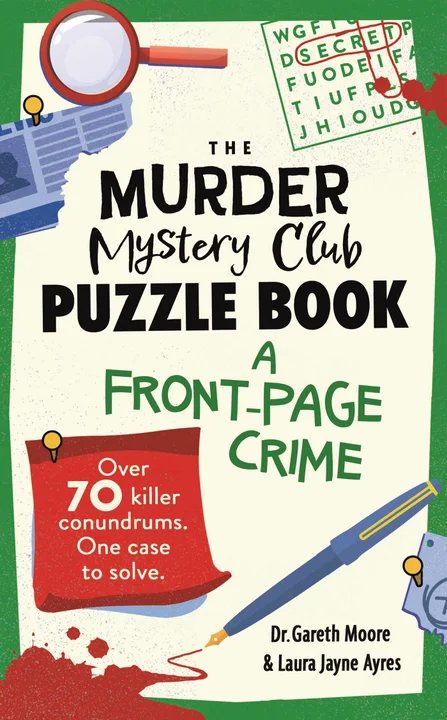
The Murder Mystery Club Puzzle Book: A Front-Page Crime
Gareth Moore & Laura Jayne Ayres · One Winter Festival investigation
Wobberley Edge is getting ready for its Winter Festival when the club is drawn into a mess involving blackmail, spies and an unlikely amount of fondue. More than 70 linked challenges feed one investigation, so a detail that seems incidental at first may become useful when a later puzzle gives it context.
See more
I’d keep a page for names and a separate line for what each puzzle establishes. Following the trail away from the festival asks more of your memory than a set of short cases, even when the individual brainteasers are manageable.
4
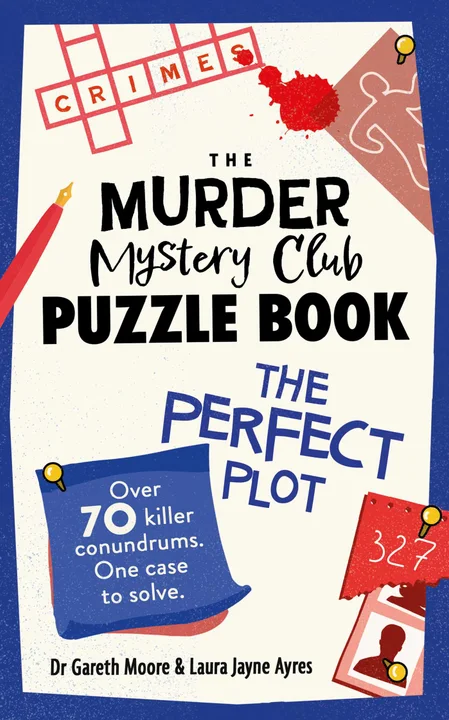
The Murder Mystery Club Puzzle Book: The Perfect Plot
Gareth Moore & Laura Jayne Ayres · One case around a novelist’s visit
Crime writer Verity Winchester is due in Wobberley Edge when the club is pulled into a real murder investigation. Progress can mean tracking a route on a map, cracking a combination or picking out a visual change. The results build up over the book until you can test a theory about who did it and why.
See more
The harder switches are between kinds of reasoning. A combination puzzle wants trial and elimination, while an ordering or family-tree puzzle asks you to carry a set of relationships through several clues. The novelist’s visit gives those changes a common thread.
5
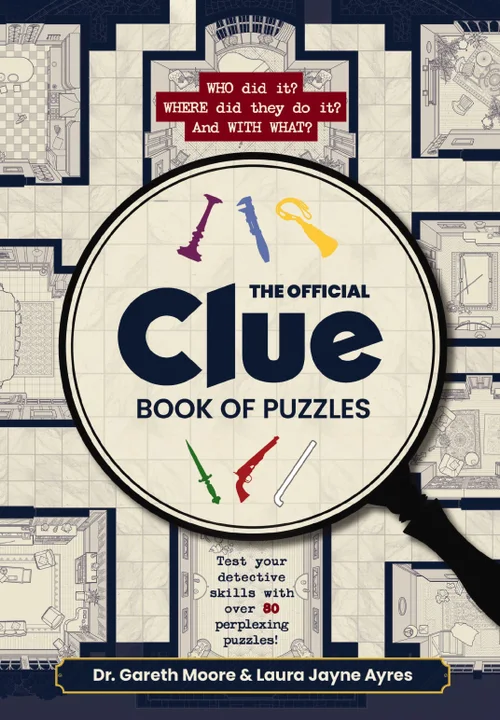
The Official Clue Book of Puzzles
Gareth Moore & Laura Jayne Ayres · Tudor Mansion
Tudor Mansion and six familiar suspects give you a head start on the setting. You work toward an accusation by decoding messages, solving logic problems and picking out visual evidence. A clue is only useful once you can connect it to the people, rooms or possible weapons in play.
See more
Knowing the game gives you a way into the setting. Over roughly 80 challenges, the book asks you to distinguish a possibility you’ve ruled out from one you simply haven’t seen evidence for.
How the investigations differ
What kind of detective work do you want to do?
Crime Seen gives you control over which details to inspect. The Crime Scene Puzzle Book changes the kind of evidence with each case. In the Murder Mystery Club books, a solved puzzle advances the same story. CLUE gives you the familiar suspects and rooms of Tudor Mansion to work with.
A picture, a case file or a theory to test?
In Crime Seen I’d ask which object deserves a closer look. A forensic file puts more of the evidence in front of you and asks what you can conclude from it. The Murder Mystery Club books call for a running theory. You may solve tonight’s code and still need one more clue before the accusation makes sense.
The two club books share Wobberley Edge and its sleuths, with different mysteries. The Perfect Plot makes a crime novelist’s visit the occasion for its deductions. A Front-Page Crime spreads its clues across a festival, blackmail and espionage. The change of setting matters more to the investigation than the order you pick up the cases.
If you like a different kind of deduction
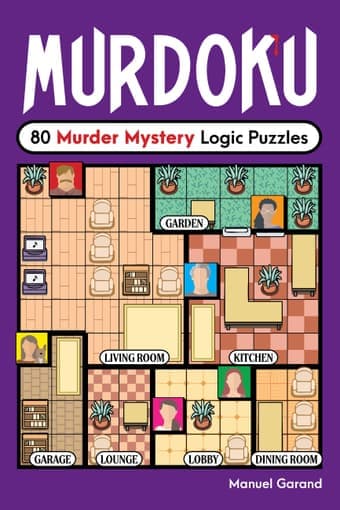
Murdle is built around matching and eliminating possibilities in logic grids. Murdoku makes the positions of people and objects in an illustrated space part of the logic. The Killer Isn’t Alice gives you a continuing mystery with written evidence and a case to keep straight. Each puts the work in a different place.
Read my review of The Killer Isn’t Alice · Find the first Murdle volume · See how the Murdoku books progress · Explore other interactive mystery books
Quick answers
Questions readers ask before buying
Which puzzle book lets you investigate illustrated crime scenes?
Crime Seen offers 12 illustrated cases. You can inspect a detail by turning to its evidence page, then return to the scene and follow another lead.
Which puzzle books follow a single murder investigation?
Each of the two Murder Mystery Club books here uses its linked puzzles to work through a separate murder investigation.
Sources for this guide
Sources & references
Order, series status, and official starting-point claims were checked against these author and publisher pages on November 27, 2026.
Keep reading