Mystery reading guide
7 Interactive Mystery Books for Adults: Follow the Clues or Change the Story

I’d start with what you want to do as the reader. In The Dinner Party, your choices change what happens, while in Antony Johnston’s mysteries you decide which leads to follow. In The Appeal and Strange Pictures, the story follows a set path, and you piece together what happened from messages or drawings.
The Seven Interactive Mysteries
01
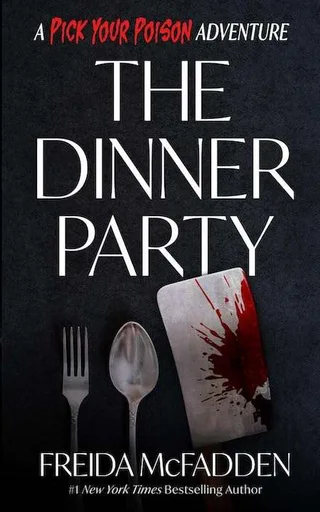
The Dinner Party
Freida McFadden · Choose what happens
You’re behind on rent when a friend offers you a night’s work serving dinner at a secluded mansion. Do you take the money or stay home? That’s the first fork, and you’re in it before there’s a crime to investigate. Whenever the story gives you a choice, you jump to the passage that follows from it.
See more
McFadden gives the story 22 possible endings. I’d treat the first one you reach as a stopping point, then go back to a choice you were tempted to make the other way. The pleasure is seeing how far a different decision takes the story, rather than trying to deduce one culprit from a set of clues.
02
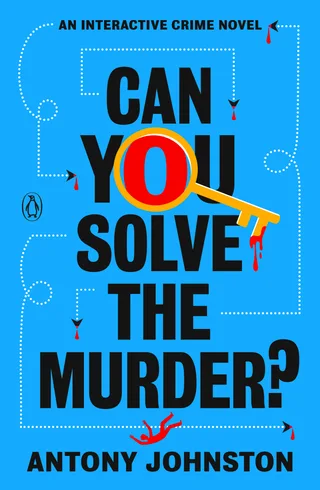
Can You Solve the Murder?
Antony Johnston · Direct the investigation
At Elysium, a wellness retreat in an English country manor, a businessman is found dead below a balcony. The door that leads to it was locked, and the key is missing. Instead of watching a detective work through the guests, you choose whom to interview and which evidence to examine. When you make an accusation, it’s based on the case you’ve built along your route.
See more
It helps to keep a short list of what you know about the door and what each person only claims to know. Some choices can bring the investigation to a premature end. That’s a different kind of risk from McFadden’s: here you’re deciding whether a lead is worth pursuing, rather than whether to walk into the story at all.
03
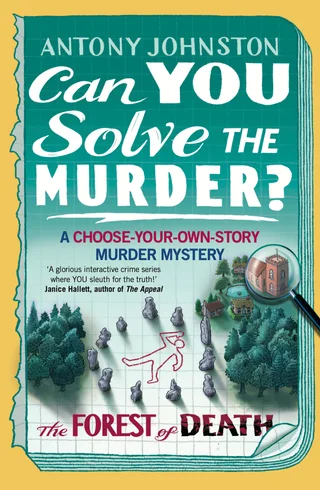
Can You Solve the Murder? The Forest of Death
Antony Johnston · Follow leads and decode clues
A singer filming a music video is found dead in a stone circle. Her bandmates and the villagers have alibis, and some locals blame a figure from folklore called the Stone Warden. You still choose whom to question, but now there are symbols at the scene to decipher and a local legend to weigh against what the suspects tell you.
See more
The manor case begins with a question about access: how did anyone get to that balcony? Here I’d keep two sets of notes, one for what people say about the legend and another for what you can check, including where people say they were. The symbols give you something to work on between interviews.
04
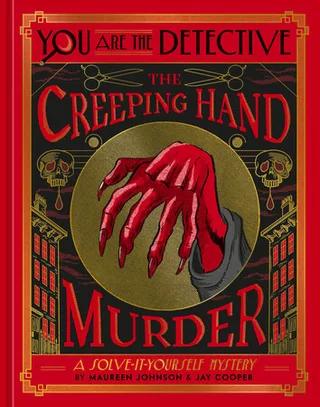
You Are the Detective: The Creeping Hand Murder
Maureen Johnson and Jay Cooper · Examine a case file
London, 1933. Seven people receive letters drawing them to a townhouse, where an American novelist is stabbed in a room full of people. Nobody saw the stabbing. Scotland Yard turns the case file over to you. You can lay a witness’s account alongside a floor plan and ask whether they could have seen what they say they saw.
See more
Here you can turn back to a diagram as often as you like without sending the investigation down a new branch. The file stays put. I’d pause before the solution and try to explain the apparent impossibility of the stabbing as well as who had a reason to do it.
05
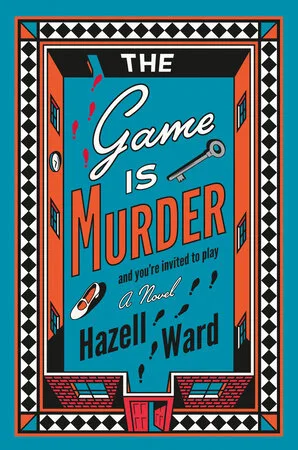
The Game Is Murder
Hazell Ward · Play the Great Detective
The invitation is to a murder mystery party, but the case you’re asked to solve comes from 1970s England. Ward casts you as the Great Detective. The narrator talks directly to you, poses puzzles and gives you reason to reconsider evidence you thought you understood. Naming a suspect is only part of the job: your theory needs to explain how and why the murder happened, too.
See more
The book gives you questions to work through without letting your answers pick the next chapter. Compared with Scotland Yard handing you a dossier and getting out of the way, Ward keeps calling attention to the game you’re playing. I’d keep a tentative explanation handy so you can see exactly which bit of it a new detail upsets.
06
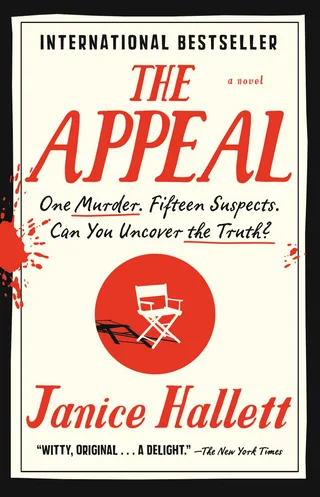
The Appeal
Janice Hallett · Read the correspondence
Two junior lawyers sift through the records of the Fairway Players, a small-town theatre group whose play rehearsals and fundraising appeal precede a death. You read the emails, messages and letters alongside them. Messages written to organize rehearsals or chase donations turn out to tell you who trusts whom, who gets left out of a conversation and which stories change depending on the recipient.
See more
I’d pay attention to the address lines early on. With so many names, noticing who is copied on a message can do more for your bearings than trying to pin down a suspect straight away. Unlike the London dossier, much of this evidence was written by people going about their lives. You have to work out which bits of everyday talk are evidence at all.
07
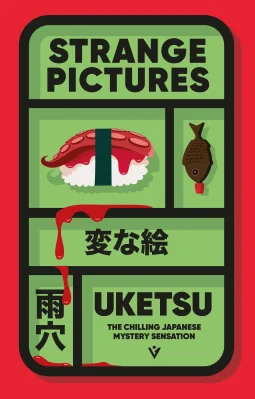
Strange Pictures
Uketsu · Work out what the drawings show
A woman’s sketches on a blog, a child’s picture of home and a murder victim’s final drawing belong to stories that seem separate at first. You’re looking at the same pictures the characters have to make sense of. What somebody drew, what they left out and where they put things can tell a different story from the one you’d get by reading the prose alone.
See more
The chapters run in a set order, but earlier drawings are worth revisiting once you know a little more. I’d stop and look before reading a character’s explanation. In The Appeal you’re asking what a person meant to say in a message. Here it can be enough to notice that something in a picture isn’t where you expected it to be.
Side by side
The Seven Books Compared
The quickest way to narrow it down is to ask whether you’d rather make the next move or make sense of what’s already in front of you.
| Book | How you participate | What sets it apart |
|---|---|---|
| The Dinner Party | Choose what the protagonist does next. | A short suspense story with 22 possible endings. |
| Can You Solve the Murder? | Choose leads, question suspects and make an accusation. | A locked balcony door at a country retreat sets the puzzle. |
| Can You Solve the Murder? The Forest of Death | Pick interviews and decipher symbols. | Village folklore competes with the evidence in a woodland murder. |
| You Are the Detective: The Creeping Hand Murder | Cross-check statements against maps and illustrations. | A Scotland Yard dossier about an apparently impossible stabbing. |
| The Game Is Murder | Test a theory of who did it, how and why. | A murder mystery party reopens a cold case and gives you a part to play. |
| The Appeal | Read emails and messages for omissions and contradictions. | The gossip around a community theatre group doubles as a record of the case. |
| Strange Pictures | Study drawings and compare them with the accompanying stories. | Images connect episodes that initially seem unrelated. |
Which One Would I Start With?
For a first taste of branching fiction, I’d start with The Dinner Party. It’s short enough to go back and see what a different answer gets you. I’d start with the first Can You Solve the Murder? instead if I wanted my decisions to feel like detective work. The locked door gives you a concrete question to keep in mind when a new lead comes up. The Forest of Death adds a second kind of problem: clues that have to be decoded as well as people who have to be questioned.
For a mystery to work through with someone else, I’d put The Creeping Hand Murder on the table. You can both look at the same plan and argue about what a witness could see. I’d save The Appeal for when I want to get to know a group through the way they write to each other, and pick Strange Pictures when I’m more in the mood to sit with an image that doesn’t quite make sense yet.
The Game Is Murder is where I’d go for the strangest relationship between the book and its detective. Part of the fun is having the person who set the game keep talking to you while you’re trying to solve it. If what you want is a fresh case to finish in one sitting and another one tomorrow, a collection of individual puzzles is a better fit.
Compare murder mystery puzzle books · Freida McFadden’s other short fiction
Sources for this guide
Sources & references
Story setups and reader mechanics were checked against these author and publisher sources.