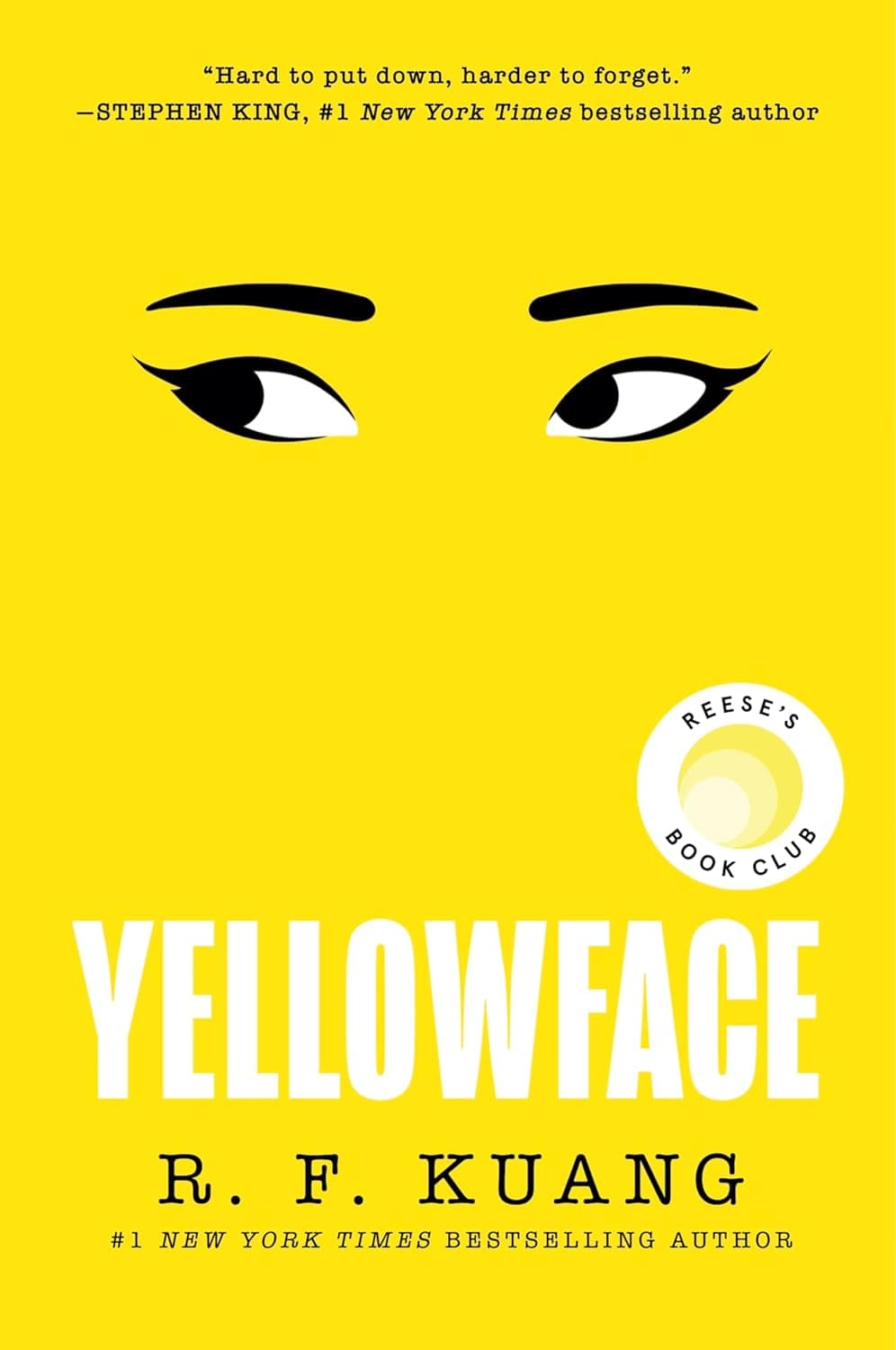
Should you read Yellowface?
What works
June's self-justification turns appropriation, envy, marketing, and online punishment into one continuous voice rather than a checklist of publishing controversies.
What may not work for you
Some industry antagonists are broad enough to make June's paranoia temporarily seem more reasonable, and the social-media cycles can repeat their point.
What may test your patience
The middle revisits accusation, denial, and reputational recovery several times, which is thematically apt but less surprising than the opening theft.
Does the ending reward the effort?
Yes. The ending understands that exposure cannot cure a narrator whose real talent is converting consequence into new material.
Reading Yellowface closely
Yellowface begins with a brutal, simple choice. June Hayward is a struggling writer; her friend Athena Liu is a literary star. After Athena dies suddenly, June takes her unpublished manuscript and gradually takes over more than the book, adopting a new author name and a public identity built on theft.
Kuang writes the publishing world like a pressure chamber where branding, optics, and incentives quietly reward the worst instincts. The brilliance is the narration: June is relentlessly self justifying, always explaining why the line she crossed was not really a line. That voice makes the book funny in a bleak way, because you can hear the lies harden into something she needs to survive.
As the book succeeds, attention becomes the threat. Online whispers become threads, threads become dogpiles, and June starts living inside a feedback loop she cannot control. Yellowface nails the paranoia of being watched and reinterpreted in public, while still keeping the moral center clear: the story is not about a misunderstood genius, it is about what happens when success is built on theft and fear.
Yellowface is a fast, talkable novel with a sharp interest in cultural appropriation, reputation, and credit.
Content Notes
Racism and identity based harassment, including online dogpiles and threats.
Death and grief early in the story, plus sustained anxiety and paranoia.
Plagiarism, deception, and morally ugly behavior from the protagonist.
Three useful comparisons
James
James gives the stolen voice in a canonical text its own history and emotional weight; Yellowface examines a thief who calls appropriation collaboration.
Best for: Readers of literary retellings, historical fiction, satire, and morally urgent novels about race, authorship, family, and the politics of voice.
The Great Gatsby
The Great Gatsby is more lyrical and indirect about self-invention, while Yellowface makes status hunger contemporary, verbal, and painfully explicit.
Best for: Readers drawn to concise literary tragedy, unreliable admiration, class, reinvention, and prose that rewards rereading.
The Compound
The Compound turns visibility into a controlled survival game; Yellowface shows a writer repeatedly choosing the attention that terrifies her.
Best for: Readers of dystopian satire, social horror, reality-TV critique, surveillance fiction, and morally compromised narrators who want an addictive rather than austere novel.