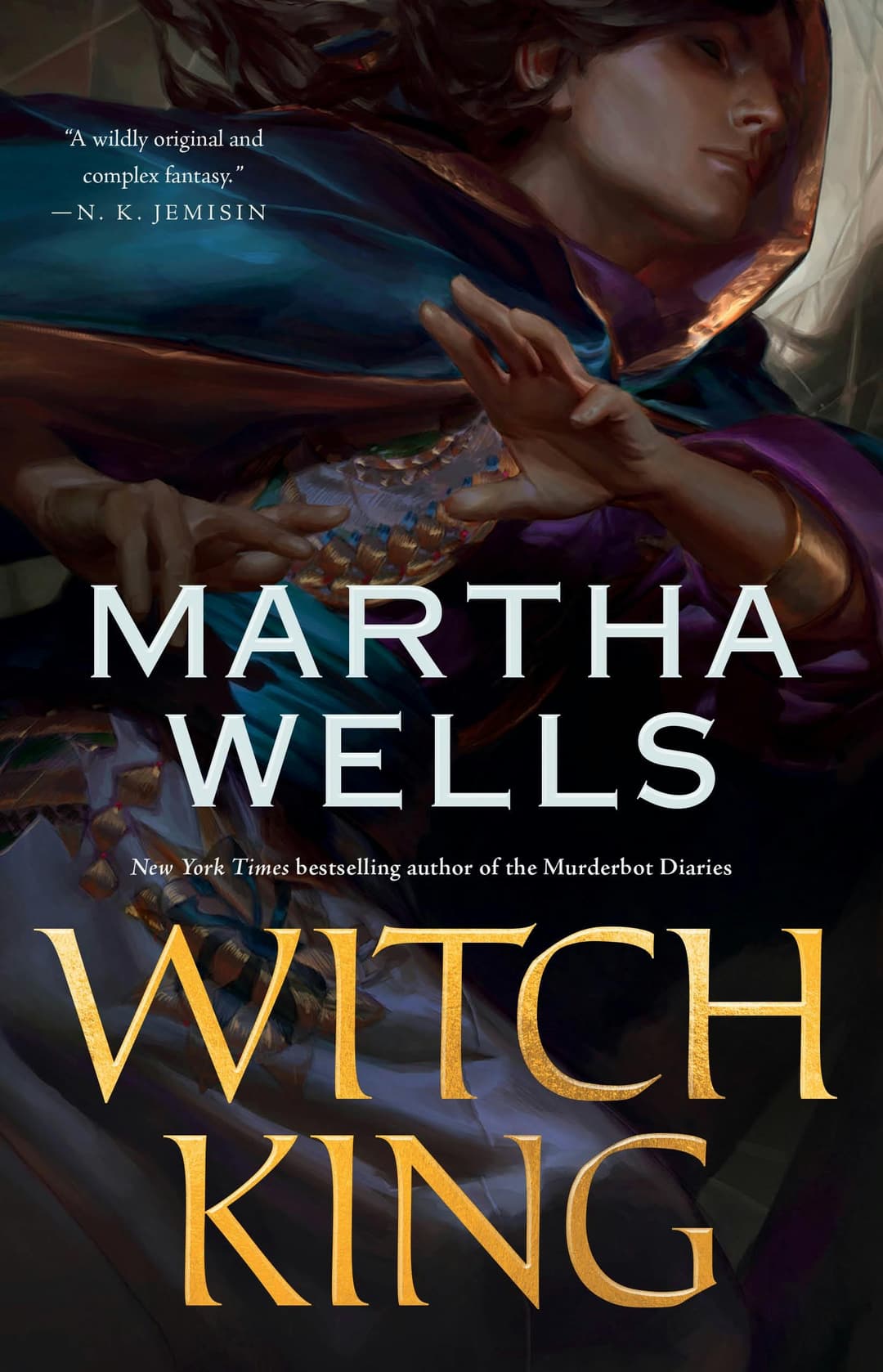
Should you read Witch King?
What works
Kai and Ziede have the ease and irritation of people who survived the same impossible struggle. The past timeline makes the Rising World feel politically constructed rather than destined, while demon bodies, witch magic, and the Hierarchs' extraction of power avoid standard medieval-fantasy machinery.
What may not work for you
The present investigation accumulates names, factions, and travel without producing a mystery as compelling as the war in the past. Several allies arrive before their relationships are fully legible, and the book sometimes asks political history to substitute for immediate dramatic pressure.
What may test your patience
The opening alternates imprisonment in the present with an earlier conquest before readers understand the powers or loyalties in either period. The pieces do connect, but the first hundred pages resist casual reading.
Does the ending reward the effort?
Mostly. The missing-person plot reaches a meaningful answer and Kai's history clarifies the stakes, though the broader threat and several political consequences are deliberately left for the sequel.
Reading Witch King closely
Witch King opens with Kaiisteron imprisoned, conscious but separated from his body. His captors expect a manageable demon and discover that the distinction between body, consciousness, and power is not as secure as their ritual assumes. After escaping with the witch Ziede, Kai searches for the ally who should have been waiting and for an explanation of what changed during their captivity.
A second timeline follows the Hierarchs' conquest and Kai's role in the resistance that eventually became the Rising World coalition. This history is not a decorative origin story. It shows alliances forming among peoples with different losses, priorities, and magical practices. The present investigation gains meaning as the reader learns what those relationships cost and why the coalition remains politically fragile.
Kai is a rewarding center because his demon nature does not map cleanly onto villainy, immortality, or human desire. He understands bodies as temporary homes and pain as a source others may try to exploit, yet his most defining attachments have been chosen over years. Ziede's impatience and practical competence keep his perspective from becoming the only interpretation of their past.
The novel is demanding. Names, titles, peoples, and institutions enter scenes before the reader has a stable map, while the timeline alternates just as one period develops momentum. The present-day disappearance is also less compelling than the earlier resistance. Its travel and questions provide structure, but the past contains the sharper conflicts and more memorable transformation.
Witch King rewards a second look more than a hurried first pass. Wells has built a postrevolutionary fantasy interested in the work after an empire falls: who records the victory, which compromises become institutions, and whether old allies still mean the same thing to one another. The immediate mystery closes sufficiently, but this is clearly the foundation for Queen Demon rather than a fully sealed world.
Kai's body changes the rules of power
A demon can inhabit a body without being reducible to it, so imprisonment, injury, and identity have different consequences. Wells uses that distinction in action while also asking why other powers want to control demon embodiment.
Revolution becomes political memory
The past timeline shows the coalition being improvised under pressure. In the present, those choices have hardened into competing accounts of legitimacy, making history something characters use rather than neutral background.
Friendship survives without becoming simple
Kai and Ziede share old knowledge and immediate loyalty, but they can still misread each other's priorities. Their shorthand makes the relationship feel lived in while leaving enough disagreement to keep both characters independent.
Three useful comparisons
Queen Demon
Queen Demon begins after the alliances and magical vocabulary are established, so it can spend more time on Dahin's trail and the group's internal trust. Witch King is the necessary starting point and offers the more powerful historical arc. Read the sequel for a clearer forward-moving quest.
Best for: Readers who finished Witch King and want more of Kai, Ziede, Tahren, and Dahin, with a stronger quest structure, mature found-family dynamics, political fantasy, and magic shaped by bodies and memory.
Nettle & Bone
Nettle & Bone also rejects a glamorous court quest and assembles adults whose practical loyalties matter more than heroic image. Kingfisher is warmer, shorter, and immediately accessible. Witch King offers denser history, more political factions, and a protagonist whose demon nature changes the metaphysics of the world.
Best for: Readers who want an adult fairy tale about sisters and found family, with gallows humor and only a light romantic element.
The Will of the Many
The Will of the Many explains its oppressive hierarchy through one outsider entering a controlled institution, which gives it a faster narrative hook. Witch King begins after a revolution and reconstructs how fragile alternatives were built. Choose Islington for momentum and secrets; Wells for aftermath, coalition, and stranger magic.
Best for: A fast-opening political fantasy built around academy competition, hidden identity, and a large mystery.
Make the next decision