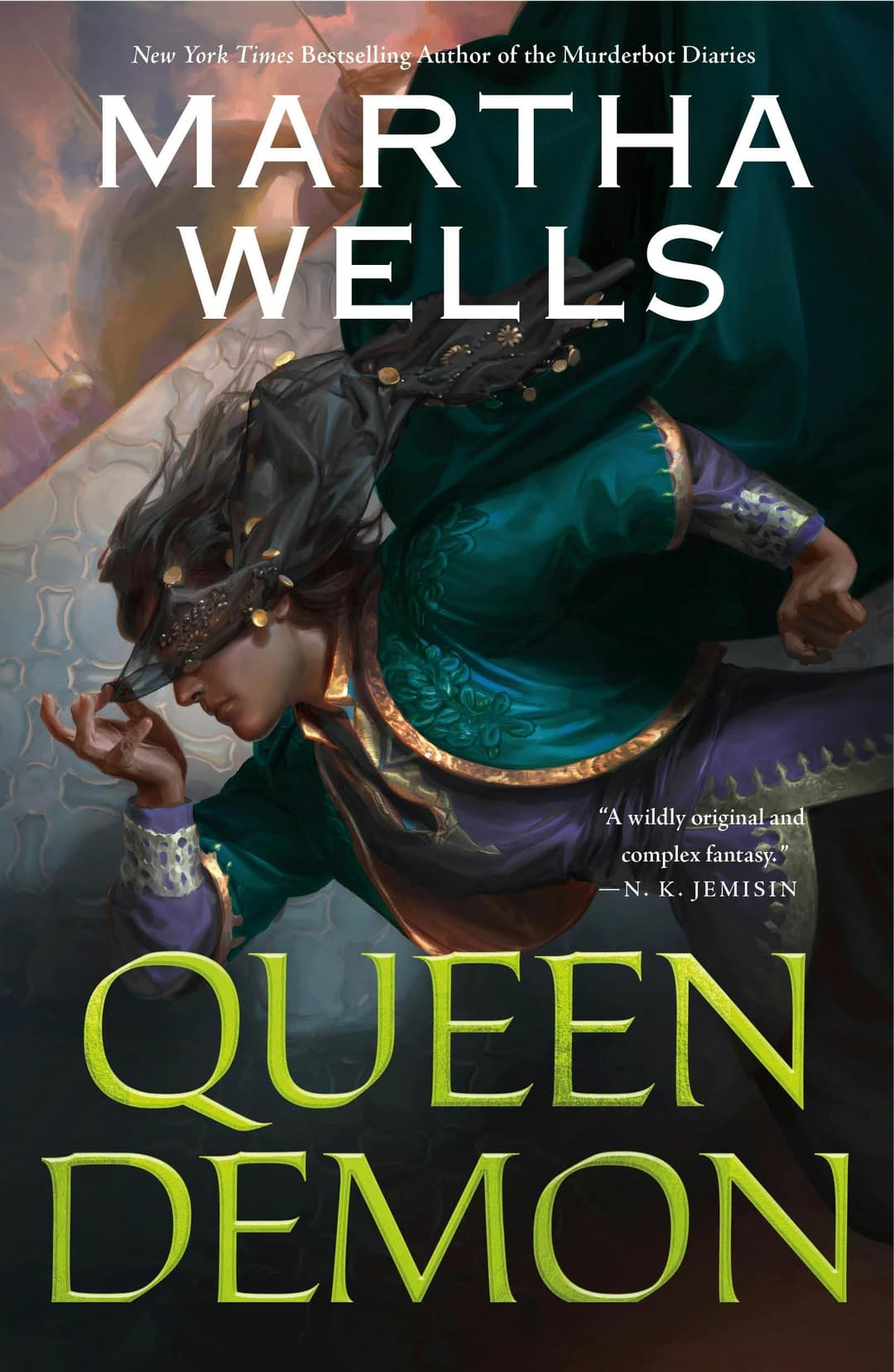
Should you read Queen Demon?
What works
The group chemistry is sharper here, particularly when Kai, Ziede, and Tahren disagree about responsibility without doubting their shared loyalty. Dahin's clues and the movement toward the Hierarchs' Well give the journey a firmer spine than the present timeline of Witch King.
What may not work for you
It is not friendly to readers who skipped the first book, and travel conversations sometimes carry more political explanation than tension. The central mystery competes with returning factions whose significance depends on remembering the prior novel's dense history.
What may test your patience
The quieter middle stages several meetings and negotiations before the Well becomes an immediate destination. These scenes deepen the coalition, but readers expecting constant demon combat may find the route indirect.
Does the ending reward the effort?
Yes, within a continuing series. The expedition produces a real confrontation and changes several relationships, while leaving enough political danger alive to make another volume necessary rather than merely possible.
Reading Queen Demon closely
Queen Demon returns to Kai, Ziede, and Tahren with the Rising World's basic history already established. Their search follows signs left by Dahin and points toward the Hierarchs' Well, a place whose importance reaches beyond one missing ally. The clearer objective gives this sequel more forward momentum even as the political map continues to widen.
The characters now have room to exist outside the work of introduction. Kai's authority is neither absolute nor merely ceremonial, and his companions can challenge how he interprets obligation. Ziede remains direct where he is reflective, while Tahren's presence makes the group's history feel personal rather than summarized. Their disagreements have the texture of long partnership instead of manufactured conflict.
Ancartre and the new alliances around the route reveal that the Hierarchs' defeat did not produce a uniform peace. Communities remember the old empire differently, and the coalition's promises do not carry equal weight everywhere. Wells is particularly good at showing how a familiar name can mean rescue to one person and intervention to another.
The book still expects substantial recall. Dahin, the Well, older relationships, and several political stakes arrive with limited reintroduction. Travel conversations occasionally carry too much of that burden, producing quieter sections where explanation overtakes danger. Readers who found Witch King's terminology difficult should not expect the sequel to provide a fresh onboarding point.
For returning readers, however, Queen Demon is the more confident adventure. The goal is easier to grasp, the ensemble has stronger chemistry, and the fantasy remains unusual without calling attention to its originality. Its ending resolves the immediate movement toward the Well while leaving the Rising World's balance unsettled enough for another book.
The quest has a clearer destination
Dahin's trail and the Hierarchs' Well organize the movement of the sequel. Political encounters still interrupt a direct route, but each one changes what reaching the destination could mean.
Old allies can remember victory differently
The Rising World is a coalition rather than a single successor state. Wells lets local experience complicate the official story, showing why former resistance partners may disagree once survival is no longer the only objective.
The ensemble finally has breathing room
With Kai's nature and the Hierarch history established, dialogue can reveal affection, irritation, and old habits without also explaining every relationship. The group feels more immediate and less like a guide to the setting.
Three useful comparisons
Witch King
Witch King carries the burden of introducing the Rising World through two timelines and offers the more ambitious revolutionary history. Queen Demon is easier to move through once that groundwork is known. It has a clearer destination, livelier group interplay, and a more confident balance between politics and adventure.
Best for: Fantasy readers comfortable with dual timelines, dense political history, unconventional demons, mature friendships, revolutionary aftermath, and a world that expects them to infer its rules from context.
A Sorceress Comes to Call
A Sorceress Comes to Call makes abusive magical control intimate and immediately frightening, then contains its action within a country-house story. Queen Demon works on a wider political map with longstanding allies and institutions. Choose Kingfisher for dark wit and domestic suspense; Wells for coalition politics and quest fantasy.
Best for: Try it for dark fairy-tale revision, coercive-control horror, older heroines, and humane humor.
Nettle & Bone
Nettle & Bone offers the more self-contained rescue, with a small party whose odd skills become useful almost at once. Queen Demon assumes extensive history and gives friendship a more political dimension. Both favor experienced, imperfect companions over chosen-one spectacle, but Wells asks for a larger commitment.
Best for: Readers who want an adult fairy tale about sisters and found family, with gallows humor and only a light romantic element.