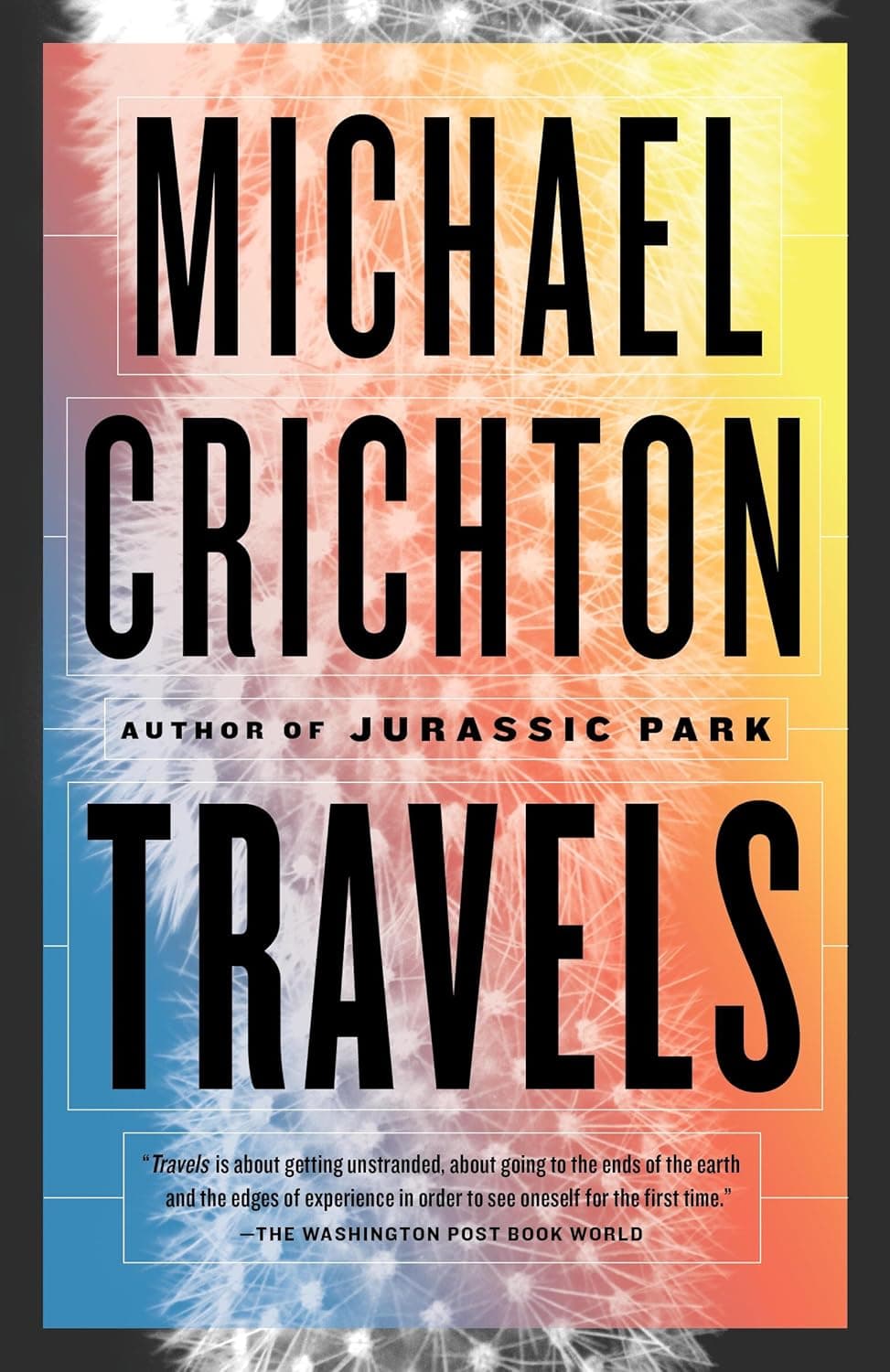
Should you read Travels?
What works
Crichton's candor about ambition, exhaustion, control, and changing belief gives familiar professional success a restless private context.
What may not work for you
Spiritual claims receive less skepticism than his scientific subjects, episodes vary in depth, and some encounters are filtered through privilege.
What may test your patience
The shift from hospital and production memoir into psychic and metaphysical exploration may lose readers expecting conventional travel writing.
Does the ending reward the effort?
The open-ended close suits a book about changing frameworks, though it offers no synthesis strong enough to reconcile science and credulity.
Reading Travels closely
Travels begins with Crichton's experiences in medical school and filmmaking, then moves through journeys to places including Tahiti and Rwanda before turning increasingly inward. The title applies equally to physical movement and experiments in meditation, perception, psychic phenomena, and spiritual practice. The book is episodic because it follows curiosity rather than one continuous life story.
The medical chapters explain why Crichton left clinical practice, while later sections show a successful rationalist testing experiences he cannot comfortably fit into conventional explanation. He writes plainly and often self-critically, but he does not approach every paranormal claim with the evidentiary standards readers may expect from his science-oriented fiction.
This mixture makes Travels distinctive and divisive. Readers seeking a comprehensive autobiography will find gaps; readers seeking only destinations may be surprised by the metaphysical emphasis. It works best as a personal record of changing attention, with funny, vulnerable, skeptical, and credulous moments allowed to coexist. No agreement with every conclusion is required to find the search revealing.
Leaving medicine
Clinical training gives Crichton status and material, but also clarifies that the professional life expected of him is not sustainable.
Outer journeys
Wildlife encounters and unfamiliar environments test his habits of control through physical experience.
Inner and paranormal exploration
Meditation and unusual claims occupy substantial space, shifting the memoir beyond conventional travel writing.
Three useful comparisons
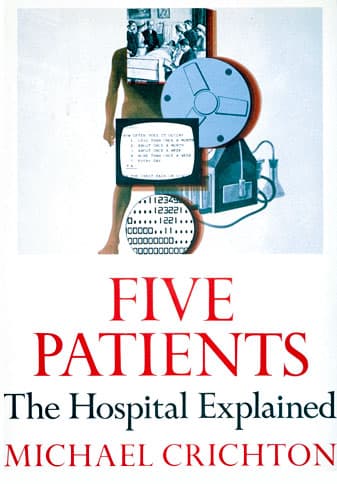
Five Patients
Five Patients is more disciplined nonfiction focused on medicine as a system rather than the author himself.
Best for: Readers interested in medical history, hospital systems, and Crichton's nonfiction roots.
As an Amazon Associate, I earn from qualifying purchases.
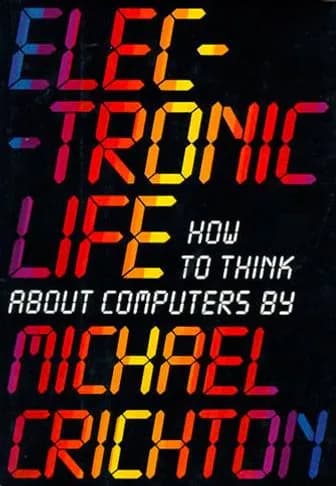
Electronic Life
Electronic Life shows his practical explainer voice without the memoir's spiritual and emotional exposure.
Best for: Technology historians, Crichton completists, and readers nostalgic for the arrival of home computers.
As an Amazon Associate, I earn from qualifying purchases.
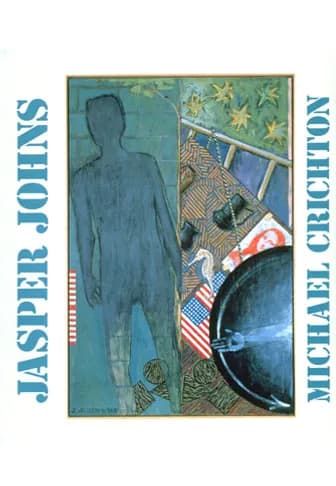
Jasper Johns
Jasper Johns offers a narrower critical encounter with art and process.
Best for: Readers of modern American art and Crichton completists curious about his critical nonfiction.
As an Amazon Associate, I earn from qualifying purchases.